ai-imaging
(5)
Lumius
Lumius is a Durham, North Carolina medical device company building a fast, affordable, real-time 3D ultrasound system - a '3D camera for the body.' Founded by three Duke PhDs, it replaces the flat 2D slices clinicians must mentally stitch into anatomy with a live volumetric view and AI that flags vessels, nerves, and muscle. The company starts with vascular access and central line placement, where roughly half of first attempts by newer clinicians fail, and plans to expand into clot detection, nerve blocks, tumor diagnosis, and biopsy guidance.

Evident Vascular, Inc.
Evident Vascular is a San Jose-based medical device startup building an AI-powered intravascular ultrasound (IVUS) platform designed for peripheral vascular interventions. Founded in 2023 and led by CEO Howard Rosen, the company aims to fix the long-standing trade-off between image quality and clinical workflow that has limited IVUS adoption, targeting FDA 510(k) clearance ahead of a U.S. launch. It raised a $35M Series A from Vensana Capital and closed an undisclosed Series B in 2025.

Diffraqtion
Diffraqtion is a Somerville, Massachusetts deeptech company building what it calls the first quantum camera for satellites and telescopes. Spun out of research at MIT and the University of Maryland, its photon-counting sensors paired with AI aim to extract far more information from incoming light than conventional CMOS or CCD sensors, letting smaller, cheaper optics see beyond the diffraction limit. The company targets space domain awareness, defense, and Earth observation, and raised $4.2M in pre-seed funding in January 2026 alongside a DARPA SBIR contract.
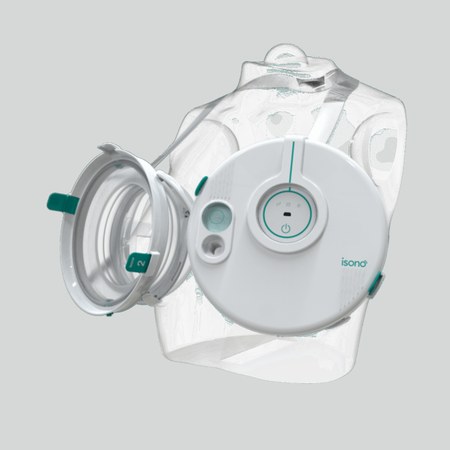
iSono Health
iSono Health builds ATUSA, an FDA-cleared wearable 3D ultrasound platform that scans both breasts in about two minutes without a specialized sonographer. The South San Francisco startup uses AI to make breast imaging portable, reproducible, and accessible at the point of care.

AngioWave Imaging
AngioWave Imaging is a Massachusetts-based medical AI company building post-processing software that sharpens fluoroscopic angiograms in the cardiac catheterization lab. Its FDA 510(k)-cleared AngioWaveNet uses a spatiotemporal, convolutional deep neural network (branded STEP) to reveal blood-vessel detail that is hard to see on the raw angiogram, helping interventional cardiologists diagnose and treat coronary artery disease. The software runs on top of any existing fluoroscopy system, requiring no new hardware.