Taco Potze’s first business had a shop and no stock. He and a university friend had installed osCommerce, an open-source system for running a webshop. It worked. The minor remaining task was finding something to put in it. They settled on MP3 players imported from Korea and China, and the venture did well enough to force a choice between commerce and coursework. They sold the company and kept studying. The empty shop is a useful place to begin his story: the software made an experiment possible before the business plan had caught up.
Today, Potze is co-founder and CEO of Open Social, which builds community collaboration software for organizations including Greenpeace, the European Commission and the United Nations. His work concerns the spaces where people exchange knowledge, coordinate projects and decide who may see what. The questions have grown more complicated. The interest in software people can use on their own terms has remained.
A webshop, then a shopping list
At the University of Twente, Potze studied industrial engineering and management. An internship took him to Promocionales Pacífico in Mexico City in 2005. He had already lived in Brazil for a year and wanted to return to Latin America, learn Spanish and gain work experience. His assignment concerned purchasing and inventory. It was an introduction to the inconvenient distance between a tidy model and an actual company.
His bachelor report examined late service, stock turnover and purchasing costs. It proposed changes to forecasting and ordering, together with an application to support them. In his evaluation, he observed that what management wanted could differ from what the organization needed. Academic requirements brought their own complications. The report records a student learning to look at a business as an arrangement of people, information and competing expectations.
The title, How to Order from the Orient?, belongs to its time. The underlying problem is familiar: having a system does not mean the right information reaches the right person. That is also a useful lens through which to view the collaboration software Potze would later build.
When the client work wanted a second life
Potze co-founded GoalGorilla in 2008. Its agency work included Greenpeace Greenwire, a community for volunteers. The project began in the Netherlands and expanded internationally. In 2015, it won a Dutch Interactive Award. Requests followed from people who wanted similar communities. A bespoke project had revealed a recurring demand.
The next idea was to make a lighter, adaptable product. Open Social emerged from that work, with Bram ten Hove as co-founder and CTO. The idea took shape in 2015; a crowdfunding campaign completed in early 2016 raised €200,000, and that year went into building the first version. The progression matters because an idea, a release and a change of business model can occupy different dates on the same calendar.
for the first version
from Peak and Nimbus
Potze described the pressure facing an agency in practical terms. Clients wanted delivery sooner, less money committed up front and the polish they associated with everyday consumer applications. A fresh custom build for every brief made those expectations difficult to meet. Reusable software offered a way to spend development effort once and improve it across many customers.
The financial adjustment was less obliging. An agency can bill for work while it happens. A subscription business pays to develop its product and receives the customer’s money over time. Potze described using savings from good agency years, alongside crowdfunding, to support the transition. Building a product also meant investing in sales and marketing before the resulting accounts could pay their way.
The founders began talking to venture investors in 2019. In 2020, Peak and Nimbus Ventures invested €1.25 million. Peak’s relationship with the company had begun at a TNW conference. Its managing partner Johan van Mil pointed to the team’s commercial and technical abilities, while Nimbus’s Auke van den Hout emphasized the international customer base. The investment brought networks and advice as well as cash.
MT/Sprout included Open Social in its 2022 Challenger50. By then, the company had won European Commission work and brought Rabobank into its financing. Potze said it had reached a position where it could continue without depending on another funding round. These are milestones in a gradual conversion: from a business organized around individual commissions to one responsible for a continuing product.
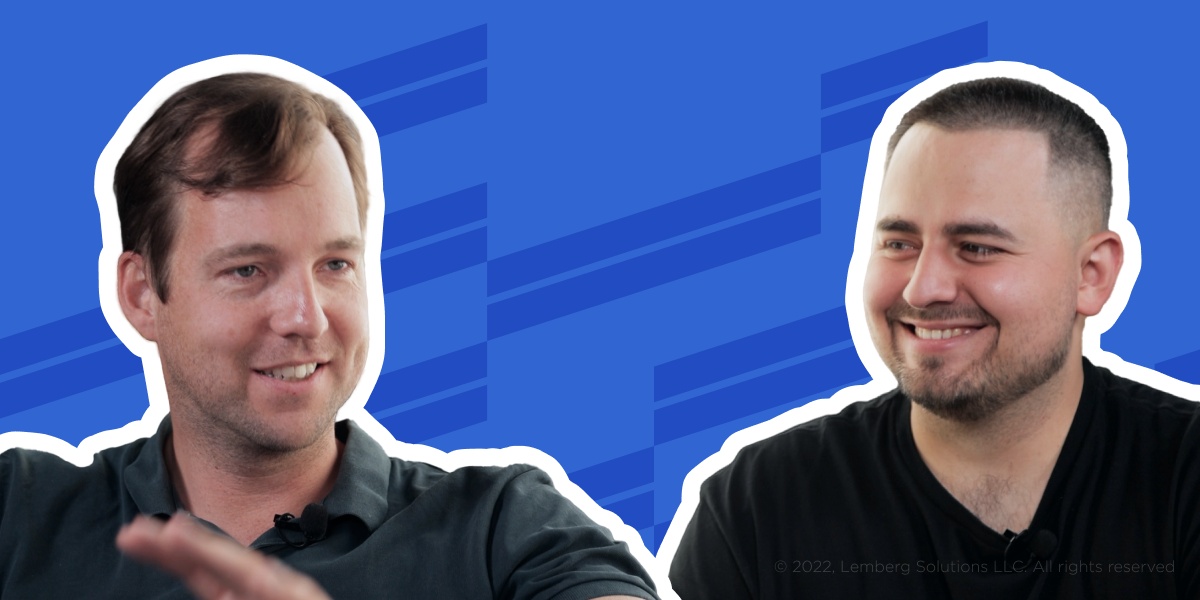
The community outside the software
There is a second career running alongside the company history: Potze has spent years arranging ways for people in open source to meet. He served on the Dutch Drupal association’s board from 2012 to 2016, organized DrupalJam in 2013 and 2014, and founded Drupal with Dinner. Software communities, evidently, can benefit from a dinner reservation.
He also helped found the Splash Awards with Bert Boerland and Imre Gmelig Meijling. The awards recognize Drupal projects and give their builders a public stage. The inaugural Global Splash Awards took place alongside DrupalCon Seattle in 2019. A local effort had acquired an international audience, with recognition extending across different types of work.
These activities make the word “community” unusually concrete in Potze’s biography. There are events to organize, contributors to recognize and people who might never meet without somebody doing the arranging. His Drupal profile also records mentoring and support-forum participation. The labor around the code appears repeatedly, well before the current platform’s emphasis on collaboration.
His writing supplies another view of that involvement. In 2016, he published Medium posts tracking Drupal modules: which were moving into the next version, which had been incorporated into core, and how usage was distributed. The subjects are less glamorous than a fundraising announcement. They concern the maintenance and migration questions on which a software ecosystem depends.
In 2017, Potze joined the founding board of the Dutch Startup Association. Fellow founding members included Roland Sars, Diana Krieger, Don Ginsel, Kirby Binayao and Boris Veldhuijzen van Zanten. The association set out to represent entrepreneurs’ interests in regulation. Once again, there was a group with shared needs and an organization to build around them.
Who keeps the keys?
Open Social now describes its business as a Community Collaboration Platform. Its open-core model makes the Community Management System available as open-source software within Drupal, while subscriptions add hosting, products and professional services. Customers can use a common foundation and pay for help running it. Free code and a commercial business coexist in the same arrangement.
For Potze, the current ambition extends beyond an active discussion feed. His 2025 summit presentation addressed documents, analytics, integrations and the governance of connected communities. The European Commission’s needs provided one example: knowledge sharing across departments and projects, with accessibility and control over data part of the requirements. The work had become infrastructure for collaboration.
The WE BUILD consortium brought a different scale of coordination. In his September 2025 account of its General Assembly, Potze described more than 180 organizations working toward a European Digital Business Wallet. Open Social supplied a place for participants to communicate and share knowledge. A network of independent organizations needs common arrangements without acquiring a single common boss.
THE OWNERSHIP TEST · SUMMIT ’26
Permissions
Rules customers can review and verify.
A route to move
Documented and tested platform portability.
AI choices
Control over activation, access and provider.
At the September 2026 summit in Rotterdam, Potze made the ownership question explicit. A network’s work becomes its memory: approved documents, decisions and accumulated knowledge. His keynote commitments covered permissions that can be reviewed, a documented and tested route to move the platform, and control over which AI can access material. They are commitments to be delivered and checked, rather than evidence that every task is finished.
His public position also has a local dimension. For the Vliegwiel portrait project, which brought together Dutch founders and ecosystem builders, he urged government and companies to buy more technology from nearby startups. For a founder serving international institutions, the argument still begins with someone deciding to give a smaller supplier a hearing.
“Government and companies should buy more local tech. Take a chance on us!”
Taco Potze · Vliegwiel portrait series
A meeting that remembered
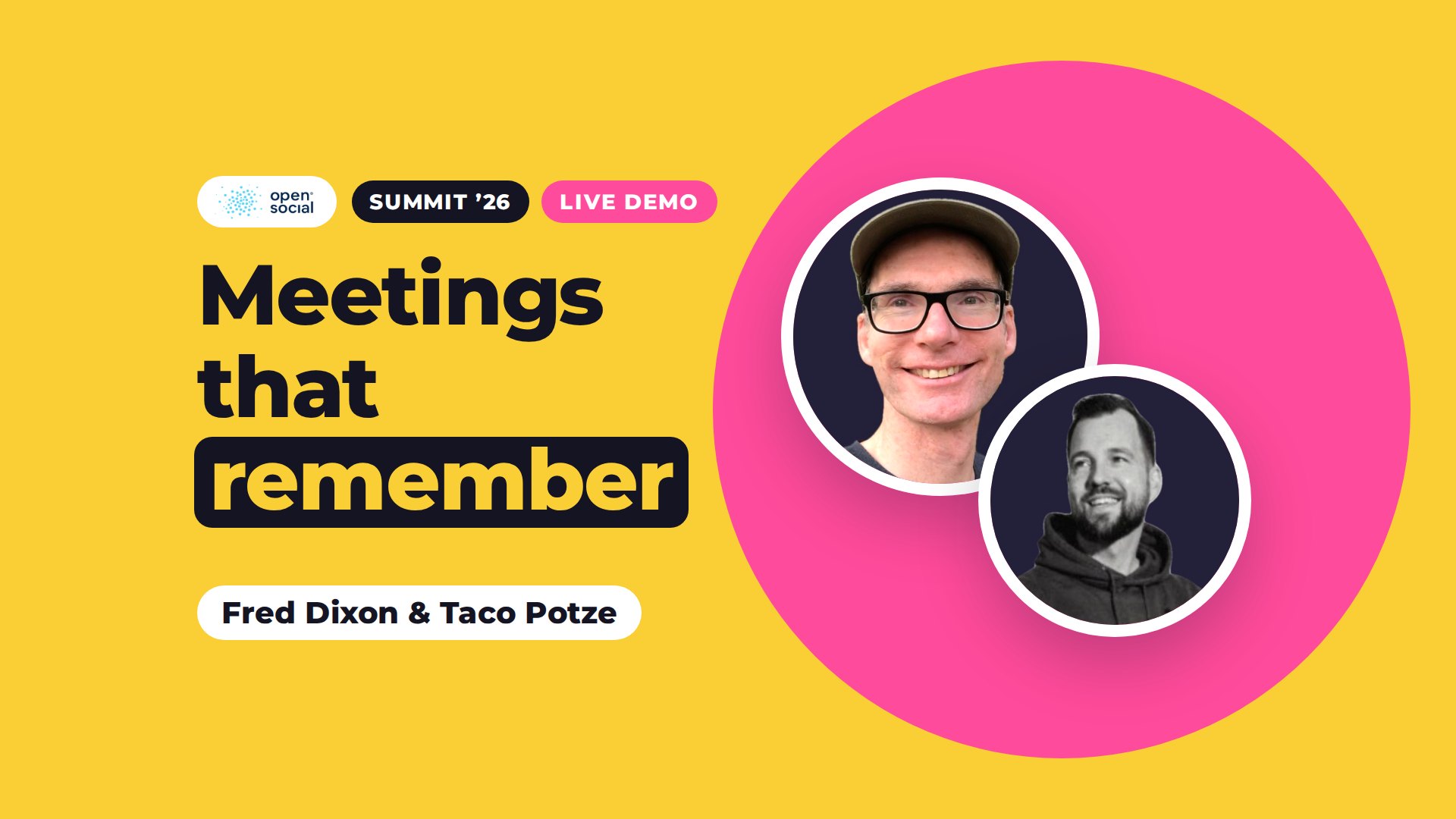
The 2026 summit offered a small demonstration of where this thinking might lead. Potze joined BigBlueButton’s Fred Dixon and Open Social’s Alexander Varwijk for a short meeting. Minutes later, the platform displayed a recording, a transcript identifying speakers and an AI summary. Potze asked Gaia AI who backs BigBlueButton. It answered using something Dixon had said during the meeting.
The demonstration was a proof of concept. The first pilot, with ELIA, the European League of Institutes of the Arts, is planned for 2027. Its appeal is easy to understand: a decision made aloud can become something a permitted colleague can find later. The permissions matter as much as the transcription. A meeting does not become everybody’s business merely because software can remember it.
Potze’s position on collaboration has also produced a commercial decision. In January 2026, he announced an offer to provide Open Social at cost to international organizations affected by U.S. withdrawal, covering hosting and essential services. The stated aim was to keep supporting institutions whose work depends on cooperation across borders.
That leaves a recognizable line through an otherwise varied career. The student installed a shop he could run. The agency founder saw a volunteer network others wanted to reuse. The community organizer made space for people to meet. The executive now asks how organizations can retain authority over the knowledge they create together. Each stage has needed software, and each has depended on people choosing to take part.
The shop eventually acquired its merchandise. The later platforms have acquired something harder to price: the record of what groups know, decide and do. Potze’s next task is helping their owners keep the keys.
Follow the conversation
Profiles, conversations and the work behind the story.
Open Social · company website Taco Potze on LinkedIn Taco Potze on X His writing on Medium Drupal contributions and community work Watch · the Lemberg interview Watch · Open Social’s 2025 roadmap Listen · the agency-to-product conversation Read · the Summit ’26 ownership commitments Read · the meeting-to-memory proof of concept MT/Sprout · Open Social in the Challenger50