A cardboard box is a modest thing. It sits on a loading dock, absorbs a label and gives away almost nothing about the argument that brought it there. Someone chose a factory. Someone checked a specification, negotiated a price, booked space, handled customs and worried about whether the next order would look like the first. Sunny Lakhani has spent more than two decades in that hidden argument. From Tampa, his career has run through global manufacturing, international trade and factory-direct sourcing. The products have changed. The operating question has stayed remarkably steady: can a complicated chain of people keep a simple promise?
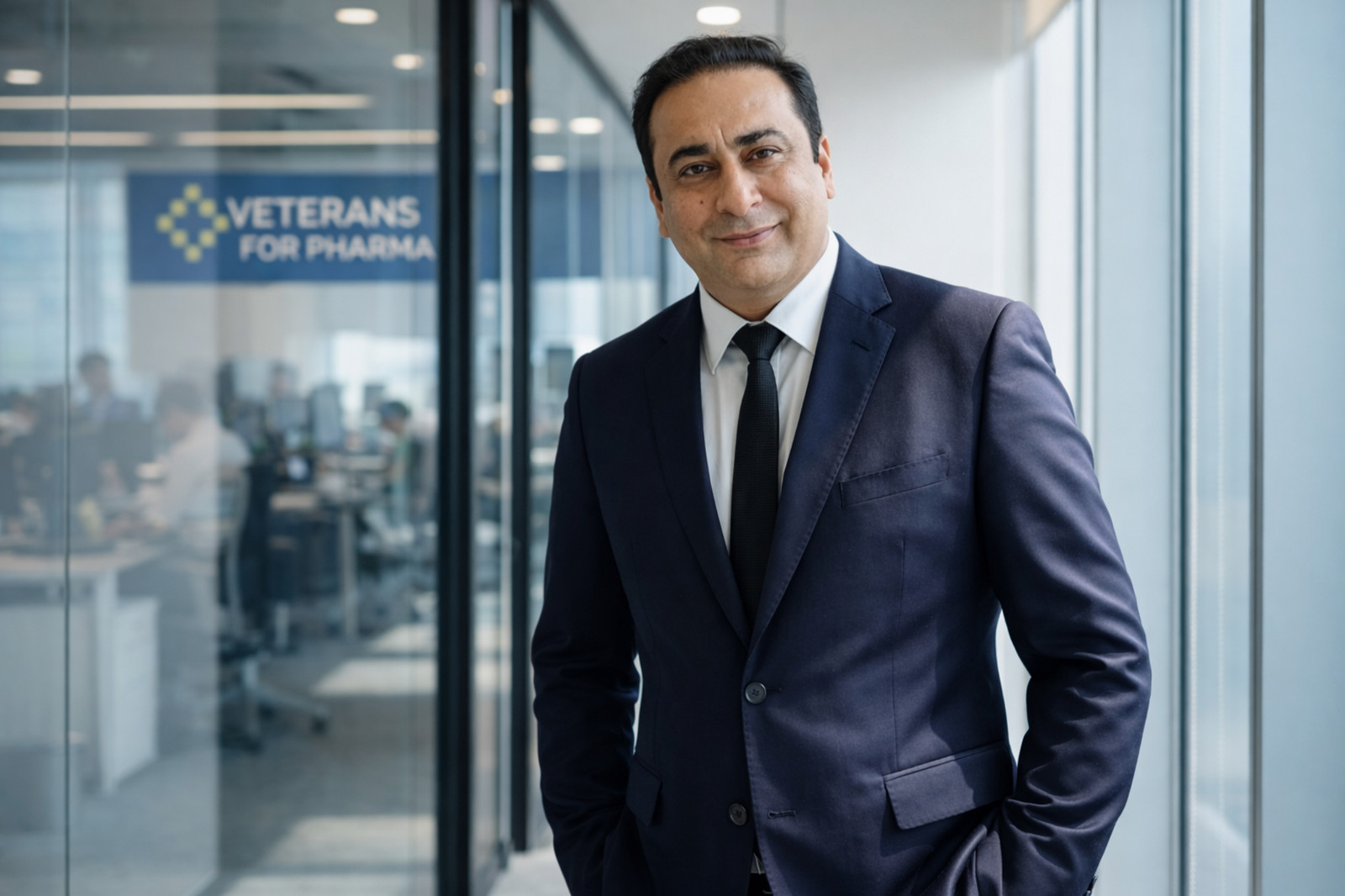
Lakhani now holds two roles that make that question unusually visible. He is chief executive of One Source S&S LLC, a Florida company connected to an international manufacturing and sourcing network. He is also a founder and managing partner of Veterans For Pharma, a newer business built to supply pharmaceutical manufacturers, research institutions, healthcare systems and federal buyers. One role carries a long operating history. The other places that history in a setting where documentation, consistency and supplier accountability have little room for improvisation.
This is not a career that can be summarized by one famous product. It makes more sense as a sequence of systems: suppliers developed, production relationships deepened, technology brought into old workflows and more of the process pulled under direct control. Lakhani's work is the business of what happens before the customer sees anything at all.
The operator's ledgerA company measured in arrivals
One Source S&S was organized in Florida in October 2006. Its public customs trail begins the following month. Read as a list, the cargo is almost comic in its range: magnifiers with rulers, umbrellas, a massage chair, tin boxes, chargers, earphones, packaging and retail displays. The records show nine shipments between 2006 and 2021, moving from suppliers in China through ports including Yantian and Ningbo to Tampa.
A manifest does not tell a life story. It does reveal the practical grammar of a sourcing business. Categories change, suppliers change and customer fashions change. The reusable skill is learning how a product is made, locating the points where quality can drift, and turning a foreign production relationship into a repeatable commercial one. An umbrella and a wall charger have very little in common on a shelf. To an operator, both are collections of tolerances, materials, lead times, packaging choices and promises.
development
traceability
The variety also hints at a willingness to work without the comfort of a single category identity. Sourcing rewards curiosity with a hard edge. A buyer has to ask basic questions without embarrassment, then keep asking until the answers survive production. The work is part commercial judgment, part logistics and part translation. Lakhani's LinkedIn profile lists English, Gujarati, Hindi, Urdu and Chinese. Language alone does not close a manufacturing gap, but a career conducted across borders benefits from an appetite for other markets and ways of working.
The box at the door is the ending. The business is everything that made it reliably appear.The operating idea behind Lakhani's career
From variety to controlScale is useful only when it behaves
Over time, One Source became larger than the modest public shipping record suggests. Lakhani's current professional biography describes a global manufacturing and sourcing platform supported by approximately 950 employees and a network of international production partners. The significant word is not global. It is supported. A network becomes an operating advantage only when the relationships, information and standards beneath it can carry weight.
His long-term strategy at One Source has concentrated on product ownership, integrating new technologies and gaining more control across manufacturing operations. Those priorities belong together. Product ownership creates responsibility beyond finding the lowest quote. Technology gives managers a clearer view of what is happening. Control makes it possible to correct a problem before it travels thousands of miles and lands inside someone else's business.
That kind of control is less cinematic than expansion for its own sake. It is also more durable. A larger catalog can create more ways to disappoint a customer. More factories can create more variations in quality. More countries can multiply the handoffs where timing or information slips. The mature version of a sourcing business is therefore not a giant shopping list. It is a method for making variety predictable.
A narrower toleranceThe move into regulated procurement
Veterans For Pharma makes the next chapter more demanding. The company was founded by Lakhani and Anthony Theriault, a retired member of the United States Coast Guard. Their backgrounds are complementary: global manufacturing and enterprise sourcing on one side, military service and mission-oriented execution on the other. The shared proposition is that procurement for regulated organizations should be treated as infrastructure rather than a string of transactions.
The company describes a network of more than 130 brands, access to over 300,000 products, more than 20 distribution centers and manufacturing capabilities across five countries. These are company-wide figures, not a personal scorecard. They show the machine Lakhani is helping to operate and the scale of the promise being made. A broad catalog matters. Distribution reach matters. Yet the more revealing commitments are transparency, audit-ready documentation, supplier accountability and dependable access.
In ordinary retail, a substitution can be an inconvenience. In a controlled procurement program, changing a product or supplier may trigger a new round of qualification, documentation and internal approval. The cost of inconsistency travels beyond the price of the item. It shows up in staff time, delayed work and the uncomfortable discovery that the purchasing record cannot answer a basic question. Where did this come from?
That is why Lakhani's earlier emphasis on product ownership and tighter manufacturing control fits this new setting. The useful knowledge is not merely where to buy. It is how to develop a supplier, how to understand capacity and how to keep a standard intact as volume rises. Veterans For Pharma describes his role in exactly those operational terms: supplier development, international manufacturing strategy and factory-direct procurement.
The Tampa vantage pointA global career with a local address
Lakhani has been educated and based in the United States while building a career oriented toward international production. He attended Loyola University Chicago from 1993 to 1997 and is now based in Tampa. The geography matters because sourcing executives live between places. The buyer has a deadline in one time zone. The factory has a production reality in another. A port, carrier and customs process occupy the distance between them.
Tampa is more than the location printed beside his name. It is the receiving end of the public trade record and the shared address of his current business activity. In March 2026, One Source S&S updated its Florida mailing address to the same Tampa location published by Veterans For Pharma. The detail is bureaucratic, but revealing. The old sourcing platform and the new regulated-procurement venture are not abstract chapters separated by a neat line. They overlap in place and in operating logic.
So do Lakhani's two titles. Chief executive suggests direction, capital allocation and growth. Managing partner implies closer contact with relationships and execution. Together they describe a career that has moved upward without moving away from the supply network itself. He remains associated with the questions underneath strategy: which production partner, which controls, which technology and which evidence will make the next order dependable?
Operations is optimism with receipts: a belief that tomorrow's many small actions can be made to agree.A useful reading of factory-direct procurement
The next orderReliability as a form of growth
The easy story about supply chains is that disruption made them important. The more useful story is that they were always important; disruption merely made them visible. Lakhani's career belongs to the longer view. One Source was established well before supply-chain resilience became a boardroom refrain. Its public history spans years of changing products, shipping routes and retail technology. The current work at Veterans For Pharma places those accumulated lessons inside a stricter operating environment.
His stated direction is clear: strengthen reliable supply partnerships, expand manufacturing capacity and connect global production with enterprise procurement programs. It is an ambition expressed through systems rather than slogans. The test will be repeat business, stable quality and records that remain intelligible when inspected. None is dramatic on its own. Together they make institutions function.
There is a small irony in building a career around making complexity disappear. When the network works, the customer sees the product, not the choreography. The container clears. The inventory updates. The order arrives. The paperwork agrees. Lakhani's work sits inside that absence of surprise, the quiet result of hundreds of decisions made before a cardboard box reaches the dock. In his business, boring can be a compliment. Reliable is the point.