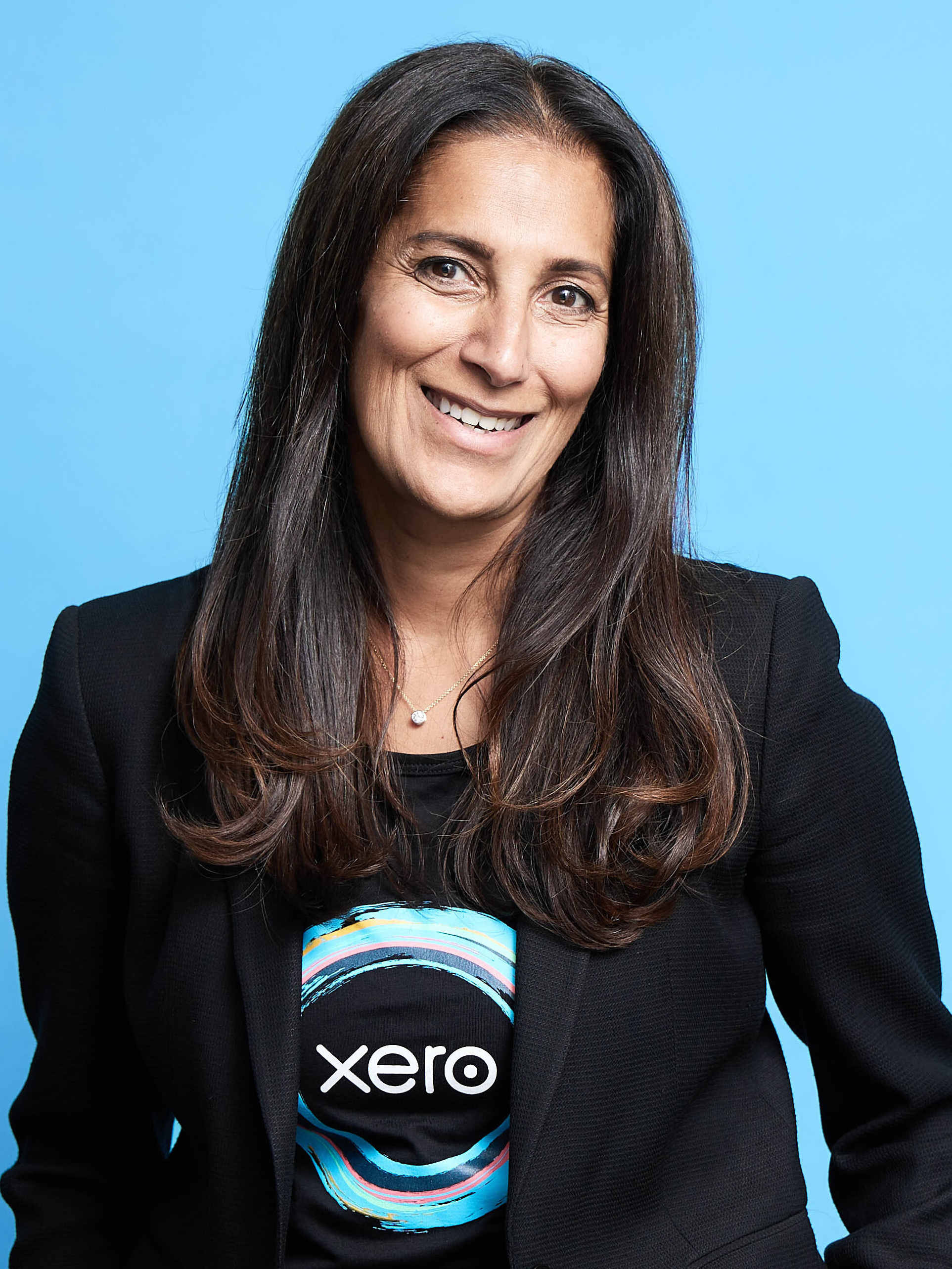
The story so far
A career that refuses a straight line.
Cassidy was born in Dar es Salaam, Tanzania, to Indian Sikh parents, and moved to small-town Ontario at age two. Her father practiced medicine. She read everything. By 1992 she had a business degree from Ivey at Western University and a desk at Merrill Lynch in New York, doing the things that 22-year-old analysts in New York do: spreadsheets, late nights, the slow education of how money moves.
In 1994 she moved to Merrill's London office, then jumped to Sky UK as an analyst. London taught her that the global economy is not an abstraction. By 1998 she was in Silicon Valley, betting on a startup called Junglee that nobody outside the tech crowd had heard of. Amazon bought Junglee that same year. She stayed, ran merchant business development for the first version of the Amazon marketplace, and watched up close how a young e-commerce company learned to scale.
Yodlee, and the first big build.
In 1999, with five engineering co-founders, she helped start Yodlee, a financial data aggregation platform that became one of the foundational pieces of modern fintech. She ran sales and business development through the dot-com boom, the dot-com crash, and the slow grind back. Yodlee went public in 2014. By then Cassidy was three jobs down the road.
Google, the apex.
She joined Google in 2003 - the year before the IPO - and rose to President, Asia Pacific and Latin America operations. The portfolio: emerging markets, monetization, the part of Google's business that was less about Mountain View and more about Mumbai, São Paulo and Tokyo. She left in 2009 to be a CEO-in-residence at Accel Partners, then took the CEO seat at Polyvore in 2010.
Joyus, and the founder scars.
In 2011 she founded Joyus, a video commerce company aimed at a market that arrived about a decade after the product did. Joyus ran for six years before StackCommerce acquired it in 2017. She is open about the math: Joyus didn't end the way she wanted, and the book she wrote later starts there - with the question of what you do with a bet that doesn't pay off and a calendar that still has thirty years of operator life on it.
StubHub, then a book, then Xero.
From 2018 to 2020 she was President of StubHub, the secondary ticketing marketplace, with around $5 billion in gross merchandise value and over a billion in annual revenue passing through her org chart. Then the pandemic hit and the secondary ticketing business stopped overnight. She left, and in 2021 she published Choose Possibility: Take Risks and Thrive (Even When You Fail). The book argues, in essence, that careers are not won by single transformative decisions but by the cumulative weight of small ones. The Wall Street Journal liked it. So did the Xero board.
The Wellington job.
Xero announced her as incoming CEO on November 10, 2022, succeeding Steve Vamos. She started on February 1, 2023. The company sits at the heart of a particular kind of work that does not generate headlines: invoicing, reconciliations, payroll, the unglamorous machinery of small business finance. Xero serves accountants and bookkeepers and the small operators who pay them, and Cassidy's job - the one she has spent two-plus decades preparing for - is to push that machine into its next phase of global growth.
theBoardlist, the side project that scaled.
In 2015, while running Joyus, Cassidy launched theBoardlist, an online marketplace that connected CEOs hunting for board members with women who had been peer-endorsed by tech leaders. It started with 600 women and 50 endorsers. It now ranks among the most cited efforts to fix the woman-in-the-boardroom math problem in tech, and Cassidy still chairs it. She funded it. She named it. She did the recruiting. It was, in the language of her book, choice number nine or ten.
The thesis.
Cassidy's organizing idea is that the standard career narrative - one big choice, made under pressure, on the way up - is a myth. Real careers are built from many small choices, made repeatedly, that compound. You cannot avoid risk; you can only get better at sizing it. You will fail at some of the bets. The point of failing well, she argues, is to learn enough that the next bet costs less. She calls the larger project Choose Possibility, and she has packaged it across a book, a website, a speaking circuit and, in a way, the example of her own resume.
What she's building now.
Xero's market is contested. QuickBooks dominates in the United States. NetSuite owns mid-market. Sage holds parts of Europe. Xero's lane is the small business that crossed from paper to cloud and now wants AI-shaped tools that do the bookkeeping while the operator sleeps. Cassidy's hire signaled that the board wanted an operator who had built fintech, run a platform at Google scale, founded a consumer product, and survived StubHub. Her first year at Xero was a sharper focus on profitability and a tighter cost base. The next chapters are about expansion, automation, and how AI changes the work of a small-business accountant in practice rather than slogan.
The personality, briefly.
People who interview Cassidy come away with the same impression: candor without performance. She is happy to talk about the bets that did not work. She uses the word imperfection a lot. She tells founders that the goal is not to look certain, it is to keep choosing. She is married to Simon Cassidy, a fellow Canadian and former hedge-fund manager who runs an independent investment firm. They have three children. The family base is the Bay Area.
The shorthand.
Tanzania-born. Canada-raised. Ivey-trained. New York, London, Mountain View, San Francisco, Wellington. Investment banker, then fintech co-founder, then Google president, then VC fellow, then CEO of a struggling startup, then president of a marketplace at scale, then bestselling author, then CEO of Xero. The line is anything but straight. That is the line.