At ten, Steven Lica already had a business with two lines of work: lawns and sprinklers. Decades later, congratulating another founder online, he recalled being a lawn boy and sprinkler repairman in his first venture. It is a small memory, offered casually. The job descriptions are refreshingly straightforward: a lawn boy cuts lawns; a sprinkler repairman fixes sprinklers. Business language would eventually supply Lica with longer titles and more complicated transactions. His own recollection of the first venture took only a few lines, tucked into a message wishing another entrepreneur and his team well.
By May 1, 2025, Lica was on the other side of a considerably larger transaction. Resmed announced its acquisition of VirtuOx, the company he had co-founded in 2005 and led as chief executive. Twenty years separated the founding from that announcement. The agreement put VirtuOx inside a publicly traded parent, with its leadership staying in place and its existing brand continuing in the near term.
The interesting part of Lica’s career lies between those two kinds of enterprise. He has run companies, expanded one as a finance executive, helped arrange their sales, and bought other businesses through VirtuOx. The recurring subject is what happens to a business as it gets bigger. Who joins it? Which capabilities come with them? What is worth keeping when ownership changes?
The résumé keeps changing sides of the table
Lica earned a Bachelor of Business Administration from the University of South Florida. His LinkedIn profile lists his university years as 1989 to 1993 and Pi Kappa Alpha among his activities. The degree belongs in the story because his subsequent jobs moved across the business itself: executive management, finance, expansion and transactions. A single title captures only one stop.
His early career included Southeast Medical, a business operating in South Florida and the Caribbean. He spent five years there, including the final three as chief executive, before arranging its acquisition by Lincare Holdings. That combination matters: he had experience running an operation before negotiating its place within a larger one. The sale followed a period of management responsibility.
At Massachusetts-based Homecare Respiratory, his title was chief financial officer. During a six-year tenure, the company expanded its operations and diversified its services. Revenue grew tenfold. He then helped engineer its acquisition by Air Products through Denmarks. Here the finance job included a substantial change in the business’s size and scope. The ledger had acquired a rather more demanding plot.
He also spent two years as chief executive of Infinity Diagnostics, preparing that company for an acquisition and completing the transaction. Kyle Miko, who would become a colleague at VirtuOx, had co-founded Infinity and served as its chief marketing officer. Their working histories intersected before the company for which Lica is now chiefly known.
Read together, these appointments give the 2005 founding a useful prehistory. VirtuOx came after experience with businesses in different places, at different stages and under different owners. The pattern offers a way to understand his later decisions without pretending that every earlier job was a rehearsal for an outcome already planned.
Twelve years in, a promise to buy
Lica co-founded VirtuOx in 2005 and held its chief executive role from the beginning. In 2017, the company announced the acquisitions of ProFox Associates and NPF. Those transactions made an explicit public statement about the direction of the business. VirtuOx was going to grow by bringing other companies into its operation.
“This is the first of many acquisitions for us.”
Steven Lica, 2017
He attached a particular idea to that ambition: interoperability among multiple platforms. It is an inelegant word for a practical concern. Separate systems have to work together. An acquired business brings existing tools and ways of doing things; combining ownership leaves the harder question of combining their usefulness. Lica’s explanation put that question close to the center of the acquisition strategy.
VERTESS advised on the ProFox and NPF transactions and sought further acquisition opportunities on VirtuOx’s behalf. There was a mechanism behind the announcement: outside advisers looking for additional businesses. Lica had previously helped companies become acquisition targets. At VirtuOx, he was also speaking for the buyer.
That shift gives his career its shape. The same executive who had arranged sales to larger organizations was now assembling a larger organization himself. Both sides involve decisions about what another business can contribute. The 2017 announcement made clear that he intended to keep making those decisions.
- 2005Co-founds VirtuOx; serves as CEO.
- 2017VirtuOx acquires ProFox Associates and NPF.
- 2018Instant Diagnostic Systems joins the business.
- 2025Resmed acquires VirtuOx; leadership remains.
What comes with the company
In August 2018, VirtuOx announced another acquisition: Instant Diagnostic Systems, based in Decatur, Alabama. VERTESS facilitated the deal. K&L Gates supplied legal counsel, with attorney Joshua Skora leading its team. Lica’s response welcomed the additional capacity and singled out the experienced people arriving with the business.
His emphasis on the team is a useful detail. An acquisition can be described with a corporate name and a date, which makes it look tidier than the organization behind it. Lica publicly identified experience as part of what VirtuOx had gained. The transaction added people who already understood their work.
Landon Pendleton’s career provides a concrete connection. He had been director of information technology and general manager at Instant Diagnostic Systems. In early 2019, following the acquisition, he became VirtuOx’s chief operating officer. He later became its chief technology officer. A person from the acquired business took responsibility within the combined one.
Pendleton had worked on technology, security, software development and business processes at Instant Diagnostic Systems since 2005. His move gives some substance to the idea of buying experience. Lica’s company gained someone whose knowledge extended across the systems of the operation it had purchased.
There is another glimpse of the operating work in Lica’s endorsement of Kinetix Solutions. He credited the outside firm as a software development and infrastructure partner in building, deploying and managing VirtuOx’s systems. The verbs are useful: a platform has to be built, put into use and maintained. Lica’s public account of growth included that continuing technical work as well as transactions. The endorsement also makes room for a supplier’s contribution, adding another relationship to the picture of how the company’s capabilities were assembled.
Three names on a drawing
The connections inside VirtuOx also appear on a different kind of document. A United States patent application for a portable cleaning device lists Kyle Miko, Steve Lica and Jon Fedele as inventors. Filed in August 2019 and published in March 2020, it names VirtuOx as the original assignee. The application is listed as abandoned.
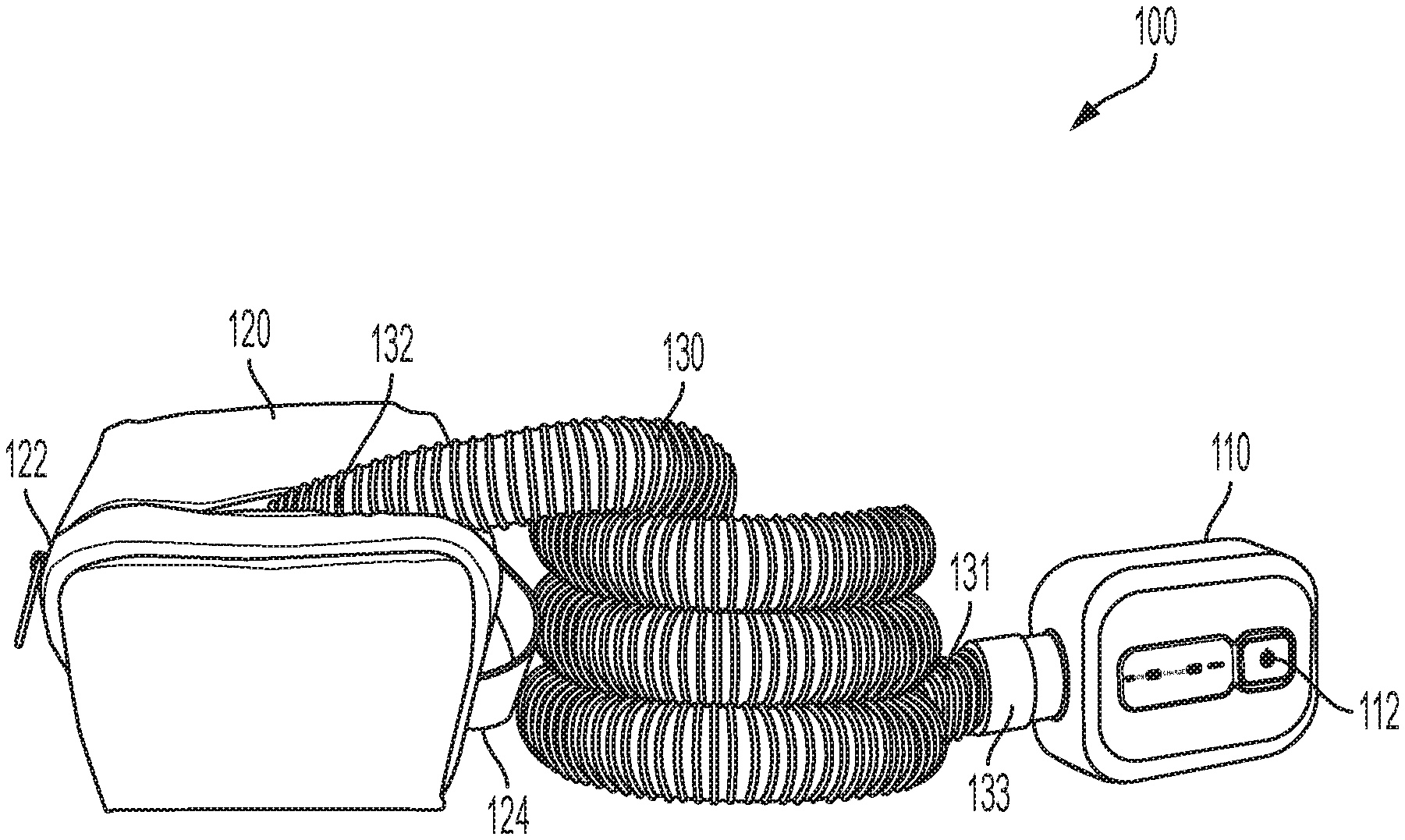
That status belongs alongside the illustration. The document records a product idea and named collaborators, rather than a granted patent. Its interest here is the overlap of people: Lica appears with colleagues associated with the company’s leadership, on work that reaches beyond the executive titles printed beside their names.
Fedele is a VirtuOx co-founder and board member. Miko is listed as chief marketing officer. Alongside Lica, both also appear in the company’s corporate records. The drawing adds another point of contact among them. Their names recur across management, company formation and a product application.
Fedele brought his own history of company building and sales. He co-founded Pulmocair in 1999, led it for eleven years and guided its acquisition by Rotech in 2010. He also founded Activa in 2009 and prepared it for an acquisition by private equity investors in April 2018. Those parallel careers place Lica among colleagues with experience of growing businesses and seeing them change hands. VirtuOx’s transactions involved a leadership group with several such histories, rather than a single founder’s résumé in isolation.
A sale with work still attached
On May 1, 2025, Resmed announced that it had acquired VirtuOx. The terms called for VirtuOx to operate as a wholly owned subsidiary. Its leadership team would remain and continue directing growth and innovation. Its existing brand would carry on in the near term. Financial terms were undisclosed; Resmed described the acquisition as immaterial to its financial results.
For Lica, this was another change of position at the table. The business that had acquired ProFox, NPF and Instant Diagnostic Systems had itself become part of a larger company. The announced arrangements preserved a role for the people who had been running it. Ownership changed while responsibility for the next stage stayed with the team.
Resmed’s fiscal 2025 annual report subsequently recorded the acquisition and VirtuOx’s status as a wholly owned subsidiary. In July, Resmed chief executive Michael Farrell spoke to investors about investment in VirtuOx’s marketing and capabilities. The transaction had moved into the parent company’s account of what it intended to build.
It is tempting to end a founder’s story at the sale. The paperwork offers a convenient full stop, and convenient full stops are scarce in business. Lica’s history makes that ending feel premature. He had already led businesses into acquisitions, spent years growing VirtuOx through purchases, and arrived at a deal that explicitly retained its leadership.
The ten-year-old’s venture survives as a modest opening scene: two services, work to finish, customers to satisfy. The later career has more entities and advisers, and considerably longer documents. Its most revealing continuity is the sequence of responsibilities Lica accepted as companies changed size and ownership. At VirtuOx, the acquisition announcement left him with another stage of the business still to run.