Steve Graham was working at Goldman Sachs when he discovered a use for the late-night ride home that probably never appeared in the recruitment brochure. He took the cab to the South Bronx to practice breaking. The young analyst had found something worth staying up for after staying up for work.
It began at the Roxy in New York in 1983. Friends from his college sporting days had suggested he investigate the dance scene. He asked a breaker to demonstrate a swipe, tried it, and discovered he could do it. A small success acquired an unexpectedly long afterlife. Graham sought instruction, learned from dancers including Mr. Wiggles and Fast Break, and eventually joined Wayne Blizz and the Float Committee.
The financial analyst sometimes joined street dancers while still dressed in his business suit. A tie is an ambitious accessory for floor work. Graham appears to have treated the wardrobe problem as manageable.
Today, he leads Graham Partners, the private investment firm he founded in 1988. In breaking, he is known as Silverback. These two identities have become connected through the less photogenic work of paying for events, organizing people, and making opportunities repeatable. The interesting question in his story is what happens after somebody learns a move.
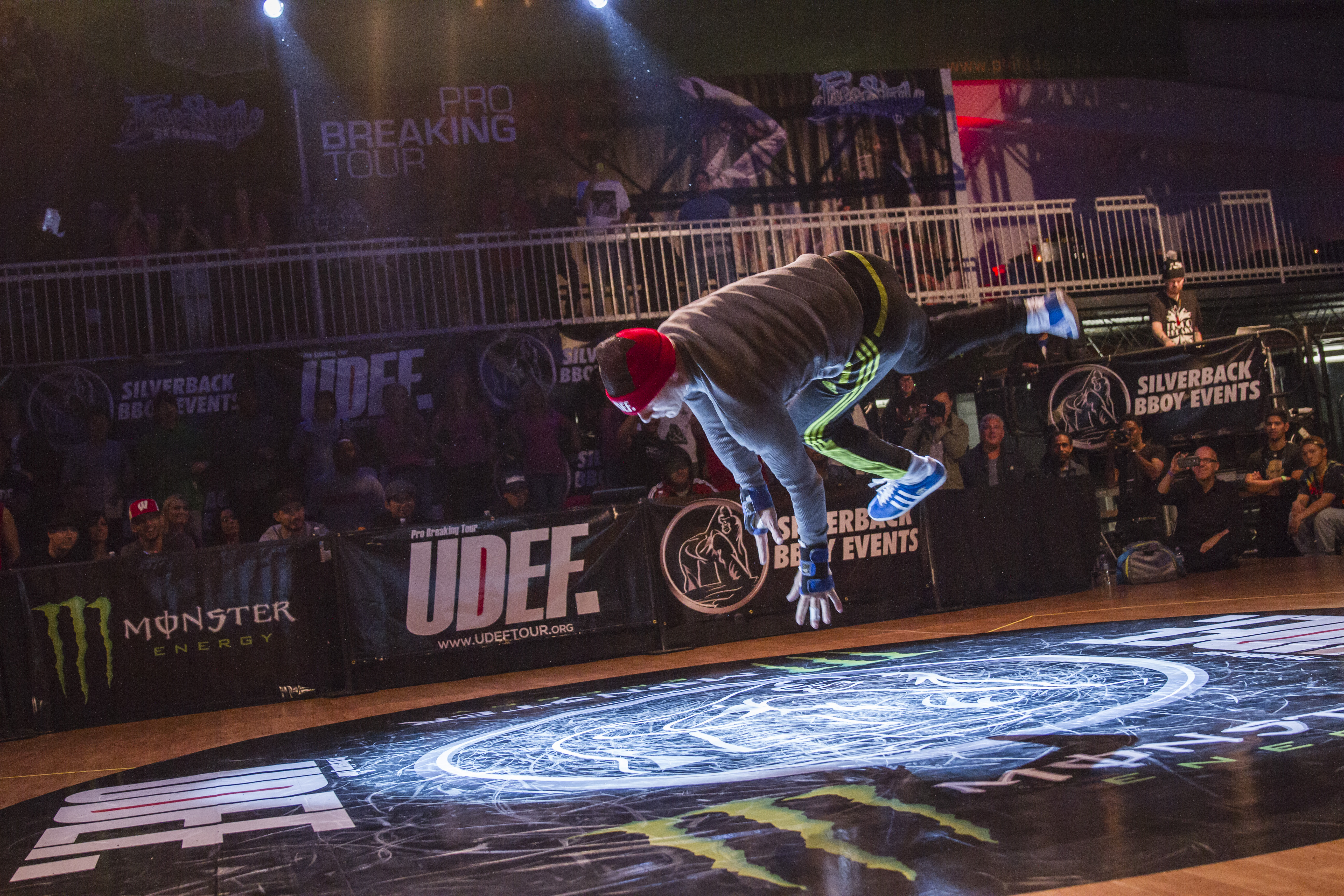
The education after the education
Graham graduated from Williams College in 1982 with a double major in philosophy and English. His sporting schedule was less narrowly defined: tennis, track, and skiing, with the captaincy of the downhill ski team. An undergraduate transcript and three varsity teams make a rather busy introduction to a career.
Breaking offered another form of athletic expression, with music, improvisation, and an audience close enough to answer back. Graham's early involvement also included sponsorship. In 1984 and 1985, he backed showcase performances at Dartmouth College featuring dancers from the South Bronx. He was studying at Dartmouth's Tuck School of Business, where he earned his MBA in 1986. The business-school years contained a little more movement than the usual case discussion.
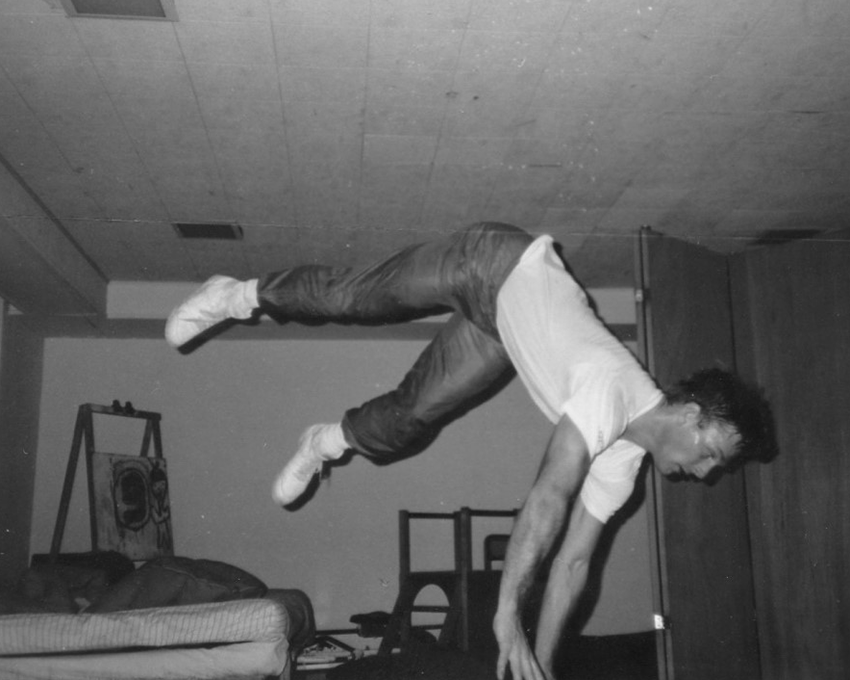
Those early showcases are a useful detail. His support for breaking began well before an Olympic audience made the activity an obvious sponsorship proposition. Bringing dancers to a campus was already a way to connect a community he had entered with a community he knew.
The classroom lesson in this part of the story came from people who could do things he could not yet do. Whatever advantages a banking job supplied, a swipe still required learning the swipe. A dance floor is refreshingly literal about qualifications.
A factory in the family history
Graham Partners grew out of a different set of practical skills. The wider Graham industrial story began with Donald C. Graham's design engineering business, established in a Pennsylvania farmhouse basement in 1960. It developed into manufacturing businesses, including packaging, engineering, and architectural products. The basement is a helpful corrective to the abstraction of the phrase private capital: these roots involved designing and making things.
Before its first fund in 1999, Graham Partners worked as the corporate finance arm for Graham Group businesses. Steve had previously worked in investment banking at Goldman Sachs and at the RAF Group. His firm's first decade involved acquisitions, joint ventures, financings, and the 1998 sale of a controlling interest in Graham Packaging to a Blackstone-controlled fund.
Those transactions crossed borders. Italy, France, Canada, the United Kingdom, Poland, Brazil, and Argentina all featured in the work. The eventual investment business arrived with experience of operating companies and the complications of expanding them. That history helps explain why manufacturing remains central to the firm's identity.
Graham's investment focus includes what the firm calls conversion plays: businesses whose products, materials, or technologies can replace established ways of doing something. He developed its operating emphasis and operations team. A new material or production process is interesting here because a customer might use it to solve a real problem.
What comes with the cheque?
The firm now targets advanced manufacturing and technology-enabled services. Its industrial interests include automation, robotics, sensors, connectivity, industrial software, and packaging. These are often businesses that do their work behind the scenes. A better sensor is unlikely to be stopped for an autograph, even if plenty of people depend on what it measures.
The operating model pairs investment with support for company management. Product development, corporate development, and operational resources form part of the proposition. Money can buy equipment; deciding what equipment matters, how it fits into production, and what customers will pay for remains work for people.
Total fund commitments, including more than $100 million from the Graham team and family.
In July 2024, Graham Partners closed its sixth buyout fund at more than $1.8 billion. The Graham team and family committed over $100 million. Those are fund commitments, with a purpose and an investment process attached. They describe the scale of the firm's next round of work.
There is a useful distinction between raising a fund and building a company. A closing announcement records money committed. The following years test decisions about products, customers, acquisitions, and management. Graham's emphasis on operating resources puts that second stage inside the firm's stated approach from the beginning.
Someone has to book the room
Breaking has its own second stage. A dancer can produce an astonishing performance without a national circuit. A continuing career requires places to perform, organizers, travel, audiences, and ways to earn money. Graham became involved in those arrangements as well as the dance itself.
In 2013, he partnered with Cros1 of Freestyle Session to form the Urban Dance & Educational Foundation and the Pro Breaking Tour. The tour launched formally in January 2014. Existing events could become part of a broader competitive circuit, with sponsorship and coordination around them.
By 2015, the circuit included 50 events across four levels: Satellite, Futures, Challenger, and Championship. The ambition included educational clinics, workshops, and camps. A tour supplied a calendar; the educational work supplied another way for young people to enter.
Graham's model drew on organized sport. But breaking's promoters and dancers already had their own relationships, identities, and histories. Joining events together meant dealing with people who had built something independently. Money could help, while trust and cooperation still had to be earned.
“Ultimately, you guys can take control of your own destiny.”Steve Graham, 2015 Silverback Open interview
The Silverback Open put visible resources onto the battle floor. The 2014 event paid $58,400 in cash prizes. In 2015, that rose to $90,150; in 2016, to $100,000; and in 2017, to $106,500. Travel awards also connected winners to other competitions.
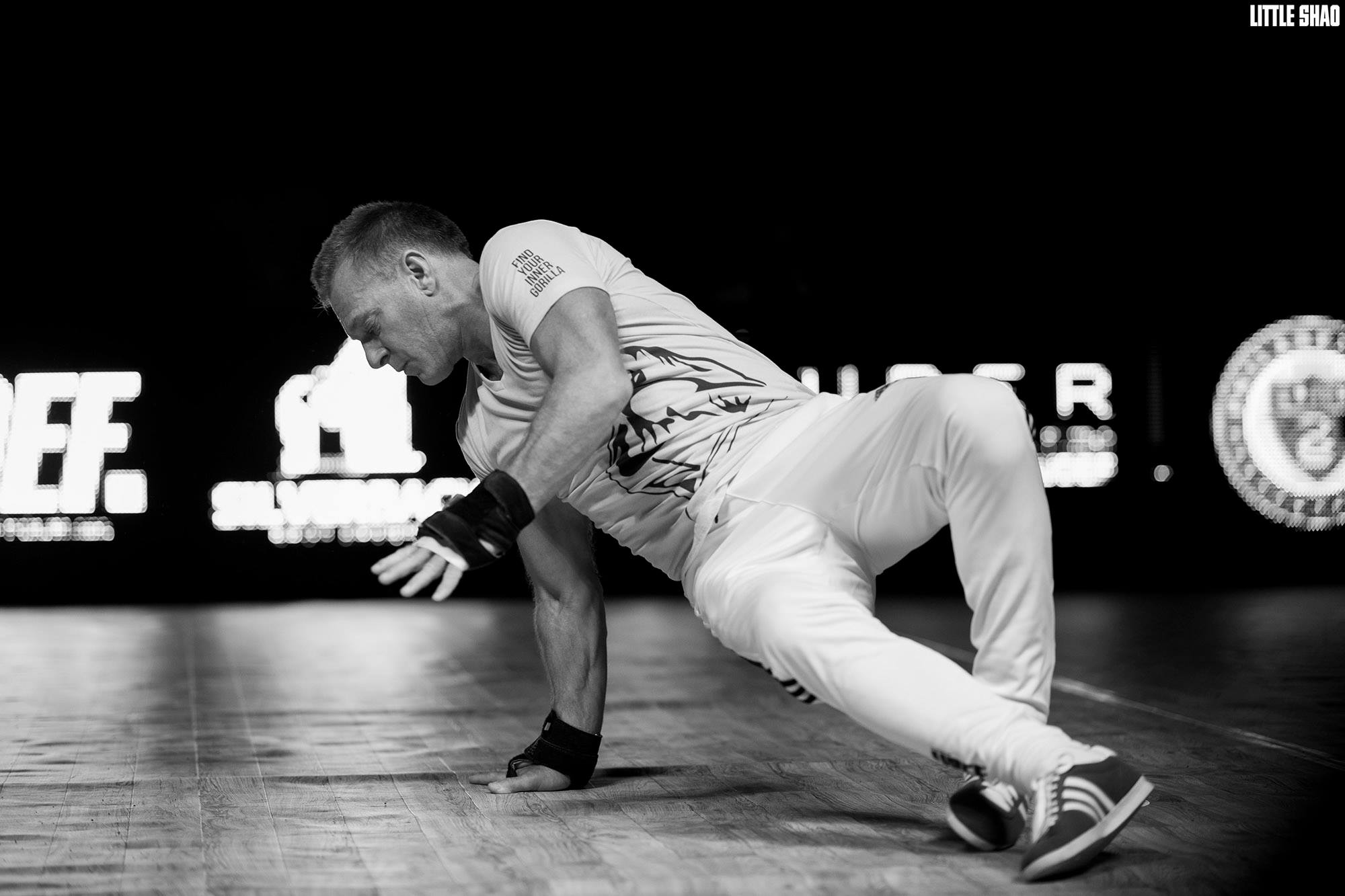
In 2018, nearly 850 breakers from 50 countries came to Philadelphia's 2300 Arena for the fifth edition. The numbers describe a meeting place as much as a tournament: international dancers, judges, DJs, organizers, and spectators assembled around a shared floor.
Paris, with a caution attached
Graham was surprised when the Olympic movement entered the picture. In December 2016, he read that breaking would join the Youth Olympic Games. Buenos Aires hosted its debut in 2018. Paris followed with breaking's appearance at the 2024 Olympic Games.
That progression offered an audience far beyond the usual battle crowd. It also raised a question about what the audience was seeing. Breaking carries the music, history, and social life of hip-hop alongside its competition. A scoring system can describe a contest without containing the whole culture.
“The competitive piece is a part of it, and it isn’t central to everything breaking is about.”Steve Graham, speaking ahead of Paris 2024
Graham cautioned that people welcomed attention while wanting protection from exploitation. His role was to support the scene, which had its own participants and authorities. The distinction matters whenever a community attracts outside money: visibility brings opportunities and a fresh argument about who gets to shape them.
He traveled to Paris as a sponsor of the U.S. team. Victor Montalvo took bronze. Graham admired the event's staging and music, and hoped the Olympic attention would help breaking secure future appearances. Four decades after discovering the Roxy, he was watching a dance he had learned enter a very different kind of arena.
A place to practice in winter
Another Graham-backed project has a much smaller playing surface and a younger audience. In 2018, he and coach Scott Spangler co-founded The SWAG, a no-cost soccer training program. By summer 2025, it served more than 2,000 young athletes in Philadelphia communities, including African-American and immigrant families.
St. Joseph's Prep became an indoor home for the program in 2022. The detail is beautifully ordinary. Philadelphia has winters. Children learning soccer need somewhere accessible to keep practicing when an outdoor pitch becomes less inviting. A relationship with a school supplied space and continuity.
Professional coaching, a room, and a reliable schedule are modest words for something substantial. They make participation possible. The soccer project gives Graham's philanthropy a local address in people's weekly lives, alongside the international scale of his support for breaking.
The next generation gets a stake
Inside Graham Partners, the question of continuity took another form in July 2025. PACT Capital Partners made a passive, non-voting minority investment in the firm. The arrangement supplied new balance-sheet capital and supported a plan initially extending economic participation and ownership opportunities to roughly 30 team members.
Graham described the intention as a program spanning generations. The firm introduced a management committee and Centers of Excellence to organize expertise across functions. These arrangements concern how a business retains knowledge and gives the people doing the work a growing stake in it.
The firm's January 2026 review recorded its highest capital deployment to date and the development of Graham Genesis, a complementary strategy. Graham continues as senior managing partner, CEO, and chairman. The work now includes preparing an organization with decades behind it for the people who will carry it forward.
His story began with a young banker asking somebody to show him a move. It has since accumulated funds, stages, coaching sessions, and ownership arrangements. The recurring practical question is simple enough: once people have somewhere to start, what will help them return tomorrow?