She wanted a grandmother to teach her dumplings. She couldn't find one. So she built the company that would.
CO-FOUNDER & CO-CEO / TRAVELING SPOON / SAN FRANCISCO
Stephanie Lawrence runs a company whose entire product is a chair you didn't know was empty - in a home you were never invited to, in a country where you don't speak the language, at a table set with more food than the family usually eats in a week. That is the strange, specific thing Traveling Spoon sells: not a tour, not a restaurant reservation, but a seat.
As co-founder and co-CEO, Lawrence has spent more than a decade building the marketplace that vets home cooks, pairs them with travelers, and arranges private meals, cooking classes, and market tours across dozens of countries. The hosts are, overwhelmingly, women - about 95% of them. The recipes are the kind that rarely get written down. The premise is almost absurdly simple and was, for years, almost impossible to book.
She would know. She tried.
The bucket-list item was small and specific: learn to make real dumplings from a Chinese grandmother. Lawrence spent a year in China chasing it. She researched, she asked, she came up empty. There was no website, no booking, no grandmother. The thing she wanted most from travel - to be let into someone's kitchen - was the one thing no one was selling.
Then she landed at the Haas School of Business in 2011 and met Aashi Vel, who had stood outside a window in Mexico watching a woman press homemade tortillas, wishing she could go in. Two people, two countries, the same locked door. They decided to build the key.
They were business school students, so they did the business school thing: they tested it. They emailed classmates heading to India and offered to set up home-cooked meals. Within the first hour, the trial was oversubscribed. Demand wasn't the question. Trust was.
So they built the trust into the product. Every host is interviewed, every home is visited, every cook is taste-tested before a single traveler is sent their way. No taste, no table. It is slower than software and harder to scale, and it is the whole reason the thing works.
She had a year, a craving, and no way to book it. The gap was the business.
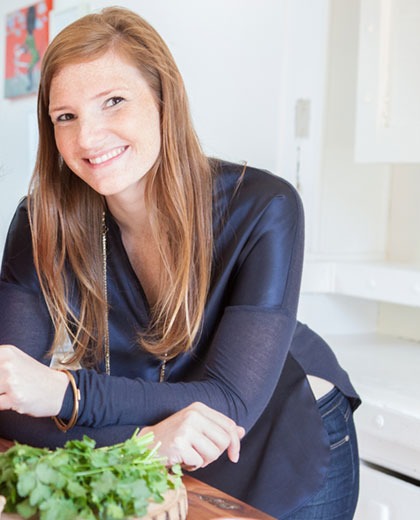
I feel richer and kinder and more inspired by the things I've seen and done while traveling.
- Stephanie Lawrence
A private, home-cooked dinner with a local family. Less transaction, more invitation. The food is the reason; the people are the point.
Cooking classes for the dishes you can't get from a cookbook - the ones passed hand to hand, that might not survive another generation otherwise.
Market walks to source the ingredients first - the chilies, the herbs, the things you'd never spot, picked by someone who's shopped that stall for years.
Lawrence and Aashi Vel cross paths at UC Berkeley's Haas School of Business and sketch out Traveling Spoon. A December pilot follows.
The earliest paying travelers sit down at their first tables in January.
The beta site launches in July. The company takes the People's Choice award at the Women 2.0 conference in Las Vegas.
Funding arrives from Erik Blachford, former CEO of Expedia, and The Chennai Angels.
Expansion into the Philippines and across 12 cities in India.
The map reaches roughly 60-65 countries, from Southeast Asia to Mexico, Turkey, China and Japan.
Lawrence graduated cum laude from Dartmouth and earned her MBA with honors from UC Berkeley's Haas School. But the resume line that matters most might be the years she spent with Alice Waters and the Chez Panisse Foundation, and at Google.org, where food and doing-good-with-it were already wired together.
That wiring shows in the company's quiet second mission: income for women in local economies, and a stubborn effort to keep family recipes from disappearing. The meal is the product. The preservation is the purpose.
In Kathmandu, Lawrence was hosted by a Nepalese family in a two-room home in Patan. They didn't share a language. They shared a feast - more food than the household would normally eat in a week - and then they handed her their children to play with and the run of their small home.
That is the experience she has spent a decade trying to make bookable for everyone else. Not a five-star dining room. A two-room home where the welcome outpaced the square footage. If you want to understand why Traveling Spoon vets with taste tests instead of star ratings, start there.
It tracks with how she talks about travel itself - as something that makes a person "richer and kinder," and that has the power, in her words, to "make the world a smaller, better place." Big claims. She backs them with dinner.
Australia. Too many M&Ms, sick on the plane. The travel bug survived the turbulence.
Soup dumplings (xiao long bao) in Beijing. Cool yogurt-and-eggplant dishes in Istanbul. The menu, memorized.
A self-declared cheese lover, which is the most reasonable thing on this entire page.
Favorite hotel: Manka's Inverness Lodge near Point Reyes Station, California. Even the homebody picks are rustic.
The very first demand test sold out faster than they could finish reading the replies.
Travel has the power to make the world a smaller, better place.
- The premise, in nine words
Sources: Wikipedia, Traveling Spoon, AFAR, Women 2.0, UC Berkeley Haas Newsroom, Crunchbase.