A customer signed the contract. Then came the spreadsheet. For Srikrishnan Ganesan, that small change of scenery became a business idea: a software company could spend months earning somebody’s confidence, then put the relationship into a collection of documents that nobody quite controlled. The sale had an owner. The promises had owners. The journey between a purchase and a useful result was considerably more crowded.
Ganesan had seen that journey from inside Freshworks. With his co-founders, he had built messaging software and watched larger customers arrive. Success brought more complicated implementations. Plans existed in internal and external versions. Work disappeared into separate streams. An escalation could be the first reliable indication that everyone had been reading a different map.
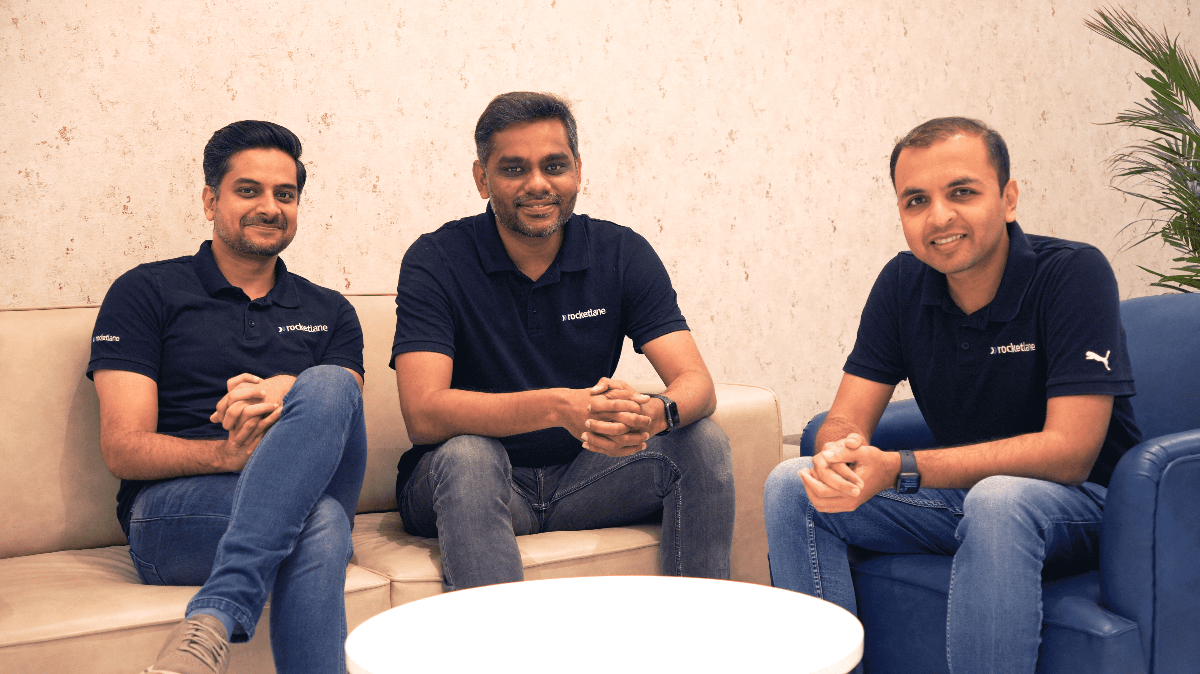
Today he runs Rocketlane, which he co-founded in 2020 with Vignesh Girishankar and Deepak Bala. Its subject sounds like the bit of a meeting when people begin checking their watches: customer onboarding and professional services. His wager is that this overlooked stretch of work determines whether the customer ever receives what the sales conversation promised.
The programmer goes to business school
Ganesan’s public introduction to himself begins in Chennai, where he says he fell in love with programming in sixth grade. He studied computer science and engineering at Sri Venkateswara College of Engineering, graduating in 2005, then attended the Indian Institute of Management Bangalore from 2005 to 2007. The combination would become useful: knowing how software gets made, and learning how a business gets built around it.
His early career took him through product roles at Verizon, Rediff.com and Jigsee. At Verizon he worked on the FiOS television service. These were consumer products, a different starting point from the business software he would later sell. At Jigsee, where he became product head, he also experienced a smaller company before setting out with friends to start his own.
Konotor began in 2012. In Ganesan’s telling, the team first entertained the ambition of taking on WhatsApp, then found a more practical opening: supplying messaging inside other companies’ applications. Customers included Swiggy, Zomato and BigBasket. It was an education in finding a market where the same underlying ability could become something people would buy.
Freshdesk, later renamed Freshworks, acquired Konotor in 2015. Ganesan stayed through 2019. The product’s subsequent life as Freshchat gave the founders experience of building within a growing software business, with a larger market and the demands that came with it. They would eventually leave with both an appetite for another company and a list of frustrations worth investigating.
A second company, with homework
There is a useful wrinkle in his account of starting again. The desire to create another business came before the final choice of problem. Freshworks had shown him what a company with momentum could do for the people inside it. He wanted to create more of those opportunities. Customer onboarding emerged from examining what had worked poorly in the founders’ own experience.
That distinction gives the story a less tidy, more credible shape. A founder need not receive one dazzling idea at a convenient hour. Sometimes he knows the kind of work he wants to do, knows the people he wants beside him, and then has to establish which problem deserves their next several years.
Rocketlane’s first year involved substantial prospect research. In a 2026 account of the company’s beginnings, Ganesan described interviews with more than 170 prospects. The team investigated a particularly awkward gap: revenue a company had contracted for, and revenue attached to customers who were actually live. A delayed implementation could leave the commercial celebration running ahead of the useful work.
The first code arrived in late May 2020. The founders chose to assemble a fairly complete experience before a public launch, including documents, reusable project templates and ways to control what customers could see. Around 15 customers used the private beta. The product launched in June 2021. The waiting had a purpose: a tool intended to bring work together needed enough of the pieces to make the promise convincing.
Rocketlane began by concentrating on the work in the middle. Conceptual diagram, not a performance measure.
The founder who could oversell his own product
Ganesan has a good story about being a less helpful founder than he intended. At his earlier startup, a sales lead could get a prospect interested in one feature. Ganesan would enter the conversation and explain everything else the product could do. Additional capabilities brought additional stakeholders. A promising deal became a more difficult decision.
He learned to let the salesperson follow the customer’s interest. It is an unusually recognizable mistake: the builder wants the whole creation appreciated, while the buyer wants one problem solved. His account is funny because the temptation survives almost any amount of experience. There is always another feature waiting for its turn to speak.
He also recalls a customer’s cat appearing on a video call. The team later sent an accessory for the pet. The gesture belongs to the same practical view of customer experience: notice something specific, remember it, and act on it. Software can organize a relationship; attention still supplies much of its texture.
Eighteen million dollars, and a rap
In January 2022, Rocketlane announced an $18 million Series A led by 8VC, with Nexus Venture Partners, Matrix Partners India and angel investor Gokul Rajaram participating. The announcement also arrived as a rap video. One can imagine the standard funding-release vocabulary feeling slightly underdressed.
A team member who made rap videos had a chance to try one for the company. Ganesan liked the first lyrics. The production stayed largely in-house; he later put its budget at $200. He was candid about the result: “it looks like a masterstroke but could have gone either way.” The admission is more enjoyable than a retrospective theory of inevitable marketing genius.
The contrast suited a company selling greater professionalism. The product could take a customer’s project seriously while its makers had some fun announcing their own progress. The rap thanked customers, employees and investors. A funding announcement briefly became something a person might share for reasons other than congratulating the founders.
Alongside that burst of attention, Rocketlane was building Preflight, a community for onboarding, implementation and customer success professionals. By the Series A announcement, the company said it had reached more than 1,200 people globally through it. These were the people doing the work the product addressed, with experiences to exchange even before they had a reason to purchase software.
“Freshworks is almost like a SaaS school for us.”
Ganesan, on learning to build a SaaS business
The company grows beyond its first description
The scope widened. Rocketlane moved from an initial emphasis on onboarding into professional services automation, bringing project delivery together with staffing, time tracking and project finances. A $24 million Series B in June 2024 supported further product development and its AI plans. The customer’s first project had opened a door onto a larger set of operational problems.
Ganesan’s 2025 conversation with SaaS Fuel described onboarding as a “second sale.” It is a useful phrase because the person signing a contract and the people implementing a system may be facing different pressures. A purchase creates expectations. The implementation has to earn confidence again, now through progress that the customer can see.
By March 2026, Rocketlane announced a $60 million Series C led by Insight Partners, bringing disclosed total funding to $105 million. The company reported that revenue had more than doubled over the previous year. It also introduced Nitro, its agentic execution platform for professional services teams, moving further into software intended to carry out delivery work.
Series C led by Insight Partners.
$105 million in total funding announced at the round.
Atlassian Ventures followed with a strategic investment announced in July 2026. Rocketlane then reported more than 750 customer companies globally. These are company-reported milestones, and they describe the scale of the business rather than a personal fortune. They also show how far the founders had travelled from deciding which implementation problems deserved a product.
Who answers when the agent finishes?
Ganesan’s recent thinking returns to the people standing between software and results. In August 2026 he discussed forward deployed engineers: technically capable people who work closely with customers to get complex systems into useful operation. Rocketlane had recently hired its first leader for that function. His interest follows naturally from years spent worrying about the handover after a sale.
He argues that identifying business value, earning trust and navigating an organization remain demanding human work. He is skeptical of a fully autonomous substitute for that responsibility. A customer buying an expensive outcome, in his view, still wants someone answerable for delivering it. Better tools can help; somebody must understand which result matters.
There is a quieter ambition alongside the financing and products. Ganesan has spoken about wanting to create opportunities for his team to learn and grow, drawing on what he experienced at Freshworks. He has also credited ideas arriving from different corners of an organization. The employee with a rap habit was given a chance to make something. The founder with too many features learned to listen.
His career keeps circling the same practical question: what helps another person move forward? First it was messaging inside an app. Then it was getting a customer through implementation. Now it includes deciding what AI should execute and where a person should remain responsible. The spreadsheet was a small beginning. The obligation behind it has proved rather durable.
Follow the next chapter
Read Ganesan’s writing, visit Rocketlane, or follow him on LinkedIn and X.