Imagine a supermarket basket containing apples, toothpaste and a bottle of shampoo. The shopper has a health benefit card. The cashier has a queue. Somewhere between the barcode scanner and the payment terminal, a deceptively difficult question must be answered: which of these things can this particular money buy?
That is Solutran’s territory. Its work belongs to the unglamorous end of financial technology, where a successful transaction is supposed to attract no attention. Yet the business contains an interesting proposition: a health benefit can follow a person into an ordinary shop, carrying its rules with it.
- Solutran connects funded benefits to eligible purchases.
- Health plans and other sponsors set the rules; members spend the allowance.
- Its S3 network checks products individually at checkout.
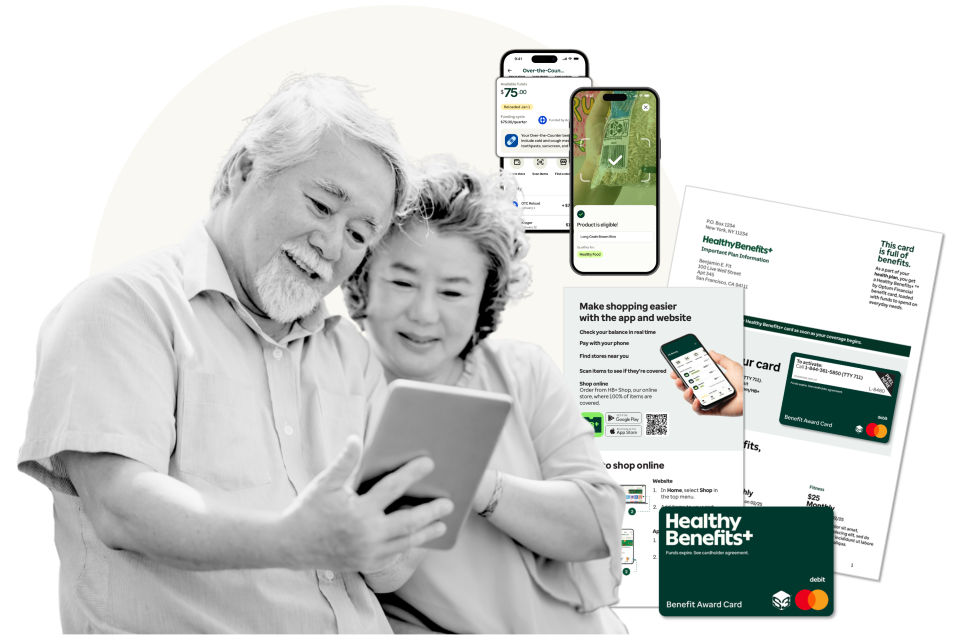
- Optum now presents the supplemental-benefit business as Healthy Benefits+.
A barcode with a second job
An ordinary payment tells a retailer that money can move. A directed-spend payment must also decide whether the purchase satisfies a purpose. A plan might fund eligible groceries or over-the-counter products. That does not mean everything sold by a grocer or pharmacy qualifies. The shop’s identity is a rather poor description of its shelves.
Solutran’s S3 infrastructure works at the level of the product. It connects benefit rules with the items being purchased and validates transactions in real time. For a mixed basket, the question is about each item, rather than a blanket permission for the entire store. In our imagined shopping trip, the answer would depend on the member’s actual plan and its approved products.
The distinction explains much of the company’s position in the market. It serves the space between an institution that promises help and a merchant that supplies something useful. The shopper sees a card, an app or a website. The institution needs controls and transaction records. The retailer wants the payment to fit an existing checkout. Three parties, three definitions of simplicity.

Before the app, there were checks
Solutran dates its history to 1982. Its earlier services included depository processing, check conversion, controlled disbursement and returned-check management. These are jobs for people who enjoy finding the missing penny. They also demand the operational discipline that a payment system needs when the money has somewhere important to be.
The company says its WIC processing support began in 1989. WIC, the nutrition program for women, infants and children, makes the connection between money and eligible food unusually concrete. Processing a payment means translating a program’s restrictions into something a family and a retailer can actually use.
In June 2017, Solutran announced that New Mexico, Cherokee Nation and Pueblo of Isleta had begun using its electronic benefits transfer processing after operating in-house technology. Its announcement supplied a useful glimpse of the preceding year: more than 17 million EBT transactions, representing nearly $500 million in food purchases at more than 2,500 retailers. Those are historical figures, a measure of the machinery before today’s Healthy Benefits+ offering.
“It is a rewarding experience to give these programs a solution that fits their needs.”Barry Nordstrand, then Solutran CEO · June 2017
The supermarket is part of the product
A benefit can be generous and inconvenient simultaneously. If redeeming it requires a special trip, the allowance comes with an unofficial transport charge. If the chosen shop does not accept it, the money becomes an exercise in patience. A payments company therefore has to build distribution as well as software.
In April 2018, Solutran announced an agreement for Walmart and Sam’s Club to join its S3 rewards network, with acceptance planned for the second half of that year. Its platform could deliver rewards through digital access, cards or both. It also described combining funding from health plans, employers and product manufacturers. The retail network made those arrangements useful in places people already shopped.
UCare supplied another example in February 2019, expanding Healthy Savings to more than 380,000 Medicare and Medicaid members. Offers were preloaded, then redeemed by scanning a card or app. No clipping or downloading coupons. The announcement said members had already saved nearly $2.5 million on healthier food and beverages. Its advertised savings of up to $200 per month were an offer ceiling, not a guaranteed payment to every member.
Conceptual flow. Coverage follows the member’s program.
Forty dollars, and the work before spending it
A North Carolina produce-prescription project run by Reinvestment Partners shows how this kind of technology can enter a health intervention. Its 2019 proposal described enrolling eligible patients through a portal and activating a Solutran Healthy Savings card with $40 for fruits and vegetables. Another $40 would arrive each month, with that month’s credit expiring if unused.
The project’s grant award was $507,340. That was funding for the broader intervention, not a price tag for Solutran’s software. Later reporting described delivery through Food Lion customer loyalty cards, so the initial design should not be mistaken for an unchanged account of implementation.
The early bottleneck was enrollment: project reports said COVID-19 slowed participation. Later, adding Atrium Health enabled outreach to a targeted group using healthcare utilization and census tracts. The lesson is practical. Making money spendable does not automatically get people enrolled. A benefits project has at least two queues to clear, and only one is at the register.
The cashier should not need a seminar
A BestRx announcement offers a more modest, revealing view of the product. Its BestPOS integration with Solutran and S3 automated eligible over-the-counter benefit redemption, deducting funds in real time through the pharmacy’s existing system. BestRx president Hemal Desai described replacing a “slow, manual redemption process.”
This is the sort of improvement that rarely makes a dramatic photograph. A familiar workflow loses a cumbersome step. For a pharmacy, that matters during a busy shift. For a member, it means the funded benefit has a better chance of behaving like an ordinary purchase. There is elegance in sparing everyone a training lecture.
A familiar card with institutional backing
Solutran is now inside Optum and UnitedHealth Group. A June 2021 insurer filing already listed it as wholly owned by Optum Financial. The current Optum website calls Healthy Benefits+ “formerly Solutran.” Its offering covers configurable supplemental benefits, with potential categories extending from food and OTC items to utilities, transportation and fitness.
The commercial customer is generally the sponsor: a health plan, government agency or another organization administering a program. The member is the user. This is a business of processing and administration rather than a consumer subscription that manufactures an allowance. Downloading the app does not qualify someone for benefits. UCare’s 2019 release described its mobile app as available at no cost; the benefit itself depended on sponsorship.
InComm Healthcare offers a credible alternative through its OTC Network and Dual Network Benefit Card, also combining benefit categories and retail acceptance. Solutran’s case rests on its particular S3 infrastructure, product-level controls and integration into Optum. A sensible buyer would examine the relevant merchant coverage and rules, rather than treat a single-card design as exclusive to one vendor.
Fourteen million reasons to maintain the list
Optum’s current directed-spend overview describes more than 14.4 million product codes and over 70,000 retail locations in its S3 network. Its accompanying video says the organization supports over 18 million members. These figures belong to the present Optum offering; they should not be read as a standalone Solutran headcount or a historical customer tally.
Keeping that list current is part of the work. Optum describes AI-assisted classification of new product data, with lower-confidence cases sent to experts. It says the model automatically tags over 90% of incoming items. That measures classification coverage, not a promise that every checkout is error-free. The judgment still has to fit a member’s benefit.
For anyone copying the approach, the useful starting point is a mixed basket. Test the covered item, the uncovered item, the balance and the merchant connection together. Access depends on an eligible member, funded benefits and a participating shop. Accurate payment cannot rescue an allowance that excludes the needed purchase. Solutran’s story makes that ordinary moment worth watching: the point where an institutional promise finally becomes something someone can take home.