The Profile / Builder
Snow Huo
She was laughed at for not speaking English at 17. Now she builds the machine that means no one has to be.
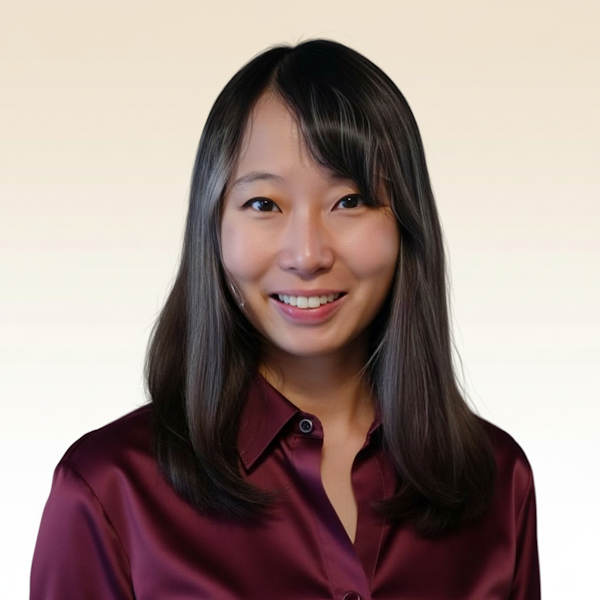
Snow Huo, CEO. Translating the untranslatable.
She was laughed at for not speaking English at 17. Now she builds the machine that means no one has to be.
Snow Huo runs a company that does something deceptively simple: it lets two people who share no common language talk to each other, out loud, almost in real time. The company is called Langfinity. Until late 2024 it was called Byrdhouse. Either way, the job is the same - dissolve the language barrier, one meeting at a time.
Langfinity is an AI interpreter. Point it at a video call, a sales pitch, a factory-floor conversation, and it strings together three separate machine processes - speech recognition, machine translation, and speech synthesis - so that what you say in English comes out in Mandarin, or Spanish, or one of more than a hundred other languages, while you are still in the room. Huo and her co-founder and CTO, Jacob Greenway, built it after years on multilingual teams watching brilliant people get flattened into silence simply because the meeting was happening in a language that was not their first.
Huo leads it as co-founder and CEO, out of San Francisco. The pitch she gives customers is blunt and unromantic: "This is a must-have solution. Their business won't function without it." She is not selling a novelty. She is selling the removal of a tax that multilingual companies have quietly paid forever.
What makes her credible on the subject is that she has stood on every side of it. She arrived in the United States at seventeen and got teased in high school for not being able to speak English. Years later she worked as a remote Chinese interpreter for the California Department of Public Health, where she watched up close how expensive and logistically clumsy traditional human interpretation can be - the scheduling, the waiting, the cost per minute. The founder, the interpreter, and the kid who could not find the words are the same person.
Around four seconds is the point where you can have a good experience.
That four-second figure is not marketing. It is the kind of number a person only earns by sitting inside the problem. Huo's team discovered something counterintuitive while building: people will forgive a longer delay on audio than they ever will on text. A subtitle that lags feels broken. A spoken voice that arrives a beat late feels like a human interpreter taking a breath. So they tuned the product around that human tolerance, chasing sub-300-millisecond response for the cases that demand it and letting the rest breathe.
Before Langfinity ever sold a seat, the team used it on themselves. Every internal standup, every external call - run through their own product, in different languages, so the bugs surfaced on their own faces first. It is the founder's oldest trick and still the best one: be your own most annoyed customer.
The road into this was not a straight line through computer science. Huo studied music and international relations at Mount Holyoke College, with a detour into music theory and composition in Montpellier, France. She picked up the engineering later, including through Harvard's CS50. Her first brush with the working world was on the opening team of Shanghai Disneyland, learning how a place gets built to delight people who arrive speaking dozens of languages. Then came product roles at Groupon and at the food-delivery startup Chowbus, where she ran consumer product. In 2021 she went through On Deck's founder fellowship. By 2022 she had her own company.
You can hear the composer in how she talks about the product. Translation, done well, is not word-for-word substitution; it is preserving nuance, tone, the cultural music underneath the sentence. Langfinity's whole thesis is that you can have the speed of a machine without surrendering that music - pairing specialized translation engines with large language models, fine-tuned on industry-specific vocabulary so a medical call does not get translated like a marketing email.
The market she is chasing is not the casual tourist with a phrasebook. It is the company whose supply chain runs through three countries and four languages, whose engineers in one city cannot fully hear the customers in another. Manufacturing. Healthcare, where a mistranslation between patient and provider is not an inconvenience but a hazard. Education, where a parent-teacher conversation can decide a child's year. These are the rooms where Langfinity tries to make itself indispensable, embedding so deeply into a customer's workflow that pulling it out would feel like cutting a phone line.
In 2024 she stepped onto the stage at SlatorCon London as CEO of Byrdhouse AI, and the company landed on Slator's list of 50-under-50 language-AI startups - a small, watched corner of the tech world where the people building this stuff all know each other. Investors followed the story too; VEST Her Ventures backed the company, drawn to a founder solving a problem she had personally bled on.
The rebrand from Byrdhouse to Langfinity in late 2024 was more than a new logo. It signaled the move from a clever real-time translation app to an industry-grade platform - the difference between a gadget and infrastructure. The name change is a tell about ambition: not a bird in a house, but language without end.
There is a particular discipline to the way Huo and Greenway approached customers. Rather than chase a wide consumer audience, they went narrow and deep - planting the product inside a handful of manufacturing and international organizations and refusing to leave until they understood the work better than an outsider has any right to. That is how you learn that a sales call and a clinical handoff need different vocabularies, different tolerances, different definitions of "good enough." Generic translation treats every sentence the same. Huo's bet is that the next decade of language AI belongs to whoever respects the differences.
It helps that both founders come to the problem as practitioners rather than tourists. They describe themselves as ex-interpreters and engineers who have shipped software to millions of users, which is a useful pairing: one half of the team has felt the exact pain of standing between two languages in real time, and the other half knows what it takes to make a machine carry that weight without buckling. The empathy and the engineering live in the same building.
I imagined a world where people could instantaneously understand one another regardless of what languages they spoke.
That sentence is the whole company compressed into a wish. It is also the kind of line that sounds like a slogan until you remember it came from a teenager sitting in an American classroom, unable to answer a question she understood perfectly in her head. The distance between knowing something and being able to say it is exactly the distance Langfinity is trying to erase.
Investors heard the same story and leaned in. When VEST Her Ventures explained why it backed the company, it pointed to the alignment between the product and a mission of empowering families and underrepresented communities through technology - the patient who can finally tell a doctor what hurts, the parent who can finally hear what a teacher is recommending. Language access is not a luxury feature in those rooms. It is the difference between being heard and being overlooked.
What lingers about Huo is the refusal to treat translation as a solved or trivial thing. Anyone can paste a sentence into a free tool and get a passable result. Doing it live, out loud, fast enough to feel like conversation, accurate enough to trust with a contract or a diagnosis - that is a different sport entirely. She has spent a decade earning the right to play it, first as the person who needed an interpreter, then as the interpreter, and now as the founder building the thing that might one day make both roles unnecessary.
Joins the opening team of Shanghai Disneyland at The Walt Disney Company.
Product Manager on consumer product at Groupon.
Leads consumer product at the food-delivery startup Chowbus.
Founder Fellow in On Deck's ODF9 cohort - the launchpad into starting her own company.
Co-founds the company with CTO Jacob Greenway and becomes CEO.
Speaks at SlatorCon London; Byrdhouse named to Slator's 50-under-50 Language AI list; rebrands to Langfinity.
Around four seconds for voice to voice is the point where you can have a good experience.
This is a must-have solution. Their business won't function without it.
An all-in-one solution for product development and international sales calls in different languages.