Money earned from newspaper advertisements might seem an unlikely source of funding for a website that lets people advertise for free. Shone Tell made that arrangement work. In 2005, he launched Yad2 as a standalone classifieds site, backed by family money and promoted with television advertising. The people watching the commercials were being offered a rather pleasant bargain: keep the fee, place the ad, find a buyer.
For the newspaper trade, the invitation was less pleasant. Classified advertisements had long been a dependable reason to buy a paper and a dependable source of money for its publisher. Tell knew that world from the inside. His family had helped build local newspapers in northern Israel. He was taking a familiar commercial need and changing where, and on what terms, people could meet it.
There is a useful family resemblance between the old business and the new one. Both depended on persuading someone with something to sell that the right audience was waiting nearby. The uncomfortable part was deciding which business deserved the next investment.
First, sell the family business
Tell's working life began in the family advertising agency, Kesher Yashir, after his military service in 1991. His father, Shlomo Tell, had established the business; his brother Avi worked on the creative side. Shone developed the commercial side of a career that would take him through technology advertising, property advertising and eventually internet businesses.
Alongside work, he studied communications and business administration through the University of Haifa's external studies unit. The brothers also expanded into Prague with an advertising operation called Prague DC. Their experience crossed borders before Yad2 became a familiar address on Israeli screens.
In 2005, the brothers sold the advertising agency to Bauman Bar Rivnay. That transaction tends to disappear behind the later Yad2 deals, although it helps explain how the next chapter became possible. A founder needs time as well as money. Running an agency and building a consumer website both make claims on the same finite working day.
The internet venture already had a family history. Yad2 had existed as a small section within the Kolyom website, part of the family's Coral Tell business. The 2005 launch gave it a separate identity and a concentrated push. Tell's contribution was to turn an existing foothold into a business he was prepared to back.
The expensive business of giving something away
Tell's mother, Bianca, and his father-in-law, businessman Shimon Jacobson, helped finance the launch. The family connection matters: this was money earned in an older commercial world being committed to a different way of reaching customers. A website offering free advertisements still had employees to pay and an audience to acquire.
Television made that contradiction visible. Tell spent on a broad advertising campaign while asking ordinary users to pay nothing for placing their listings. Observers wondered how the arithmetic would work. The cost arrived immediately; the commercial return depended on enough people adopting a new habit.
By the end of 2009, Yad2 had recorded a reported net profit of NIS 9.5 million. That figure gave the free-listing proposition a concrete answer. There was an advertising business around the activity of people buying and selling, even when every participant was not paying an entry fee.
The distinction is easy to appreciate with an apartment. An individual may need to advertise once. An estate agent needs potential customers repeatedly. Put both in the same useful place and they can have different reasons to be there, with different willingness to pay.
A competitor buys the advertising
By July 2007, Tell had a newspaper-backed rival to discuss: winwin, from Yedioth Ahronoth. His public reaction carried a certain advertising-agency cheek. Another large company promoting online classifieds could help teach consumers to use the category. The competitor's marketing might therefore enlarge the audience available to Yad2.
He also described a practical revenue base: small businesses, including property agents and car dealerships. Banner advertising was less central to his explanation. The customer who needed a continuing flow of enquiries gave the website a business relationship beyond a single household clear-out.
His account of operations was equally specific. Development, creative work and customer service were handled in-house. He emphasized keeping listings current and avoiding duplicates. A classified advertisement has a short useful life after the thing has been sold. Preserving it indefinitely may flatter a counter while irritating everyone who calls.
Tell's examples of what people sold included porcelain ornaments and an eighteenth-century menorah. The assortment supplied its own entertainment. More seriously, it showed how a marketplace could turn a possession someone had stopped noticing into something another person was actively seeking. The website's job was to arrange the introduction.
Before the handshake, several false starts
The eventual sale can make the preceding years look tidier than they were. Newspaper groups and internet companies had explored buying into Yad2 before Walla acquired control. The business was already valuable enough to attract negotiations, yet reaching a completed agreement took longer than attracting interest.
In November 2007, a proposed Nana10 transaction was announced around a NIS 74 million company valuation. It did not become the ownership structure that carried Yad2 forward. The episode is a reminder that an announcement, a negotiated price and a completed sale occupy different places in a founder's diary.
Tiger Global became the consequential partner in 2008, purchasing a 49% stake. Tell retained control. The combination gave the company an international investor without immediately replacing the founder as its controlling operator.
Early in 2009, with the financial crisis changing the mood around transactions, Tell remained publicly confident. He said the business had more than doubled sales and profit since 2007. At that point, the story was already about the performance of an operating company. A recognisable name and an appealing website had become a business whose numbers buyers could examine.
- 2005Standalone Yad2 launch
- 2008Tiger Global buys 49%
- 2010Walla agrees to buy 75%; Tell becomes chairman
- 2013The family's remaining stake is sold
The numbers on the table
In July 2010, Walla announced an agreement to purchase 75% of Coral Tell for NIS 117.5 million, with an option to acquire the rest. Tiger sold its 49%; Tell and the other family-side shareholder sold a further 26%, retaining a combined 25%. The headline percentage described Walla's purchase across sellers.
The operating figures help explain the interest. Yad2's reported 2009 revenue was about NIS 37 million, up 45%, with operating profit of about NIS 15 million. At the announcement, the site was attracting more than 2.5 million monthly users.
Walla and Yad2 had already worked together. Their relationship included a jobs venture and search interfaces appearing within Walla's content. The acquisition extended an existing commercial relationship, giving the participants experience of one another before the larger commitment.
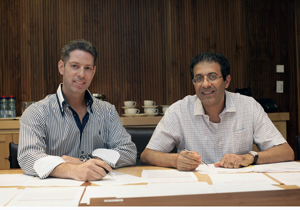
Yad2 was to continue operating independently, with Tell as active chairman for at least three years under the announced arrangement. The deal bought control of a company that already had an audience, income and partnerships. There was plenty on the table besides the signatures.
A founder learns to leave the controls
Tell had described himself as a perfectionist and a centralising manager. He built a management system to follow activity on the website, down to customer-service work and incoming advertisements. His account suggests an operator who found details difficult to leave alone.
Yavin Gil-Mor took over as chief executive in 2010. Tell credited Gil-Mor and Walla's Ilan Yeshua with helping him delegate and make room for other ventures. For someone accustomed to following what was happening across the operation, installing another chief executive was a meaningful change in how work got done.
The successor had his own agenda. Later that year, Gil-Mor discussed expanding the presence of secondhand dealers and broadening the site's commercial activity. That is what succession looks like in practice: the company continues to develop through decisions made by someone else.
Walla acquired the family's remaining stake in 2013. In 2014, it sold Yad2 to Axel Springer Digital Classifieds. Those dates separate Tell's entrepreneurial achievement from the subsequent stewardship of the company. A business can remain closely associated with its founder while accumulating a history that belongs to other managers and owners.
The next question: does the phone work?
Tell later appeared as a co-founder and partner at TestM, a smartphone diagnostic app whose public launch came in September 2017. The setting was familiar: strangers trading used possessions. The difficulty had moved further into the transaction. Finding a seller was one task; establishing the condition of the object was another.
The launch covered iOS and Android. TestM checked areas including the screen, sound, motion, connectivity, hardware and camera, then produced a report that buyers and sellers could share. Its arrival was timed ahead of Apple's next iPhone announcement, when newer devices would send older ones towards the resale market.
“We will eliminate ambiguity”
Shone Tell, describing TestM's aim in 2017
A useful report offered something more specific than a seller's assurances. A phone could look respectable while having a problem a quick visual inspection would miss. The proposal was to give both parties information they could inspect before agreeing on a price.
By 2018, Yad2 was encouraging people trading phones to present and request TestM reports. That connection brought Tell's later venture into the marketplace associated with his earlier one. The sequence is revealing: first assemble an audience for used goods; then address a reason members of that audience might hesitate to complete a purchase.
The classified outlives the clipping
Yad2 kept changing after Tell's departure. Tomy Schoenfeld became chief executive in 2022. In December 2025, Apax agreed to acquire the company from KKR for a reported $950 million. Apax now lists Yad2 as a current investment with a 2026 investment year.
The business spans property, vehicles, jobs and general classifieds. Its professional customers include agents, developers and dealers. Beneath the later ownership changes remains a recognisable arrangement: consumers bring things and intentions; businesses pay to reach them.
For Tell, the interesting continuity runs from newspaper advertisements through Yad2 to the used phone awaiting inspection. Each involves a person trying to establish whether another person's offer deserves attention. The price, the address and the condition change. The need for a useful introduction survives.
A classified is modest prose. A few lines, perhaps a photograph, and an invitation to call. Tell built a business around moving those lines to a place people would visit. His family already knew that small advertisements could matter. He gave them a different home.