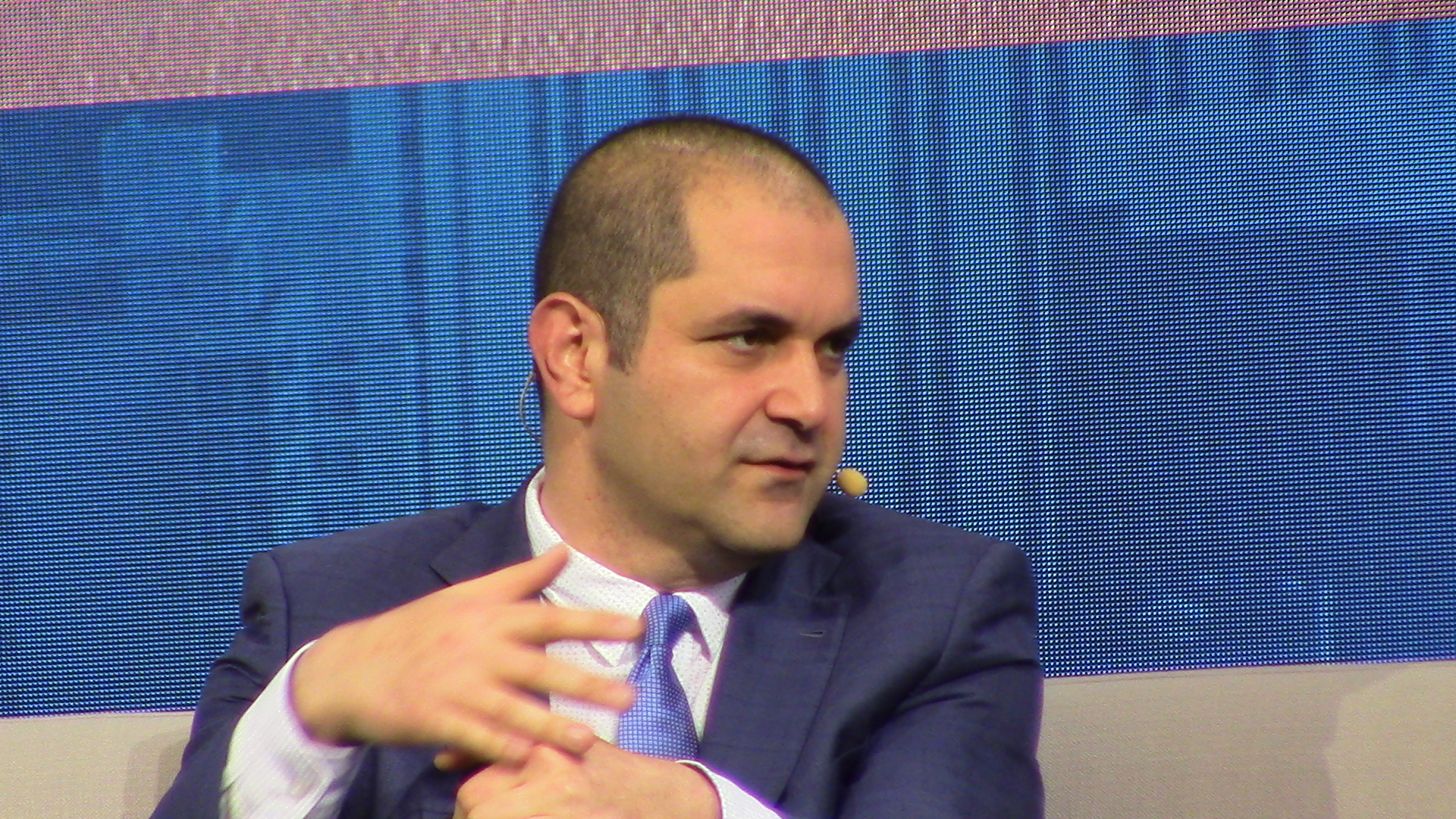
Most venture capitalists spend weeks in due diligence. Shervin Pishevar spends minutes. "I know if I want to invest in a founder within minutes of meeting them," he says. Translation: while you're scheduling the second coffee, he's already written the check.
This isn't recklessness. It's pattern recognition honed over 27 years and 200+ bets. The kind you develop when your parents arrive in America with $35 and your father - who broadcast instructions for escaping Iran and landed on Ayatollah Khomeini's execution list - drives a taxi in Silver Spring, Maryland while your mother, despite advanced degrees, cleans houses.
You learn to read people fast when survival depends on it.
The Biology Major Who Built the Cloud Before It Had a Name
At 23, while studying molecular cellular biology at UC Berkeley (not business, not computer science), Pishevar founded WebOS in 1997. The pitch: replace Windows with a web-based operating system that lives in the cloud.
The problem: this was 1997. The term "cloud computing" wouldn't enter common usage for another decade. Amazon Web Services wouldn't launch until 2006. Google Docs was sci-fi.
My first software company was WebOS, which I started in 1997. It was ten years ahead of its time because I was trying to replace Windows with a web-based operating system that existed in the cloud.
WebOS created the first cross-browser windows-like interface for the internet. Investors squinted. The market shrugged. By 2001, the company dissolved. But Pishevar retained the software, which became HyperOffice - a productivity suite that predated Google Workspace by years.
Being a decade early is indistinguishable from being wrong. Unless you survive long enough to be right.
The $26 Million Bet That Changed Everything
By the time Pishevar joined Menlo Ventures as managing director, he'd learned something crucial: the best investments aren't about technology. They're about regulatory arbitrage.
In 2011, he led Menlo's $26 million Series B investment in a car service app called Uber. Not because the app was sophisticated - it wasn't. Not because ride-sharing was novel - black car services existed. Because Travis Kalanick was willing to fight city hall in every city on Earth.
Pishevar didn't just write the check. He became a board observer. He sat with Kalanick and mapped global expansion. While competitors focused on perfecting one market, Pishevar convinced Uber to blitz the world.
The Regulatory Arbitrage Playbook
Pishevar built Sherpa Capital's entire strategy around a simple insight: the biggest returns come from companies that transform industries by challenging existing regulations. Uber fought taxi commissions. Airbnb fought hotel regulations. The legal battles weren't bugs - they were the entire feature.
By 2013, Pishevar left Menlo to co-found Sherpa Capital with Scott Stanford, formerly co-head of Goldman Sachs' Global Internet Investment Banking division. The fund's portfolio read like a checklist of every regulatory fight in Silicon Valley: Uber, Airbnb, Slack, Robinhood, GoPuff.
Sherpa closed $154 million in 2014. By 2016, $470 million for two new funds. By 2017, nearly $640 million total. Pishevar didn't just raise money - he pioneered Special Purpose Vehicles (SPVs) in venture capital, creating over $200 million in SPVs before most VCs understood the structure.
The Exits That Built the Legend
Dollar Shave Club to Unilever: $1 billion. Postmates to Uber: $2.65 billion. TaskRabbit to IKEA. The pattern wasn't luck. It was Pishevar's ability to spot founders who'd fight through regulatory cement.
He also backed both Dollar Shave Club and Harry's, direct competitors in razor subscriptions. When asked why, he shrugged. Good founders, both of them.
When Elon Musk Tweets, Most People Retweet. Pishevar Built It.
In August 2013, Elon Musk published a white paper challenging anyone to build the Hyperloop - a transportation system that could move people in pods through low-pressure tubes at 700+ mph. Most people filed it under "interesting thought experiment."
Pishevar responded within months. By late 2014, he co-founded Hyperloop One (later Virgin Hyperloop One) with engineers Josh Giegel and Brogan BamBrogan. The goal: turn Musk's napkin sketch into functioning infrastructure.
This is the beginning, and the dawn of a new era of transportation.
Hyperloop One raised over $450 million, built a test track in the Nevada desert, and hit 240 mph in trials. Richard Branson joined as chairman in 2017, rebranding it Virgin Hyperloop One.
Pishevar served as executive chairman until December 2017, when he resigned amid sexual misconduct allegations from multiple women. The same month, he resigned from Sherpa Capital. The allegations derailed his public-facing roles and reshaped his career trajectory.
The Comeback: Quantum Computing, Telly, and Edison Fund
Pishevar didn't disappear. He went quieter, focused, surgical. Through his family office Sofreh Capital and the Edison Fund, he continued backing transformative companies - just without the spotlight.
In 2022, he took D-Wave, a quantum computing pioneer, public through his SPAC DPCM Capital. While tech investors chased AI hype, Pishevar bet on quantum - the technology that could make AI look quaint in a decade.
He co-founded and now chairs Telly, a company reimagining television. Through Edison Labs, he's building a venture studio model that incubates companies rather than just funding them.
The Philosophy: People Are the Best Asset Class
"People are the best asset class," Pishevar says. Not markets. Not sectors. Not trends. People.
This explains why a biology major with no formal business training could outperform professional investors. While MBAs built financial models, Pishevar studied founders. While analysts ran sensitivity analyses, he asked: will this person run through walls?
His track record validates the approach. Uber, Airbnb, Facebook, Slack, Robinhood, Postmates, TaskRabbit, Dollar Shave Club, Warby Parker, Tumblr, Savage X Fenty. Over 200 companies. 93 exits. 73x average returns.
I know if I want to invest in a founder within minutes of meeting them.
Minutes. Not months. The confidence doesn't come from arrogance - it comes from repetition. When you've met thousands of founders and tracked their outcomes across decades, pattern recognition becomes instinct.
The Immigrant Who Champions the American Dream
Pishevar's family arrived with $35. His father drove taxis. His mother cleaned houses. Both held advanced degrees from Iran but started over in America with nothing.
In 2012, the U.S. Government named him an Outstanding American by Choice. In 2015, President Obama appointed him to the J. William Fulbright Foreign Scholarship Board. In 2016, he received the Ellis Island Medal of Honor.
These aren't vanity awards. They're recognition that Pishevar represents what America promises: that talent and drive can overcome any starting condition.
He hasn't forgotten where he came from. On Instagram, he identifies as "tech founder, investor, philanthropist, driver of change, and Iranian American immigrant working to spread American Dream and to restore democracy to Iran." In 2026, he appeared on the All-In Podcast with Prince Reza Pahlavi, leader of Iran's democratic opposition.
What Comes Next
Pishevar is 52. Most venture capitalists at this stage coast on past wins, collect board seats, write smaller checks. Not him.
Through Edison Fund and Sofreh Capital, he's backing the next generation of regulatory arbitrage plays. Through Telly, he's challenging how media works. Through his advocacy, he's fighting for democracy in Iran.
The pattern holds: find the thing everyone says is impossible, find the founder crazy enough to try it, write the check before the meeting ends.
At 23, he tried to build cloud computing before clouds existed. At 37, he bet $26 million on regulated ride-sharing before anyone believed it would work. At 40, he turned Elon's Hyperloop tweet into a real company.
What does a man who's always a decade early bet on now? Quantum computing. New media models. Democracy in authoritarian states.
The same things that made him early on WebOS, Uber, and Hyperloop: he's betting on what should exist, not what does.
The Pishevar Playbook
Study people, not spreadsheets. Decide fast. Bet on regulatory arbitrage. Pioneer new structures (he invented venture SPVs). Average 73x returns. Repeat for 27 years. Oh, and arrive in America with $35 first - it helps with perspective.
His first name, Shervin, means "like a lion" in Persian. The metaphor works: patient when hunting, decisive when striking, uninterested in prey that doesn't challenge him.
Most investors wait for consensus. By the time everyone agrees, Pishevar's already exited.