At the airport, a SIM card is a tiny object capable of ruining a large trip. Leave the plane, switch on your phone, and choose your nuisance: pay for roaming, hunt down a local carrier, or spend the first hour looking for free Wi-Fi. Jing Liu saw the nuisance as an engineering problem. His team’s answer eventually sat in travelers’ bags as a bright orange Skyroam hotspot.
The Shenzhen company behind that work, Shenzhen Sikai Rong Technology, developed the virtual-SIM approach that made the device useful. Instead of asking the traveler to change a plastic card in each country, the service assigned connectivity remotely and connected the device through a local mobile network. The puck was easy to photograph. The real trick was invisible.
- Skyroam began with the cost and inconvenience of international mobile data.
- Its Solis hotspots sold hardware plus flexible data plans across many countries.
- The same virtual-SIM system later moved toward phones and connected devices.
- The lesson: a consumer gadget can demonstrate a business platform.
A phone bill was the first prototype
Liu had previously worked on technology to cut international calling costs. The more stubborn complaint, he found, was data roaming. By 2008 his team had devised a virtual-SIM solution; a Shenzhen operating company was incorporated in 2011. The early product, known in China as Manyoubao, let a traveler turn on a portable Wi-Fi device and connect without shopping for a local SIM. It was a modest promise, which is usually where good technology begins.
Skyroam grew across two geographies at once: Silicon Valley origins and Shenzhen research and development. That division suited the product. It needed both a consumer story that could travel and the patient work of making radios, software, networks and billing cooperate. A hotspot cannot negotiate a carrier agreement on its own. Nor can a clever algorithm rescue an empty battery. Skyroam had to solve the whole stack.
The arithmetic behind the orange shell
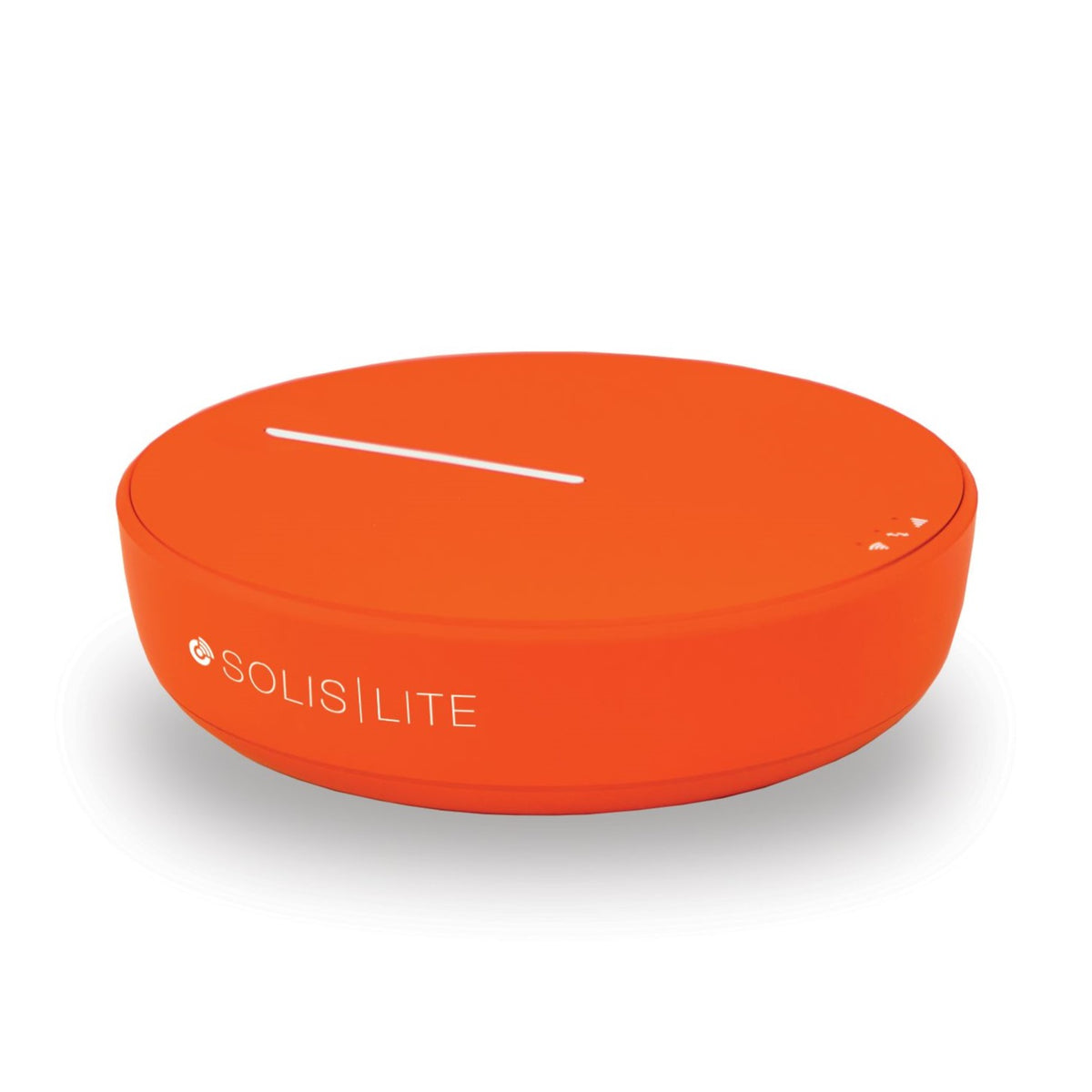
The visible business is straightforward. Buy a Solis hotspot; buy the data you need, by day, by gigabyte, or by subscription. The current Solis Lite listing puts the device at $159.99, with global day passes starting at $9. Those prices are a snapshot, not a promise for every trip: plans vary by destination and usage. For a family carrying several phones and a laptop, the attraction is one portable connection that can serve up to ten devices. For someone who travels once a year with a modern eSIM phone, the arithmetic may look different.
Solis says it serves more than 140 countries through over 300 network partners. The company claims its virtual SIM can assign a suitable local connection without the traveler installing a new profile at each stop. Its own explanation draws a useful line: an eSIM plan is downloaded to a compatible device; SIMO’s virtual SIM is assigned dynamically to hardware built for that system. Both dispense with a removable card, but they are different ways to manage the connection.
This distinction matters because the rivals are not merely other orange pucks. A traveler can use a home carrier’s roaming package, buy a local SIM, download a travel eSIM, or rent a competing hotspot. Skyroam’s case is strongest when several devices need one connection, the itinerary crosses borders, or the user wants a backup network without rebuilding the setup at each stop. It is weaker where local data is cheap, the phone already supports an affordable eSIM, or signal from the available partner networks is poor. No clever SIM arrangement can create a tower where none exists.
The traveler bought Wi-Fi. Skyroam was learning how to sell network choice.The company’s strategic turn
The four-SIM clue
A remarkable clue came from a phone with four SIM slots. Liu described a popular Transsion model in Africa whose buyers used several carrier cards because coverage varied so much from place to place. If the device could select a working network in software, the solution might be larger than a travel accessory. In 2018, Skyroam announced a strategic partnership with Transsion to bring its virtual-SIM technology to smartphones. In Indonesia that year, Wiko launched a Tommy 3 phone using the SIMO app with MediaTek chipset support.
This was the change in scale. A hotspot is a thing the customer remembers to pack. Software inside a phone or other connected device is available before anyone starts packing. The same idea could serve tablets, laptops and equipment that needs mobile data but has no appetite for a tray full of national SIM cards. Skyroam later described a service for manufacturers and carriers alongside its consumer product. Under the SIMO name, it now presents that wider platform as the main proposition.
Not every feature survived the argument
The 2019 Solis X was an almost comic inventory of ambitions: a hotspot, a power bank, a remote camera and a smart assistant in one round case. It could connect up to ten devices, while the battery promised long use between charges. The camera made for an excellent product demonstration. It was harder to explain why someone with a good phone camera needed another one in the Wi-Fi puck. A contemporary hands-on review liked the hotspot function but found the extras less persuasive and judged the simpler Solis Lite a better buy for travelers.
That is a useful failure. The lasting point of the product was connection, not photography. The company did not need every feature to win. It needed travelers to trust that the device would get them online and manufacturers to believe the underlying service could travel beyond the device. Skyroam’s 2019 $20 million Series C2 round was explicitly tied to new work in smartphones and the Internet of Things. An earlier $20 million Series C had helped finance the same wider ambition. Investor money bought time to make the invisible part portable.
There is a method here that a smaller company can copy. Start with a pain people can name and price. Build a concrete product that proves the solution under real conditions. Watch for a customer whose version of the pain is larger than the original one. Then sell the part of the product that solved the problem. It works only if the second market has the same underlying constraint. A global carrier service cannot be willed into existence by a handsome hardware shell; it needs local network access, compatible devices, support and sensible plan economics.
A bigger map than the suitcase
The Skyroam consumer name changed to Solis in 2022, according to the app’s release notes. SIMO is the wider connectivity brand. The company’s current site still sells hotspots, while its account of the business speaks of software for carriers, chip makers and device manufacturers. In 2025 it introduced Solis Go with an emphasis on backup connections during outages and emergencies. The original airport problem has acquired a cousin: keeping something online when the usual network gives up.
The Shenzhen operation is easy to miss when the product is described simply as an American travel gadget. Yet its work sits at the interesting seam between hardware and networks. The orange puck helped people understand the idea. Its second life is less photogenic and more consequential: a device that can choose another route to the internet without asking its owner to change a card.