The future, in Shelly Li’s line of work, eventually needs collecting. It turns up as a laptop someone has replaced, a server an enterprise has retired, a piece of equipment whose original assignment is over. There may still be a buyer, a usable component, another job. The difficulty is finding out which, and making the next step happen.
Li co-founded Sprout, the technology lifecycle company she now leads as CEO. Before that, she wrote science fiction. The combination has a certain literary economy: someone who imagined what might come next ended up working on what happens afterward. Her career connects those interests through a very physical business of equipment, warehouses and people.
The scrap yard came first
Long before the Duke University dorm room in Sprout’s founding story, there was her father’s scrap yard. In a 2013 interview, Li described spending much of her childhood rummaging through it. Her father had moved from commodities trading into exporting scrap metal. Materials had prices, markets and destinations. Their value depended on what someone could do with them.
She had not expected to follow him into the industry. By twenty, however, she was running an e-scrap business called Smart Metals while studying economics and philosophy at Duke. She spoke about changing trade relationships, finding new partners and making recycling available on college campuses. It was already an argument about how to organize a business around unwanted materials.
That early record adds depth to the familiar student-startup story. Li brought experience of an industry as well as a fresh encounter with its problems. A campus could expose a missing service; a scrap yard had supplied years of informal education in what happened once things left their owners.
Writing the future, then collecting it
There was another education running alongside it. As a Duke freshman, Li was already a published science-fiction writer. She had grown up in Omaha after spending her first four years in China. Mandarin came first, followed by English, then stories. She began writing at eight and had completed a novel by eighth grade.
An early attempt to sell that novel stalled. After a pause, she turned to short fiction. An introduction to an editor at Nature helped her place a story called “Replacement.” More publications followed. At Duke, she named the Sanford School of Public Policy as a favorite writing spot. One can appreciate the setting: a future imagined within walking distance of people studying how to govern it.
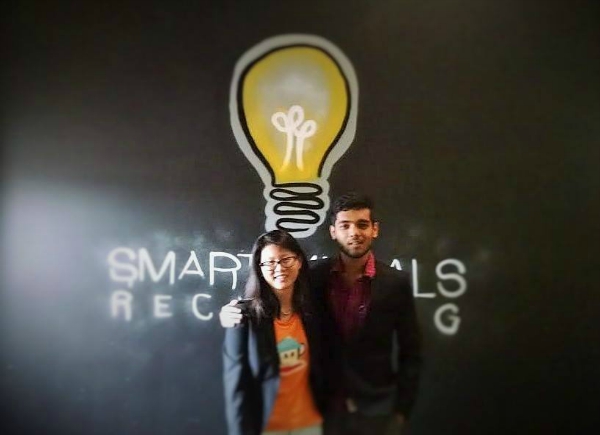
She met Arun Karottu through Duke’s University Scholars Program. He studied computer science; she pursued economics and philosophy. They noticed electronics being discarded as students packed up at the end of the academic year. Phones, laptops, cameras and speakers were leaving campus alongside the ordinary debris of college life.
The observation gave their interests a shared problem. Recoverable materials were being thrown away, and a collection system had to connect the people holding them with someone able to use them. Their venture, Smart Metals Recycling, won Duke’s 2015 Borchardt Prize for best undergraduate startup.
A business needs somewhere to put things
Sprout dates its founding to 2014. The early business moved from buying and brokering recyclable material toward processing it. A partnership with L. Gordon Iron & Metal Company brought warehouses, equipment, transport and access to customers. An idea about waste now had room to accumulate actual objects.
Li took temporary leave from Duke to work full time as CEO. Her earlier experience included summer roles at Morgan Stanley and McKinsey. The recycling venture offered a different set of decisions: how to move material, handle it and build an operation that could keep serving customers.
By 2015, the company was reporting $9 million in annual revenue and 28 full-time employees. Those figures belong to that early period. They show how quickly a college venture had acquired the obligations of an operating business: wages, equipment, deliveries, customers expecting the work to be done.
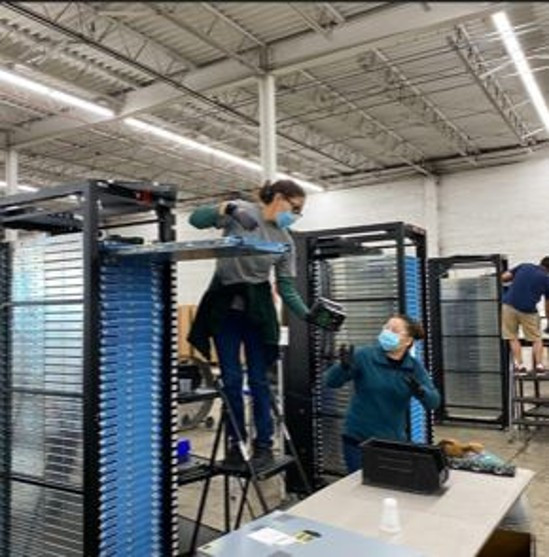
Li was also explaining the labor inside the proposition. Taking electronics apart, she said in 2015, could be “as complex as manufacturing products.” The observation resists the tidy language of recycling. A device arrives as a finished object. Recovering its value requires understanding how it was assembled and what its pieces can still do.
She argued for accountability and transparency across that supply chain. In her telling, commercial value and responsible handling belonged in the same conversation. A market for recovered equipment needed controls, communication and people willing to examine where materials went. The appealing circle on a diagram still required someone to do every part of the work.
Keeping track of the second act
The company later operated as SMR Worldwide, then adopted the Sprout name in 2020. Its growth made the original question more demanding. Once an enterprise has equipment spread across locations, deciding what to keep, resell or recycle becomes a problem of records as well as transport.
Sprout’s SmartERP platform connects individual assets with their lifecycle information. Its offering includes visibility into equipment, chain-of-custody documentation, data-destruction records and recovery outcomes. The point is to let different teams follow the same asset through different decisions. Finance, operations and security each need answers about the thing being moved.
- 01Deploy & useStart with a record.
- 02Assess & secureFind out what remains.
- 03Repair & redeployKeep useful equipment working.
- 04Resell & recoverRoute the remaining value.
Illustrative routes through Sprout’s services; an asset’s path depends on its condition and requirements.
Li’s own observations on hardware management have stressed dependable data, integration and workflow automation. In a reflection on 2022, she described those themes alongside hyperscalers’ adoption of regenerative supply chains. Her attention was on the infrastructure needed to make reuse work repeatedly, across an organization.
Recognize acquired a majority stake in Sprout in December 2024, announcing the deal the following January. New Capital Partners, an investor since 2019, remained a minority shareholder. The investment announcement described more than 200 enterprise customers served in over 40 countries across six continents.
For Li, that partnership brought plans to invest further in the people and business. For Recognize, the attraction included expanding enterprise demand and the hardware changes accompanying generative AI. The firm identified technology investment, adjacent services and acquisitions among its growth priorities. The same business could connect to a much larger spending cycle.
“the highest form of sustainability is reuse”
Shelly Li
Notes made above the clouds
The scale of the company is one part of Li’s public story. Another appears in a small detail after a presentation to chief information officers. Invited by board directors Charles Phillips and David Wasserman, she spoke to leaders responsible for organizations with tens of thousands of employees. On the flight home, she journaled about the conversation.
Her reflections considered how technology, processes and people need to move together. A system introduced without adoption has a problem regardless of its specifications. She also argued for decisions to sit with people who have enough information to assess the opportunities and risks. Those are useful concerns for a founder whose company joins software to physical operations.
In her description of Sprout’s culture, persistence matters. She prizes teammates who bring a “we will thrive” attitude and find ways through problems. The distinction she draws is between collecting capable individuals and building a group that can be counted on together. It is a demanding expectation, expressed in the language of daily work.
Her praise for colleagues makes that expectation concrete. When Caroline Lau moved into the chief of staff role in late 2025, Li highlighted her steadiness and ability to help important work move forward. The job’s remit included coordination, processes and organizational alignment. These are the less photogenic ingredients of expansion, which usually become visible when they are missing.
There is also an employee view of that culture. Sprout’s Great Place To Work profile, updated in May 2026, reported that 90% of employees said it was a great place to work. The number offers one view of the workplace behind Li’s descriptions of persistence and shared commitment. A growing company’s story includes the people who experience its expectations every day.
The machines get newer; the question stays
In 2026, Sprout publicly introduced Velerity Compute, a business unit supplying refurbished AI server infrastructure. The move connects its handling of retired hardware with customers looking for systems they can put to work. Assessment, recertification and configuration sit between those two ends of the market.
A June announcement described a planned Garland, Texas flagship of more than 127,000 square feet, scheduled for the second half of 2026. It outlined space and capabilities for repair, recertification and recovery of AI hardware. The plans made the direction tangible: sophisticated equipment needs an operation capable of diagnosing it and deciding what happens next.
In April 2026, Sprout introduced a new brand and website organized around the entire technology lifecycle. Its positioning extended from deployment to final disposal, with SmartERP connecting the work. That wider remit makes the company responsible for more of the journey Li has spent her career examining. The promise now begins while equipment is entering service, carrying the possibility of reuse into earlier decisions about how it will be managed.
Li appeared on CNBC’s Squawk Box in August to discuss enterprise GPUs and their lifecycle. It is a newer version of a question that has followed her for years. When one owner is finished with equipment, its future still depends on condition, requirements and another potential user.
Away from work, her public biography puts family at the center and lists reading alongside skiing, hiking, surfing and travel. The writer has remained a reader. The founder has remained interested in things with another use ahead of them. Across the scrap yard, the campus and the server room, Li’s work keeps returning to a simple act of attention: looking at what is being discarded long enough to ask where it could go.