By December 2021, Brian White had an unusual Christmas tradition: helping host the L.A. County Holiday Celebration. It was his sixth time. The connection had begun in 2015, with his publicist, Shannon Barr, thinking about something beyond his television credits. White had a background in dance. She thought this particular stage might suit him and connected him with the event.
There is a whole working philosophy tucked inside that small piece of matchmaking. An actor can be described by the roles he has played. He can also be understood through the things he knows how to do, the communities he cares about and the places where he would actually enjoy turning up. Barr had noticed a useful overlap. Preparing for his sixth appearance, White was still explaining how it happened.
Hollywood publicity is often pictured at its most photogenic: a premiere, a backdrop, someone wearing an earpiece and looking as though the fate of civilisation depends on moving three feet to the left. White's story offers a less theatrical picture. Someone paid attention. Someone made an introduction. An opportunity acquired a life beyond its first booking.
Barr is the founder, CEO and owner of Strategic Public Relations in Los Angeles. Her work crosses film, television, music and corporate entertainment. The personal story running through those categories concerns who gets recognised, who gets represented and how long someone is prepared to keep showing up for them.
An eight-year-old with a different ambition
Barr's ambition began unusually early. Looking back in a June 2026 conversation, she described wanting to make stars at eight years old. Even the childhood version of the plan placed her on the other side of the spotlight. The attraction was helping someone else become visible.
Her account of getting started includes a friend named Caprice, an internship and an early job at ICM. It also includes a difficult boss, an unplanned spoken resignation and staying on to find a replacement. It is a wonderfully awkward sequence for a future communications professional: a consequential announcement escaping before the announcement strategy was ready.
There were harder barriers, too. Barr has spoken about racism in the business and losing job opportunities because she wore braids. Those experiences belong alongside the later executive titles. They give a concrete dimension to her work expanding representation: she had encountered an industry's judgments about who should look at home inside it.
The ambition survived the introductions, the assistant work and the discouragement. It eventually became a business under her own name. In 2003, she founded Shannon Barr Public Relations, known as SBPR. Ten years later, the next chapter would take her into Rogers & Cowan.
A department for the people coming next
Barr joined Rogers & Cowan as a vice president in 2013 when it acquired SBPR. By September, she was on a panel at the Pacific Design Center speaking with UCLA student-athletes about entertainment public relations. The group included senior agency leaders and an account coordinator. More than 40 athletes attended, meeting people who worked in a business many knew chiefly through its finished products.
The following year, Barr created an emerging-talent department after noticing a gap in the representation of young, diverse performers. She oversaw it for four years and became a senior vice president in 2015. There is a practical difference between recognising a gap and creating a department to address it: a department gives the observation somewhere to go on Monday morning.
- 2003Founds SBPR
- 2013Joins Rogers & Cowan
- 2014Creates emerging-talent department
- 2015Becomes senior vice president
- 2019Launches Strategic PR
Emerging talent asks a representative to work with an unfinished public picture. The familiar name, the established reputation and the easy shorthand may still be ahead. Publicity at that stage requires decisions about what deserves attention now and what should have time to develop. It also requires a willingness to invest effort before recognition makes the choice look obvious.
Barr's later reflections include representing Damson Idris, Isaiah John and Malcolm Mays as emerging actors. Their names make the department's purpose more tangible than a corporate label can. The work involved individual careers, with different material to discuss and different introductions to make.
The friendship test
When Barr talks about choosing a publicist, she reaches for a comparison most people already understand: “Picking a publicist is like picking a best friend.” That is a fairly demanding job description. It also suggests that an impressive address book cannot settle the question of whether two people will work well together.
She has stressed connection and her own willingness to commit fully to a client. The choice runs in both directions. A performer chooses someone to advise them; the publicist decides whether she believes enough in that performer to take on the responsibility. The relationship has to support conversations that happen before an audience hears anything.
Melissa L. Williams supplied a client's view in a 2021 tribute to Black women who had supported her career. She included Barr alongside studio leadership, casting directors and other executives, crediting their belief in her and their part in her progress. Her account placed the publicist within a network of people who had actively backed her.
White's hosting connection and Williams's tribute describe different kinds of help. One is a specific introduction. The other is sustained belief, remembered publicly by the person receiving it. Together they explain why a publicity career cannot be read entirely from a list of magazine covers. Some of its effects appear in what clients keep doing, and whom they remember thanking.
From Barr's introduction to Brian White's sixth time hosting the L.A. County Holiday Celebration.
The second name on the door
On February 1, 2019, Barr started Strategic Public Relations. After five and a half years at Rogers & Cowan, she returned to independent ownership. The sequence matters: she had already built a firm, worked inside a larger organisation and created a department before setting up this new agency. She was making the choice with experience of both arrangements.
The firm brought together talent publicity and work for entertainment businesses. Its services include media relations, events, social media, brand partnerships and reputation management. That range creates different assignments for the same underlying skill: understanding what a person or organisation has to communicate, and finding a workable way to communicate it.
Her professional history spans actors such as Jeffrey Wright and Brenda Song, musicians including Eve and Tyga, and the Rolling Loud festival. Those are distinct kinds of public presence. A festival involves an event and its audience; an actor's publicity follows a career across projects. The useful common thread is Barr's experience moving between them.
There is also the unglamorous machinery. A publicity-assistant job description she posted calls for calendars, itineraries, fact sheets, press clippings, status reports and research. It is a pleasing antidote to the velvet-rope view of the profession. Someone still has to know where everyone is supposed to be, and which version of the fact sheet is current.
When the room itself needed changing
In May 2021, Barr applied the relationships of publicity to a dispute about the Hollywood Foreign Press Association and the Golden Globes. The association had approved a reform plan amid scrutiny of its membership. Barr wanted a coalition of publicists to press for more substantial change and to involve the people they represented.
Her email proposed asking clients to post their views and support the #CHANGEisGOLDEN campaign. It also raised the possibility of clients staying away from the 2022 ceremony. She called those clients “OUR CLIENTS!” in capitals. The typography conveyed a certain impatience with leaving the industry's most visible people out of the conversation.
The proposal turned on a very plain piece of awards-show arithmetic. A ceremony needs people willing to attend it. Publicists help organise access to those people. Barr was urging colleagues to use that relationship collectively, with clients who felt comfortable participating. Her message was a proposal for pressure, rather than a claim that the reform argument had been settled.
The episode adds another dimension to her emerging-talent work. Representation involves getting people into professional rooms; it can also involve challenging the conditions inside them. Here, Barr was asking the people who arranged appearances to consider the force of an absence.
A ceremony needs people willing to attend it.The leverage behind an invitation
Still thinking in careers
By June 2026, Barr was discussing more than two decades of entertainment publicity on NAACP+'s Inside the Industry. The conversation returned to beginnings, choosing clients, the price of representation and the patience involved in building a career. Her original interest in making stars had acquired the detail of someone who had spent years doing the daily work.
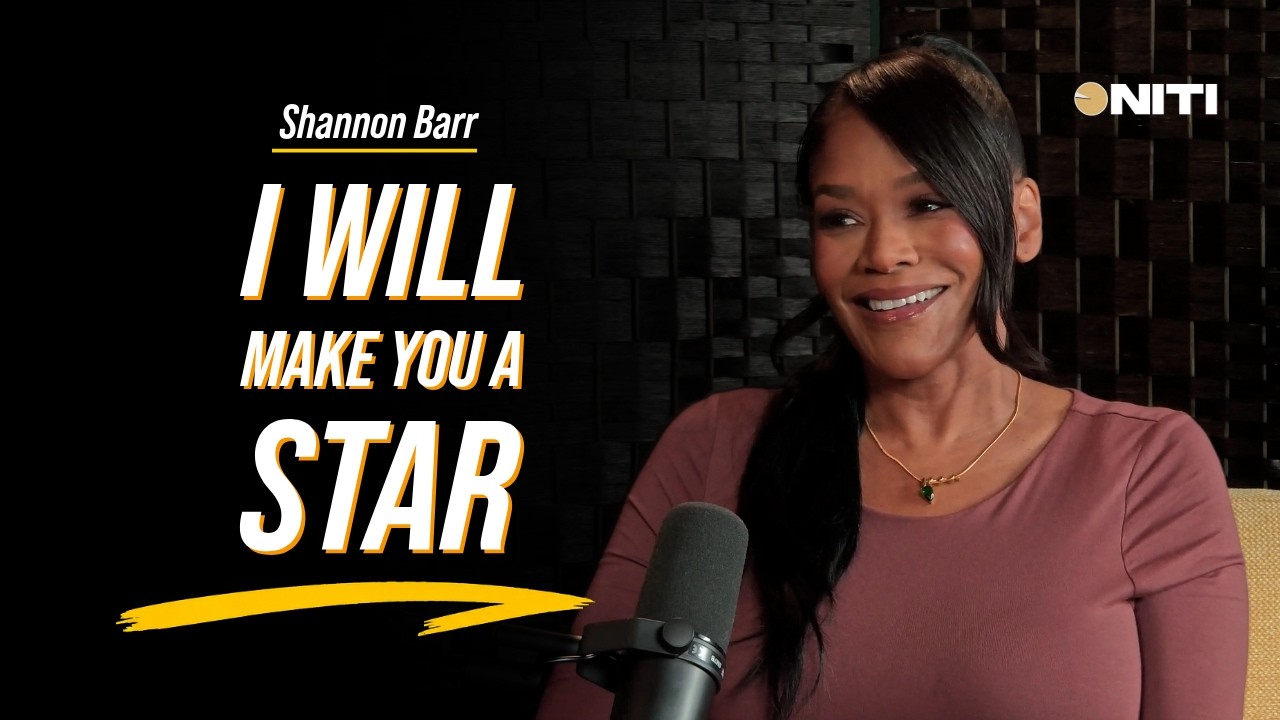 Watch the conversation ↗
She also discussed a relationship with Kenya Moore stretching back some 20 years. Duration changes the scale of a publicity story. The unit of measurement becomes a working life, with its changing projects and circumstances, rather than a single announcement. Barr's emphasis on believing in the people she represents makes sense against that longer calendar.
Her route through the business has given that belief several organisational forms: a firm bearing her name, an emerging-talent department inside a larger agency and the independent company she runs today. Each involved choices about whose career would receive attention. Her advocacy around the Golden Globes extended the question to who helps decide which attention counts.
And then there is White, returning for another holiday show. It is a useful place to leave a publicist's story: with a client doing something she thought would fit him, years after the introduction. The cameras have plenty to look at. Barr's contribution began earlier, when she noticed the dancer.