Shameem C Hameed arrived in the United States with an education, an appetite for business and very little of the social machinery that makes either useful. He remembers having little money, no contacts and no relatives there. He would share a basement before living in downtown Bethesda. The distance between those addresses is a more interesting measure of his career than a valuation.
Before America, there was India, then Saudi Arabia. In 2001 he was an Indian expatriate trying to build a software startup in the kingdom. When he later described the move to the United States, he wrote with the gratitude of someone who had discovered room to act. He also brought his son from India, raised him as a single parent and put him through Virginia Tech.
That is quite a lot of responsibility to pack beside a business plan. His account gives the familiar immigrant success story a domestic scale: a place to live, work that pays, a child reaching university. Those details make the ambition legible. Building a company was connected to building a life, with the demands of both arriving on the same calendar.
Today Hameed leads ZH Healthcare, the company behind blueBriX. His public professional profile places him in Coppet, Switzerland. His career has crossed professions as well as borders. The thread running through it is a preference for having enough room to make his own decisions, including the decision to carry on.
The lawyer who also understood a ledger
His first profession was law. He enrolled with the Bar Council of Delhi and practised in the High Court of Kerala. He holds both a law degree and a commerce degree from Mahatma Gandhi University, along with a diploma in industrial relations and personnel management. The combination gives his early résumé an unusually broad vocabulary: contracts, accounts and people.
He also spent more than a decade active in the Indian stock market and the Cochin Stock Exchange. In 1995 he became a founder and the first managing director of Peninsular Capital Markets. The brokerage operated from more than 300 locations before its business was acquired by Motilal Oswal Securities. He had experience with capital long before he had reason to debate the terms of venture funding.
Software was another early undertaking. He founded Datamate Software and Exports in 1991, developing enterprise software for industries including finance and hospitality. His later American ventures included software services, legal transcription and structural steel detailing. This is a career with several entrances. A neat, single-industry origin story would have to leave rather a lot at the door.
Three dates before the funding debate
- 1991Founds Datamate Software and Exports
- 1995Becomes founding managing director of Peninsular Capital Markets
- 2008Starts ZH Healthcare
The money came with a calendar
ZH Healthcare began in 2008. By his December 2023 conversation with Practical Founders host Greg Head, it had almost 200 employees across the United States and India. The business had remained profitable every year and had taken no outside funding. Those are dated milestones, and they describe the circumstances in which Hameed could afford to make a choice.
He had explored investment. The conversations exposed a mismatch between the company he wanted to build and the business investors expected to finance. There were differences about the product and its customers. There was also the matter of a proposed exit within five years. Hameed wanted a company whose future extended beyond that appointment.
His account of those meetings is funny in a slightly painful way. He caught himself adjusting his explanation of the business to suit the people across the table. The fit was becoming uncomfortable. A founder who had already crossed countries and professions was being asked to squeeze his next chapter into someone else's timetable.
He chose to continue without venture capital. That decision rested on an operating business with customers and profits, which matters. Independence is easier to defend when the bills can be paid. His patience had a commercial foundation. It gave him the option to turn down terms that would change the purpose or pace of the enterprise.
“I'm building a big, long-term company.”
Shameem C Hameed · December 2023
A snapshot from his December 2023 Practical Founders interview.
A customer has a vote
Hameed's argument about funding reaches beyond ownership percentages. In a 2022 essay responding to Reid Hoffman's ideas about rapid expansion, he questioned how comfortably those rules fit ordinary businesses. He objected to treating customers as expendable on the way to a much larger company. He wanted room for successful small and medium enterprises, too.
He credits those businesses with employment and prosperity, and argues for a better balance among customers, entrepreneurs and capital. The position has a practical edge. A customer who pays for useful work gives a company a reason to exist next month. An investor who wants a particular outcome may give it a different reason to change direction.
In November 2023 he returned to the financing question in an opinion article. His concern was dependency: large funding rounds can leave a company vulnerable to investor sentiment and pressure over timing. He argued that profitability belongs near the beginning of the business model. Money raised and a durable business, in his view, deserve separate examination.
There is room to disagree with that prescription. Hameed's own history gives it more substance than a slogan, however. He had worked in stockbroking, started several businesses and considered outside investment himself. His preference emerged from encounters with the machinery of finance. He knew enough about the invitation to read the conditions attached.
Let the people using it change it
His product decisions offer another view of the same preference for autonomy. blueBriX developed into a configurable platform, with a low-code and no-code environment that lets customers adapt software themselves. The team built the platform incrementally around requirements that customers helped fund. The commercial relationship supplied both money and information about what to build next.
There is a pleasing consistency here. A founder who wants discretion over his company also sells customers more discretion over their tools. That is an interpretation of the pattern, rather than a claim that every decision followed a single philosophy. But it helps explain why configurability figures so prominently in the business he describes.
The team-building had its own constraints. Hameed discussed the difficulty of recruiting senior executives before the business had grown substantially. He also gave credit to leaders he had elevated to co-founder status. That is an interesting adjustment to the familiar founder portrait: the title can expand to acknowledge people who helped make the enterprise possible. Growth involved finding people who could carry responsibility, then recognising what they had already contributed.
The principle even became a competition. In July 2022, the company announced a form-building challenge with three $1,000 prizes, divided among beginner, intermediate and expert participants. Training and support were part of the offer. Software users were invited to make something themselves. It was a small, concrete expression of confidence in the people at the keyboard.
Useful work pays for the next piece
requirements↓Funded
development↓A more configurable
platform
Who should pay for the advertisement?
A less polished encounter shows Hameed thinking about money in public. In a 2015 open-source community discussion, a nonprofit was considering paying for advertising. Hameed argued that commercial vendors stood to benefit and could pay for their own promotion. The nonprofit, he suggested, could direct its resources towards development. He acknowledged that his company had commercial reasons for supporting the publication involved.
The exchange is useful because it is specific. There is a proposed expense, a shared project and a question about who benefits. Hameed's answer distinguished the vendor's interests from the community's budget. It is an instance of the financial judgment that disappears when a founder's biography becomes a procession of job titles.
His interest in financing shared software had appeared earlier. In 2011 he proposed directing a percentage of revenue from referred business to the nonprofit supporting OpenEMR. He later explained that the idea had stalled over concerns about promoting one vendor. The outcome matters as much as the proposal. A community has interests and constraints of its own; a commercial contribution still has to find a form the community can accept.
He subsequently served as chairman of OEMR. The board elected him on May 11, 2016, in a meeting that also dealt with membership and routine administration. Institutional work often looks like this: motions, seconds, votes and another meeting to attend. His open-source involvement included that unglamorous work of helping an organisation govern itself.
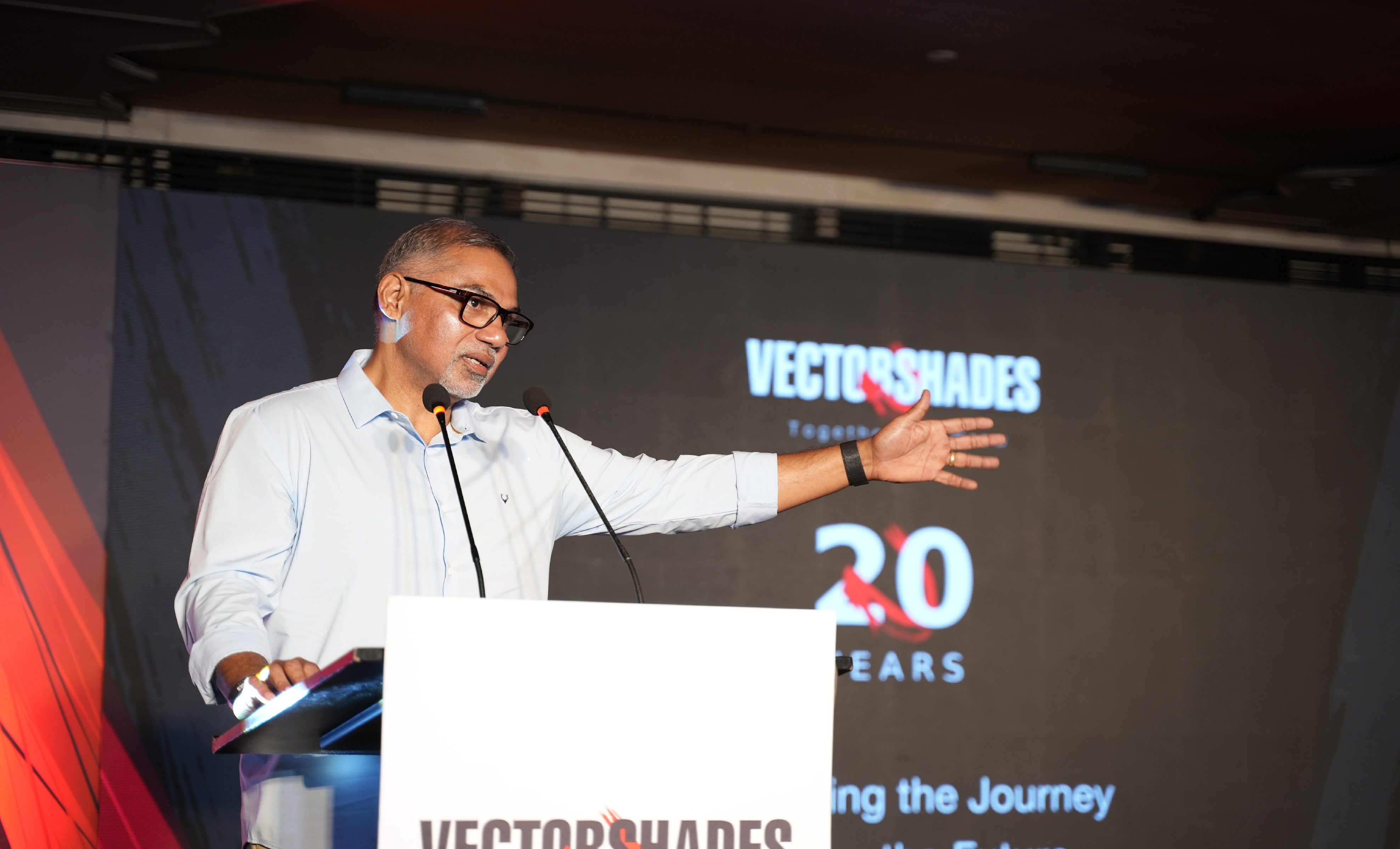
Twenty years, and the people who stayed
The most recent chapter brings him back to India. An October 15, 2026 announcement marked VectorShades' twentieth anniversary with a gathering in Kochi. Hameed and co-founder M Shahzad recognised the employees who had stayed through difficult periods. The company's steel and rebar detailing work serves fabrication clients in the United States, with teams in Chennai and Kochi.
“There were times when survival was the only goal,” Hameed said. It is a useful admission at an anniversary. Longevity can look inevitable once a business has acquired a stage, a gathering and twenty years to count. The founder's recollection leaves the difficult years in the picture.
The next phase, presented as VectorShades 2.0, concerns production and client relationships. Elsewhere, Hameed has thanked his blueBriX team after frank discussions and given senior colleagues credit as co-founders. The public record repeatedly brings other people into the frame. A company that lasts has people who remember how it got there.
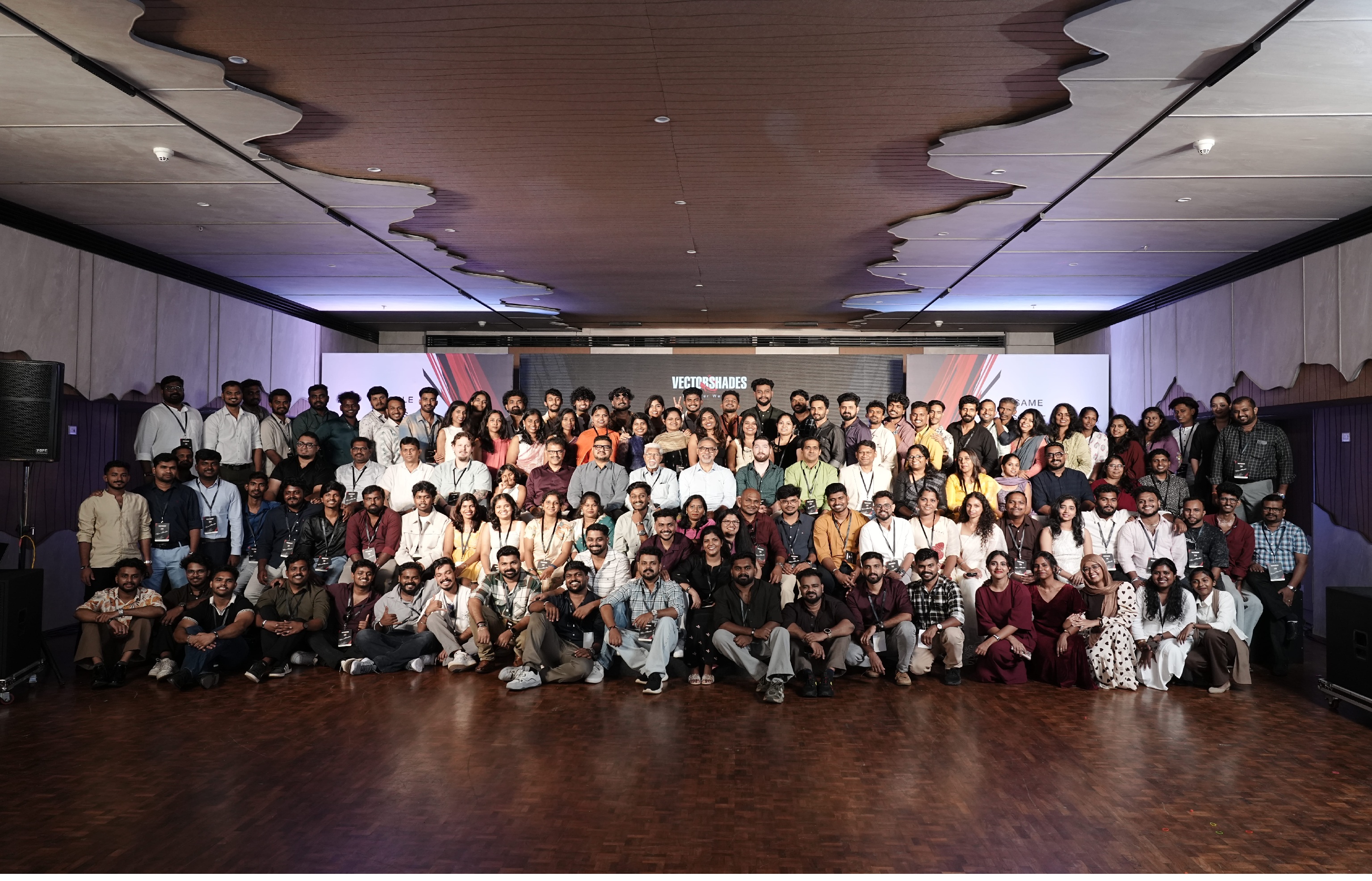
The basement, the brokerage, the software platform and the anniversary stage belong to one career. Each puts a different weight on the word independence. For Hameed it has meant restarting in a new country, choosing the terms of growth and accepting the work of continuing. Having declined an exit timetable, he still has a company to run in the morning.