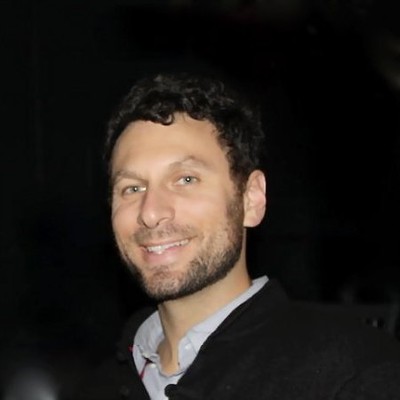
Profile
The Cartier Alum Who Bet on Robinhood Before Anyone Else Would
Seth Berman walks into Y Combinator demo days in 2010, and the room has twelve founders in it. Twelve investors. He ends up writing checks to about thirty companies over the next few years, including Nest, Optimizely, and a few others that won't become famous until later. He is not an engineer. He is not a banker. He spent the better part of a decade at Richemont Group - the Swiss luxury house that owns Cartier, Montblanc, Net-A-Porter, and Chloé - thinking hard about why people covet things, how brands create desire, and what makes a consumer relationship compound over time. That background turns out to be unusually useful for picking seed-stage companies.
In 2013, Berman co-founded Susa Ventures with Chad Byers and Leo Polovets. The name is a nod to the ancient city of Susa, where the first recorded financial transactions happened. The fund started small. The bet was simple: find companies with compounding moats - data advantages, network effects, proprietary datasets - and get in early enough to matter. Eighty percent of the portfolio went into four categories: logistics and sharing technology, fintech, digital health, and computer vision. It was a thesis that rewarded patience and specificity over dilettante generalism.
The early portfolio was studded with exactly the kind of outcome that thesis predicts. Expanse, a network security startup that scanned the entire internet to map corporate attack surfaces, was acquired by Palo Alto Networks for $800 million. Flexport became the defining logistics-tech company of its era. And then there was Robinhood.
"When I started going, it was probably 12 founders that were presenting and 12 investors. In my early small portfolio, we invested in five or six companies that became unicorn businesses."
Seth Berman - We The Builders Podcast
The Robinhood story deserves its own paragraph. When the zero-commission brokerage came seeking seed capital, no institutional investor wanted to touch the regulatory complexity. To launch, Robinhood needed someone to be the investor of record for FINRA - to open their books and stake their credibility on a company promising to let everyday Americans trade stocks for free. Nobody volunteered. Berman did. He credits their eventual success to something that any good brand strategist would notice: "intuitive UI and great user experience." He kept 80% of his Susa stock through the IPO. That sentence tends to end conversations.
The compounding moat thesis wasn't just a phrase on a pitch deck. Susa built a scout network - people embedded at Robinhood, Stripe, Facebook, Google - tasked with identifying departing engineers and product managers before they hit the open market. While other funds waited for deck submissions, Susa was already in the room. The firm also built what it called a "parallel fund structure" - returning profits to portfolio founders rather than just to limited partners. It was a way of saying: we want to be the investors you call when you're starting your second company, too.
10
Unicorns Backed
~100
Total Investments
$175M
Latest Fund (2025)
2013
Susa Founded
$800M
Expanse Exit
900+
Seed Funds Today
Selected Portfolio
Companies That Changed Things
Robinhood
Zero-commission brokerage
IPO
Flexport
Digital freight forwarding
Active
Expanse
Attack surface management
$800M Exit
Viz.ai
AI stroke detection via CT scans
Series D
Mux
Video infrastructure API
Active
Human Interest
401(k) for small businesses
Series D
Pulley
Equity management for startups
Active
Nest
Smart home thermostat
Google Acq.
Docker
Container platform
Angel Round
Investment Thesis
Compounding Moats & Physical Intelligence
Berman's investment thesis has always centered on one question: what makes this company harder to displace next year than it is today? The answer, for most of Susa's portfolio, lives in data. Companies like Viz.ai ingested millions of CT scans to improve their stroke-detection AI. Flexport got better at logistics by moving more freight. The data moat grows with every transaction, every shipment, every scan. Berman called it early - "data was the new oil" - before that observation became a bumper sticker.
His newer framing is more specific, and potentially more important. At Kivu Ventures, his team coined "physical intelligence" to describe what they see as AI 2.0 - the moment when trained models stop living only in software and start affecting atoms. Autonomous vehicles, surgical robots, AI-designed chips, smart logistics nodes. The intelligence becomes physical. Berman is betting that this transition generates the next cohort of category-defining companies.
Compounding Moats
Companies that become harder to displace with every transaction. Data advantages, network effects, operational scale that generates proprietary signals.
Physical Intelligence
AI 2.0 - when trained models start affecting physical objects. The thesis driving Kivu's bets on healthcare AI, logistics tech, and industrial applications.
Founder-Market Fit
"We tend to want to invest in entrepreneurs that are trying to solve a problem" with deep domain expertise - not those who simply want to start companies.
Go-to-Market Parity
Distribution as a first-class discipline: "If you have the resources, your go-to-market team should be equal to your product and engineering team."
Second Act
Kivu Ventures: The Series A Play
The seed market got crowded. By the time Berman talks about it publicly, there are 900-plus seed funds. He watched the stage compression in real time: what used to be seed is now Series A; what used to be pre-seed is now seed. The opportunity at Series A shrank to roughly 30 high-quality funds competing for the best deals. Berman moved up the stack.
Kivu Ventures targets companies that have demonstrated product-market fit - those that have cleared the existential questions and now need capital to scale a defensible advantage. Checks go up to $15 million per company. The focus: vertical AI, AI infrastructure, healthcare, fintech, logistics, and consumer tech. The logic follows the physical intelligence thesis directly.
Kivu Ventures — Founded by Seth Berman
Series A & B, Built for the AI Era
Kivu targets exceptional founders with deep domain expertise and companies with defensible competitive advantages. Investment cap: up to $15M per company. Focus: vertical AI, AI infrastructure, healthcare, fintech, logistics.
Seth Berman
Founder & General Partner
Emery Wells
Investment Partner — Co-founder of Frame.io (acq. Adobe $1.275B)
Paul Sciarra
Venture Partner — Co-founder of Pinterest, Exec Chairman of Joby Aviation
The Stories
What the Track Record Doesn't Show
The Pinterest Miss
At TechCrunch Disrupt, Berman met Pinterest's founders. The engagement numbers were extraordinary - 20 minutes of time-on-site per day, comparable to Facebook at the time. He looked at the numbers. He passed anyway. He still talks about it. "I should have known that with that much engagement, they were going to build something really special." The co-founder of Pinterest, Paul Sciarra, is now a Venture Partner at Berman's Kivu Ventures. The irony is not lost on anyone in the room.
The Robinhood Bet Nobody Else Would Make
When Robinhood came to raise its seed round, every institutional investor encountered the same problem: the company needed someone to be the investor of record for FINRA approval. This meant opening your books, your compliance records, your full financial disclosure to a federal regulator. Every fund that heard the pitch passed. Berman said yes. He credits their success to "intuitive UI and great user experience" - the kind of judgment call you develop after a decade marketing Cartier and Net-A-Porter. He retained 80% of his Susa stock through the IPO.
The Luxury Brand Instinct
Before seed investing, Berman was VP of Strategic Marketing at Richemont Group - the Swiss conglomerate that owns Cartier, Montblanc, Chloé, and Net-A-Porter. The job was to understand desire: why someone pays $10,000 for a watch when a $50 one tells the same time. That lens, applied to startups, produces different questions than engineering or finance backgrounds typically do. It asks: does this create genuine desire? Does the user relationship compound? Will people recommend this the way they recommend a hotel they love? The approach shows in Susa's portfolio, which skews toward consumer-facing or distribution-first companies across every sector.
"Sometimes the most talented people have broken resumes. The credentials aren't there, yet they demonstrate extreme persistence."
Seth Berman
Market Perspective
From 12 Investors to 900+ Seed Funds
The venture landscape Berman entered in 2010 bears little resemblance to the one that exists today. At early Y Combinator demo days, the room was small enough that everyone knew everyone. There was no crowd. Berman invested in roughly 30 companies in that era - several became unicorns - partly because there was genuine information asymmetry, and partly because being a consistent, reliable early participant built a reputation that compounded into dealflow.
That asymmetry is largely gone. Nine hundred-plus seed funds compete for the same deals. Winner-take-all dynamics mean that if a company is talking to 20 funds, 19 of them lose. Berman's prescription: be the partner founders want, not just the fund with the best platform deck. "When founders receive multiple tier-one term sheets, they tend not to care so much about the platform and the services. Instead, they prioritize the partner they're going to be working with."
The AI wave adds another layer of complexity. Berman's team observes that models are "breaking the benchmarks way faster than anybody could imagine." The implication is that the window to build defensibility around AI capabilities is shorter than anyone assumed - which makes the physical intelligence thesis, where the software meets physical constraints, more durable as a moat.
Fund History
Capital Raised Over Time
Career Arc
The Timeline
2000
Started career in entertainment as Coordinator at The Firm, Los Angeles.
2003
Director of Brand Partnerships at American Vantage Media.
2004
Joined Richemont Group as VP of Strategic Marketing - overseeing Cartier, Net-A-Porter, Montblanc, Chloé, and Mr. Porter's digital expansion.
2009
Began angel investing in early-stage tech startups alongside his day job in luxury brand marketing.
2010
Attending early Y Combinator demo days. Invested in Nest, Optimizely, Wish, Docker, Omio, and others in a concentrated angel portfolio.
2013
Co-founded Susa Ventures with Chad Byers and Leo Polovets. Led seed investment in Robinhood, volunteering as FINRA investor of record when no one else would.
2016
Led Susa's investment in Flexport. Also backed Periscope Data and Expanse in this vintage.
2019
Susa Ventures closed $140M Fund III - the fund that accelerated investments in AI, health tech, and logistics.
2021
Expanse acquired by Palo Alto Networks for $800M - one of Susa's defining exits.
2023
Founded Kivu Ventures, a Series A/B fund focused on vertical AI, healthcare, fintech, and logistics - with Emery Wells and Paul Sciarra joining as partners.
2025
Susa raises $175M in new capital. Kivu leads $31.5M Series A for HOPPR (AI medical imaging). Participates in $50M Series B for Plenful (AI healthcare workflows).