He learned to lead by jumping out of airplanes. Now he is teaching machines to listen to the quietest signals your body makes.
The look of a man who has pitched investors and packed a parachute - and prefers the parachute.
The pitch sounds almost too small to matter: a patch you wear on your belly. No scope, no sedation, no day blocked out at the clinic. You go home, you eat, you sleep, you live - and the patch keeps listening. That is GutTracker, and Scott Schorer is the one staking his name on it.
As CEO and Chairman of G-Tech Medical, a tiny, eight-person company tucked inside the Fogarty Innovation incubator in Mountain View, Schorer is chasing a problem that has frustrated gastroenterology for decades. The gut is loud, talkative, and almost impossible to overhear. Conventional tests catch a few hours in a clinic and call it a portrait. Schorer's bet is that the truth lives in the days nobody was watching.
The technology reads myoelectric signals from the stomach, small intestine and colon all at once, then ships the data to the cloud where proprietary algorithms - built, the company says, with a hand from particle physics - turn the noise into something a physician can actually read. It is a wearable, a sensor problem, and a data problem stacked on top of each other. Which is to say, exactly the kind of layered mess Schorer keeps gravitating toward.
The company frames its edge in three plain words: comprehensive, extended, continuous. Comprehensive, because the patch watches the whole tract at once rather than one isolated stretch. Extended, because it runs for days instead of the hour or two a clinic can spare. Continuous, because it records you living your actual life - the coffee, the commute, the bad night's sleep - instead of the artificial calm of an exam room. Each word is a quiet rebuke to the way GI function has been measured for a generation.
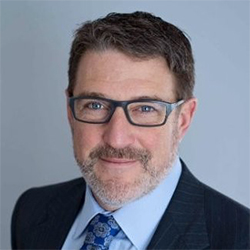
Most medtech CEOs start in a lab or a sales bag. Schorer started at altitude. After finishing high school at the American Overseas School of Rome and earning two degrees from Dartmouth - a liberal-arts A.B. in engineering sciences and a B.E. from the Thayer School of Engineering - he commissioned into the US Army's 82nd Airborne Division.
For five years he was a platoon leader and infantry officer, stacking the qualifications that read like a dare: Airborne, Ranger, Pathfinder, Jump Master. He trained inside the Army's World Class Athlete Program. The lessons travel well. Leading people through uncertainty, with the stakes real and the plan rarely surviving contact, is a skill that does not expire when you trade fatigues for a cap table.
The Dartmouth-plus-Thayer combination is the tell. One degree teaches you to ask why something matters; the other teaches you how it actually works. Schorer has spent a career living in that overlap - close enough to the engineering to respect the physics, far enough back to sell the result.
It is why his companies keep landing at the seam between hard science and the messy human body: spines that need fixing, wounds that need healing, metabolisms that misbehave, and now a gut that will not stop talking. The throughline is not an organ. It is the appetite for problems that need both a soldier's nerve and an engineer's patience.
Read Schorer's history as a loop rather than a ladder. He co-founds or inherits a company at the awkward stage - too real to be a science project, too early to be safe - and his job is to make it legible. Legible to regulators, who need a clean path to clearance. Legible to investors, who need to believe the next round buys real progress. Legible to acquirers, who need to see a business, not a hope.
CentriMed went to Global Healthcare Exchange. Innovative Spinal Technologies went to Integra after eight years and five clearances. At Systagenix he did not start the thing but steered it, taking a roughly $100 million wound-care division carved out of Johnson & Johnson through a turnaround. The verbs change - found, build, fix, sell - but the underlying skill is the same: turning technical promise into something the market will actually pay for.
Functional GI disorders - gastroparesis, chronic constipation, IBS, IBD - share a maddening trait: the symptoms are loud but the measurements are thin. Physicians have long described motility the way sailors once described currents, by inference and experience rather than instrument. A leading Mayo Clinic gastroenterologist put it bluntly in praising the approach: until now there has been no reliable tool to measure motility over multiple days under normal conditions.
That gap is the whole opportunity. If you can record the gut continuously and cheaply, you change the question from "what did we catch in the clinic" to "what is actually happening." For a man who has spent a career making the technical legible, a noisy organ that nobody can quite hear is almost too on-the-nose. It is the loudest unsolved measurement problem in the body, and Schorer has walked straight at it.
Office tests last hours. Real life doesn't stop at the clinic door.The thesis behind GutTracker
82nd Airborne Division. Platoon leader and infantry officer. Airborne, Ranger, Pathfinder and Jump Master qualified.
CentriMed. Co-founds a healthcare trading exchange, later acquired by Global Healthcare Exchange (GHX).
Innovative Spinal Technologies. Founds and runs it for eight years, shepherding five products through CE Mark and FDA before the company is sold to Integra.
Systagenix Wound Management. President of the Americas, leading the turnaround of the roughly $100M former J&J Advanced Wound Care division.
Advisor & consultant. Works with boards and CEOs across medtech and biologics, including Auris Robotics, Neograft and PlasmaTech.
GI Dynamics. Named President & CEO of the company behind the EndoBarrier device.
Gila Therapeutics. President & CEO, developing treatments for metabolic disorders.
G-Tech Medical. CEO & Chairman, building the GutTracker monitoring patch.
Raised in public and private equity across the companies he has led - the unglamorous skill that keeps medtech alive long enough to matter.
Named co-inventor on six patents. He does not just run the companies; his fingerprints are on the IP.
At Innovative Spinal Technologies, five products earned CE Mark and FDA clearance before the sale to Integra.
CentriMed to GHX, IST to Integra. He has handed off companies, not just started them.
Steered the Americas business at Systagenix, the former J&J Advanced Wound Care unit, through its turnaround.
Spine, wounds, metabolism, and the GI tract. Few operators reinvent their domain expertise this many times.
He still races. Triathlons and marathons are the leftovers from his time in the Army's World Class Athlete Program.
His downtime list runs from soccer to motorcycle riding - the same taste for momentum that shows up in his career.
He came up through the American Overseas School of Rome before Dartmouth - an international launch for a very American resume.
G-Tech credits particle physics, of all things, as part of the toolkit behind its signal-reading algorithms.
Strip away the patents and the funding rounds and Schorer's ambition is oddly modest: give people a true picture of how their gut behaves when nobody is watching. For the millions living with functional GI disorders, the clinic visit has always been a guess dressed up as a measurement. A few hours, one room, one meal, one snapshot.
Schorer's wager is that the answer was never in the snapshot. It was in the days in between - the ordinary mornings and restless nights that a wearable can finally record. After spines, wounds and metabolism, he has landed on the organ system that talks the most and gets listened to the least. It is a fitting last frontier for an operator who keeps choosing the problem nobody else wants to touch.
G-Tech is small, the road is long, and the medtech graveyard is full of clever patches. But betting against a Dartmouth engineer with a Ranger tab and a habit of selling the companies he starts has not, historically, been the smart money.
What makes the bet interesting is not the gadget. It is the temperament behind it. Hardware that lives on the body for days has to survive sweat, sleep and forgetfulness. Algorithms trained on messy real-world signals have to earn a clinician's trust one cautious step at a time. Regulators move at their own pace, and capital is patient only until it isn't. Threading all of that takes someone comfortable with long odds and longer timelines - which describes a soldier, an endurance athlete and a four-time founder about equally well.