A career spent on the seam between money and the mind.
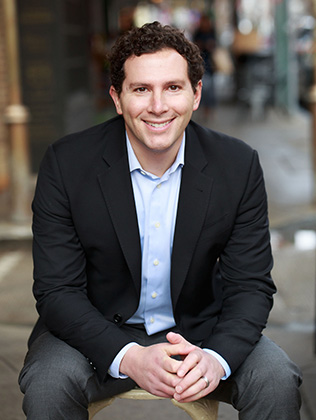
In February 2025, Scott Greenberg joined Nura Bio as Chief Business Officer - the person who turns hard neuroscience into the deals, dollars, and strategy that carry a drug toward patients.
Nura Bio is a clinical-stage company in South San Francisco with a deceptively simple ambition: keep nerves from dying. Most neurological disease shares a quiet villain - axon degeneration, the slow unraveling of the wiring that lets the nervous system work. Nura builds small molecules to interrupt that process across the central, peripheral, and ocular nervous systems. Greenberg's job is to make sure the science has the runway, the partners, and the capital to reach the clinic.
It is the kind of role that asks for two brains at once. One reads a cap table; the other reads an enzyme. Greenberg has been building both since he was an undergraduate, when he took the unusual step of pursuing dual degrees at the University of Pennsylvania - one in Finance, the other in the Biological Basis of Behavior. At the time it might have looked like indecision. In hindsight it reads like a thesis.
From Goldman to the gene
The career began where many ambitious dual-degree graduates land: investment banking at Goldman Sachs & Co. It is a useful place to learn how money moves and how deals get done under pressure. But Greenberg's center of gravity was always the biology. He left finance-as-finance and walked into finance-as-medicine, spending more than a decade at Celgene Corporation - the oncology powerhouse later acquired by Bristol-Myers Squibb in one of the largest deals the industry has seen.
Celgene was a graduate school of its own. Greenberg moved through it sideways and upward - business development, R&D strategy, R&D project leadership, sales and marketing. That breadth matters. People who have only ever done deals tend to misunderstand the science; people who have only ever done science tend to misunderstand the deals. Greenberg sat in enough rooms to learn both dialects.
Operator, not just advisor
After Celgene came Roivant Sciences, the much-discussed model that spins biotech assets into a constellation of focused companies. There Greenberg served as Vice President, Head of Operations - a job that is less about the slide deck and more about whether the machine actually runs. From building strategy to keeping the trains on time, it was a step deeper into the operating core of how biotech companies function.
Then he took the title that proves a person can run the whole thing: Chief Operating Officer of Aro Biotherapeutics, a company developing targeted siRNA therapies. There he led fundraising, finance, and business development, plus corporate strategy, new product planning, and project management. It is a long sentence because it was a long list - which is the point. By the time Nura Bio called, Greenberg had personally touched nearly every function a young biotech needs to survive.
Inside the nerve's self-destruct switch
Nura Bio's lead program, NB-4746, targets an enzyme called SARM1. Think of it as a kill-switch buried inside the nerve - normally dormant, but when an axon is injured or stressed, it flips on and the nerve begins to dismantle itself. Block SARM1, and you may stop that demolition before it starts. Here is the chain Greenberg has to translate into a business case.
Injury
An axon is damaged, stressed, or stricken by disease.
SARM1 fires
The dormant enzyme activates and burns through NAD+, the nerve's fuel.
Axon dies
The wiring degenerates - a hallmark of countless neurological conditions.
Block it
NB-4746 inhibits SARM1, aiming to halt the cascade and protect the nerve.
What a Chief Business Officer actually does here
The title sounds abstract until you watch a biotech try to survive without one. A Chief Business Officer is the company's interface with the outside world of capital and partnership. He decides which programs to license, which pharma partners to court, how to structure a deal so the science gets funded without giving away the future. He helps translate a wall of preclinical data into a story investors will write checks against. At Nura, with business development squarely in his remit, Greenberg is the person standing between a promising molecule and the money it needs to become a medicine.
It is a role that rewards range over depth, and range is precisely what Greenberg accumulated. The banker learned how deals are priced. The Celgene veteran learned how drugs are developed and sold. The Roivant operator learned how a company is run day to day. The Aro COO learned what it feels like to be responsible for all of it at once. Few people in the industry have walked that full arc; fewer still chose to keep their feet in both finance and biology the entire way.
The company he bet on
Nura Bio's pitch is unusually clear for a field famous for jargon. Rather than chase a single disease, the company goes after a shared mechanism. Its small molecules aim to modulate axon degeneration and the microglial response - the nervous system's own inflammatory crew - across the central, peripheral, and ocular nervous systems. If the bet pays off, the same biological insight could matter across a range of neurological conditions rather than just one. That is a big "if," and the size of the prize is exactly why the science needs someone fluent in the language of risk and reward to carry it forward.
Greenberg did not join alone. His appointment was part of a broader leadership expansion, arriving alongside another senior hire as Nura built out the C-suite for what its chief executive called the company's next phase of expansion and clinical development. Companies do not staff up like that on a whim. They do it when the data has earned the right to cost more money - when a science project becomes a business that has to be steered.
Why Nura, why now
Nura Bio is small - around 31 people - and that is a feature, not a footnote. At that size every hire is a bet, and a Chief Business Officer is one of the heaviest bets a company makes. It says the science is ready to meet the market. With a Series A and roughly $141 million raised in total, Nura is moving from quiet laboratory promise to the expensive, public business of clinical development. That transition is exactly the terrain Greenberg has walked at four previous companies.
His arrival came as part of a broader C-suite expansion announced in February 2025 - the moment a startup stops being a project and starts being an enterprise. For a man whose entire resume bridges the gap between a balance sheet and a biological pathway, it is hard to imagine a more on-brand assignment than helping a neuroprotection company grow up.
The throughline
There is a tidy lesson hiding in Greenberg's path, and it is not "follow your passion." It is closer to "refuse the false choice." Finance or science. Strategy or operations. Big company or small. At each fork he kept both options alive, and the result is a rare kind of fluency - someone who can sit between the investors and the inventors and make each understand the other. In an industry where great science routinely dies for want of capital and savvy, that translation is not a soft skill. It is the whole game.
He does not seem to be a man chasing headlines. There are no viral quotes, no manifesto, no Twitter thread philosophy. What there is, instead, is a quarter-century of showing up where biology gets ambitious and helping it find the money to keep going. At Nura Bio, the ambition is to protect the nervous system itself. Greenberg's contribution will be measured not in noise but in whether the deals close and the drug advances - the quiet, unglamorous arithmetic that decides which medicines ever reach the people who need them.