In 2017, Sanjiva Weerawarana became an Uber driver. He already had a software company to run and a career at IBM Research behind him. He also had a complaint about Sri Lankan life: people were much too willing to judge a person by the job they did. Driving strangers around Colombo offered a practical way to enter the argument. It came with a fare meter.
The idea began with a ride in a competitor’s car. His PickMe driver was a woman who had left a banking career so she could make time for athletics. Driving gave her flexibility. Explaining the change to her father was another matter. Weerawarana saw the problem as a hierarchy of respectability: a bank manager could change her work without becoming a different class of human being.
He registered, drove and wrote about the experience. The software engineer had plenty to say about the registration software, too. By then, challenging assumptions was familiar work. His company, WSO2, had been built around an assumption he wanted to overturn: that ambitious infrastructure software had to come from somewhere other than Sri Lanka.
A return ticket with room for ambition
Weerawarana’s education took him to the United States. At Kent State, he earned a bachelor’s degree in 1988 and a master’s in 1989, studying applied mathematics and computer science. His master’s work concerned automatic code generation for Cray Fortran. A computer science doctorate at Purdue followed in 1994. By August 1997, he was at IBM’s T. J. Watson Research Center.
The work there put him among the people building the machinery of web services. A website could display information to a person. Web services helped software exchange information with other software. Making that useful across companies required agreements about how systems described themselves and communicated. Weerawarana worked on the toolkits and specifications that helped establish those agreements.
His name appears among the editors of the WSDL 2.0 core specification, alongside Roberto Chinnici, Jean-Jacques Moreau and Arthur Ryman. WSDL describes what a web service offers. It is the sort of contribution that rarely supplies a dinner-party anecdote, although a remarkable amount of everyday digital life depends on people agreeing on such details.
In 2001, after 16 years in America, he returned to Sri Lanka. The geographical move left a technical question wide open: could engineers working there help create the platforms used around the world? Open source offered a route. Code could travel farther and faster than the reputation of the place where it was written.
Before the company, a place to contribute
The Lanka Software Foundation grew out of conversations between Weerawarana and Jivaka Weeratunge in 2001 and 2002. Registered in 2003, it aimed to help Sri Lankan developers contribute to and lead open-source infrastructure projects. The distinction mattered. Installing other people’s software was useful. Having local engineers shape the software itself offered a different kind of opportunity.
His own Apache involvement gave that idea practical roots. His work included Apache SOAP and the web-services projects that followed. These communities allowed contributors to be evaluated through their technical work across national borders. For engineers in Sri Lanka, participation could mean joining the conversation where decisions were made, rather than waiting for finished products to arrive.
This was a patient way to challenge a country’s place in an industry. It required projects, collaborators and people willing to work through unglamorous technical problems. The foundation preceded WSO2, a useful corrective to the idea that his interest in public institutions appeared only after a company sale.
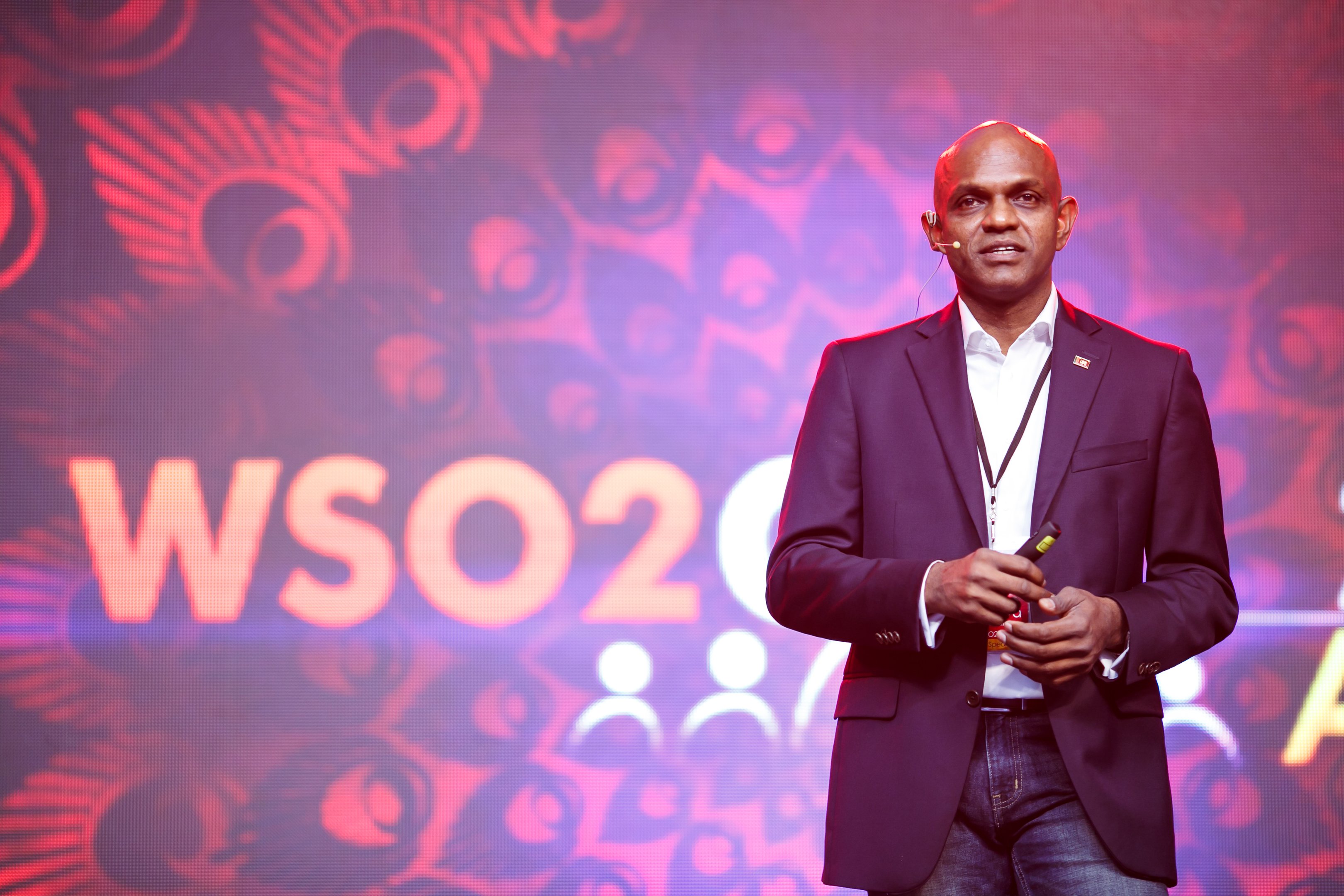
Software with a Colombo address
In August 2005, Weerawarana co-founded WSO2 with Paul Fremantle and Davanum Srinivas. The company would build enterprise middleware: software for connecting systems, managing access and making services work together. Its customers might be familiar names. Its work generally belonged behind the scenes, where a successful connection attracts considerably less attention than a failed one.
The venture needed believers as well as programmers. In his later account of the sale, Weerawarana thanked early backers James Clark and Adam Fremantle, Paul’s father. Intel Capital helped the young company continue in 2006. Toba Capital became another consequential supporter. His recollection includes the instruction to stop burning cash and become profitable. Even open-source idealists eventually meet the accounts department.
WSO2’s business connected freely available software with the support and expertise organizations needed to use it. By the May 2024 acquisition announcement, it had more than 800 employees and was approaching $100 million in annual recurring revenue. Those figures describe an enterprise built over nearly nineteen years, rather than an overnight discovery that Colombo had programmers.
The reach was international. Banks, telecommunications businesses, universities and governments used the company’s software. For Weerawarana’s founding argument, that mattered as much as a local success story. A product built with Sri Lankan engineering could earn a place inside organizations whose purchasing decisions had little reason to be sentimental about Sri Lanka.
- 1994PhD at Purdue
- 2001Returns to Sri Lanka
- 2003Lanka Software Foundation
- 2005Co-founds WSO2
- 2024EQT acquisition completes
- 2026CEO handoff
The six-month project that learned to count
One of his more revealing technical stories concerns Ballerina, the programming language he created with a team at WSO2. The ambition emerged from years of trying to improve integration programming. In 2016, the team decided a full language was the answer. They initially imagined the work might take six to eight months.
There was a preview in February 2017. The production 1.0 release arrived in September 2019. His announcement placed a small, rather satisfying “LOL!” between the early confidence and the eventual timetable. Anyone who has ever estimated a software project can appreciate the punctuation.
The account also distributes the credit. He described a core effort averaging more than fifty people, with contributions across product teams, tooling and marketing. The language came with libraries, a compiler, development tools and a place to share modules. A new language needs considerably more than a name and an elegant idea. It needs other people to make it usable.
A sale measured in more than one payout
In May 2024, WSO2 agreed to be acquired by EQT in a transaction valued at $600 million. Completion followed in August. The distinction between signing and closing was important enough for Weerawarana to explain to employees: agreement came first; the actual exchange of shares and money had to wait.
His message contained another figure: nearly 30% of the total proceeds would go to current and former employees. Employee share ownership had been a principle of the company. With the acquisition, it became money people could receive. Former colleagues were included in that calculation, a reminder that a company’s history contains people absent from its latest group photograph.
of total sale proceeds allocated to current and former employees.
Illustration of the stated approximate share; individual payouts varied.The acquisition gave the business a new owner. It also gave a long-running experiment a financial result that could be counted across many households. For a founder interested in what Sri Lankan engineers could build, that distribution belongs in the story alongside the headline valuation.
In his 2024 reflections, he described his preferred way of thinking as “dispassionately passionate.” Commitment should survive a difficult problem; an opinion should be allowed to change when new information arrives. His example was personal: colleagues sometimes found his changes of mind frustrating. Building a technical organization apparently includes reserving the right to annoy it for a reason.
Three foundations, and another set of systems
By 2025, he was talking publicly about a company that could outlast its early chapters. His WSO2Con Asia keynote was titled Journey Towards a Forever Company. At TEDxColombo, he asked whether Sri Lanka could become a global digital technology leader. His argument emphasized creating products and small teams prepared to pursue problems they cared about.
On May 14, 2026, WSO2 announced his departure from the CEO role, effective from June. He finished on May 31. Devaka Randeniya, the chief revenue officer, was appointed acting CEO while the board searched for a permanent successor. After more than two decades, daily leadership would pass to someone else.
Weerawarana identified three foundations where he intended to put more effort: Lanka Software Foundation, Lanka Data Foundation and Avinya Foundation. Avinya, established in 2022, works on education and vocational opportunity for young people. Its concern with skilled work has a recognizable connection to the taxi experiment: people need useful opportunities, and the work they do deserves respect.
The data foundation brings his old technical interests into civic life. It connects public information so people can examine how their government changes. In February 2026, he wrote about software that tracks government organizations over time. Departments move between ministries; gazettes record the changes. Connecting those records makes the movement easier to inspect.
“My plan is to put more effort into those.”
Sanjiva Weerawarana, on his three foundations · May 2026
There is a family resemblance between these projects. Enterprise software connects systems that otherwise struggle to communicate. Public-data tools connect records that otherwise sit apart. A vocational education program helps a young person reach work. The resemblance is a way of reading his career, while the organizations have different jobs and different measures of success.
The Uber essay ends with a request to treat the driver as an ordinary person doing a job. Coming from someone who helped design the plumbing of enterprise software, it is pleasingly direct. He had spent years working on communication between machines. For this particular connection, the passengers already had everything they needed.
Follow the connections
Writing, conversations and the institutions in his next chapter.