The Dispatch
The last pager he ever wants to carry
At 2 a.m. on a Saturday, a phone lights up. An app is down. Somewhere a senior engineer rolls out of bed, joins a bridge call, and starts opening tabs - Slack threads, Jira tickets, a Datadog dashboard blinking red. Revenue is leaking by the minute. Nobody fully remembers whether this exact thing happened three months ago. This is the scene Sang Lee describes when he explains why he started a company, and it is the scene he is trying to delete.
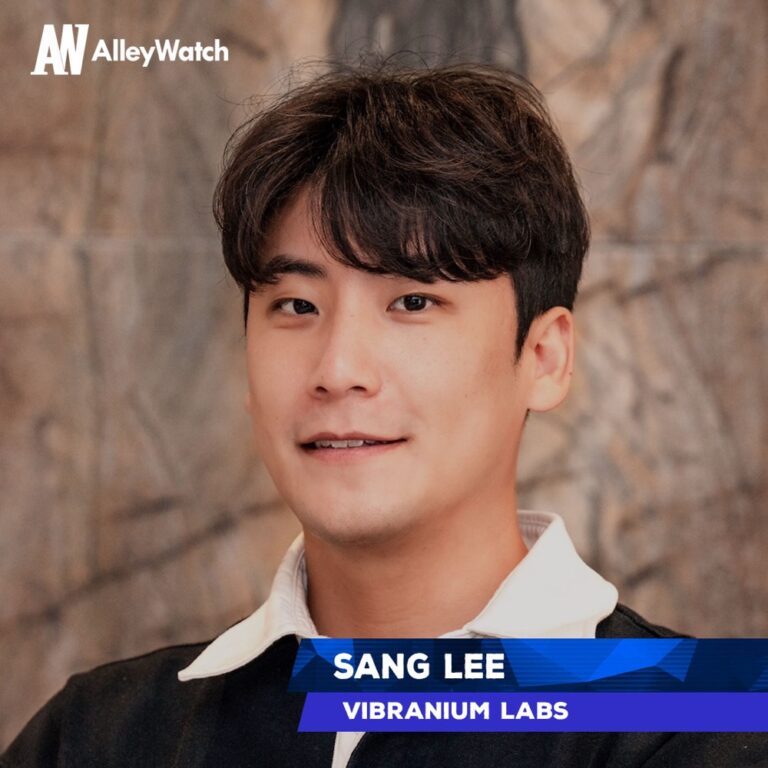
Lee is the co-founder and CEO of Vibranium Labs, a New York startup making Vibe AI - a product the company bills as the first 24/7 AI site reliability engineer. The premise is almost cheeky in its simplicity: when an incident fires, page the AI first. Let it read the logs, find the root cause, pull the right runbook, and either fix the problem or hand a human a tidy summary and a recommended action. The pitch line on the website does not hedge. "The last pager you'll ever need."
What makes this more than a slogan is that Lee lived the problem from the inside. Before founding Vibranium Labs he worked at Google and Amazon Web Services as an AI engineer and site reliability engineer - two of the most demanding incident-response cultures in the industry. He was the person getting paged. He is not theorizing about on-call pain; he is automating his own former job.
Incident response hasn't fundamentally changed in decades - it's still a handful of senior engineers pulled from sleep or family to fix issues under enormous pressure.
— Sang Lee, Co-Founder & CEO
Why now, and why him
The timing argument is blunt. As more software gets generated quickly - including the wave of "vibe coding," where apps are spun up from text prompts - more of it breaks in ways nobody anticipated. Lee's co-founder Tim Hwang put it plainly: these applications are definitely going to break. Vibranium Labs is, in a sense, a bet on the inevitability of failure. The more code the world ships, the more 2 a.m. phone calls there are to answer. Vibe AI wants to answer them first.
Lee frames the product carefully, and the framing matters to him. This is not an AI that shows up to take engineers' jobs. It is an AI that shows up so engineers can keep theirs without hating them.
We're not trying to replace engineers. We designed Vibe AI to empower them.
— Sang Lee
The numbers the company puts forward are the kind that make a CFO lean in: up to an 85% reduction in mean time to resolution, and reported triage accuracy north of 95%. Vibe AI plugs into the tools teams already use - the alerting, the ticketing, the dashboards - and sits as a first-responder layer on top. It detects and routes, investigates and triages, executes verified fixes behind human approval gates, and then writes its own post-mortem so the same fire is easier to put out next time.
The firefight that became a company
Lee's origin story is not a whiteboard moment. It is a memory of exhaustion. "Both my cofounder, Tim Hwang, and I have been in those 2 a.m. firefights where an app goes down, you're juggling logs, tickets, and dashboards, and the company's revenue is bleeding by the minute," he recalls. The cost of an outage, in his telling, is never just the downtime. "Every outage carries hidden costs, lost revenue, shaken confidence, and eroded trust."
That last word - trust - is the thread. Reliability is the unglamorous foundation everything digital stands on. When a checkout page fails or a trading system stalls, the damage outlives the incident. Lee's wager is that an always-on agent, one that never sleeps and never forgets a prior incident, can protect that trust better than a rotating cast of tired humans.
He is candid about the grind behind the scenes, too. "They spend hours sifting through logs, trying to recall if a similar incident happened months ago, while customers wait and revenue bleeds. It's stressful, inefficient, and unsustainable." It is a rare founder who builds a company to abolish a specific feeling. Lee built one to abolish the dread of the buzzing phone.
From aerospace to the cloud
The path here was not a straight line. Lee studied aerospace engineering at the University of Maryland and went on to earn a master's degree at Cornell University. Rockets to reliability is an unusual arc, but there is a logic to it: aerospace is the discipline of catastrophic-failure thinking, of redundancy, of assuming the worst and engineering around it. Site reliability engineering is the same instinct pointed at servers instead of airframes. Lee carried the mindset across, then taught a machine to use it.
Along the way he also spent time at Leidos before the Google and AWS years. By the time he co-founded Vibranium Labs in 2024, he had seen incident response from the trenches of two of the largest cloud operations on earth. The company he assembled is stacked with that pedigree: the founding team's collective experience spans Google, AWS, Workday, Arnold & Porter, and FiscalNote, the public company (NYSE: NOTE) that co-founder Tim Hwang previously built.
A raise that closed itself
In September 2025, Vibranium Labs announced $4.6 million in seed funding, led by Calibrate Ventures and Mirae Asset. The supporting cast reads like a who's-who: a16z, Franklin Templeton, Plug and Play, Gaingels, Wildcard Capital, FalconX, and DCG. By Lee's account, the round came together in roughly six to eight weeks - fast, because the pain point needs no explanation. Every investor with engineers in their portfolio has heard the war stories.
His advice for building in lean times is the same discipline he applied to the product itself. "Stay laser-focused on solving one core pain point. Customers will pay for must-have products even in lean times." It is not a glamorous philosophy. It is the philosophy of someone who has watched too many systems fail because they tried to do too much at once.
The company has since been selected as an AWS AI Marketplace partner and counts Shutterstock among its global clients, with ambitions extending across healthcare, finance, and other sectors where downtime is measured in something worse than dollars. The name itself is a quiet joke with a point: vibranium, the near-indestructible fictional metal. A company built around making systems unbreakable could hardly call itself anything softer.
Lee is not promising a world without outages. He is promising a world where the outage gets handled before it ruins someone's night. For an engineer who spent years being that someone, it is less a business plan than a personal score to settle.