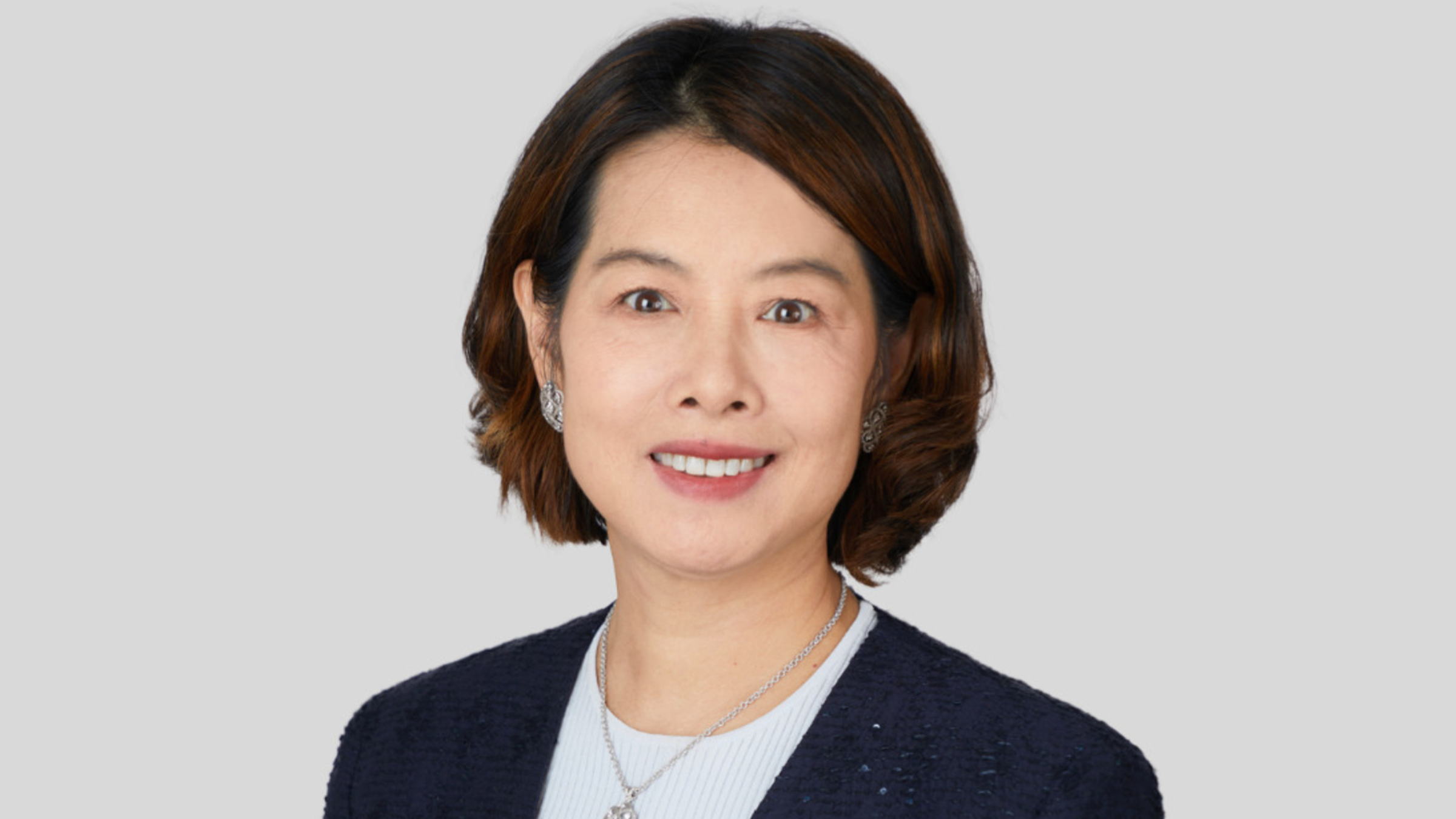
The CEO of CORXEL Pharmaceuticals starts most negotiations from an unusual place: she has been the person at the bedside, and she has been the person whose signature releases the drug into a market of 1.4 billion. Not many pharma executives have been both.
Sandy Mou spent her first seven working years in a clinic. This is the biographical detail everyone glosses over on their way to the $287 million Series D1 headline, and it is the wrong instinct. The seven years matter. They are the reason CORXEL is a cardiometabolic company now and not, say, still a cardiovascular-and-ophthalmic company under its old name JIXING. They are the reason the pipeline was rearranged around an oral pill. Clinicians know something drug marketers occasionally forget, which is that a weekly injection is not the same product as a daily tablet even when the receptor being agonised is identical.
CORXEL, headquartered at 300 Connell Drive in Berkeley Heights, New Jersey, with roots in Shanghai, closed its Series D1 in January 2026. The number was $287 million, the deal was led by RTW Investments and SR One and Sequoia Capital China among others, and the money is earmarked for one specific thing: pushing CX11, an oral small molecule GLP-1 receptor agonist, through a Phase 2 study in the United States and a Phase 3 study in China. CORXEL acquired the ex-Greater China rights to CX11 from Vincentage in 2024 - a deal Mou constructed inside her first two years as CEO.
I am deeply touched by JIXING's mission to bridge the innovation gap for patients in China and the world. This is what attracted me most to join JIXING.— Sandy Mou, on accepting the CEO role, December 2022
The word investors keep using about CX11 is "differentiated." This is a word investors use when a molecule is either genuinely novel or is being politely described by someone who owns shares in it, and CX11 is arguably both. The injectable GLP-1 category - Wegovy, Zepbound, and their descendants - has produced two things simultaneously: a market that will be worth on the order of $100 billion by the early 2030s, and a supply constraint so severe that the incumbents have spent two years explaining shortages to Wall Street. A pill that works avoids the supply constraint. A pill that works also gets prescribed to a wider slice of the population, because a weekly needle is a lifestyle choice that many patients decline.
The Résumé
The Career Behind the Balance Sheet
Before CORXEL, Mou spent nearly three years running Shanghai Allist Pharmaceutical Technology. She took the job in March 2020. Allist was a Chinese biotech with an EGFR inhibitor for non-small-cell lung cancer, and under her tenure it did what Chinese biotechs are supposed to do but frequently don't: it listed on the STAR Market of the Shanghai Stock Exchange, secured its first new drug approval, got the drug onto the National Reimbursement Drug List, and turned profitable. The listing alone would be a career-defining event for most CEOs. Mou treated it as a checkpoint.
Before Allist, she spent three years at MSD China, where she was given the job of building the oncology business unit from scratch starting in May 2017. Among the launches she oversaw was Keytruda, the pembrolizumab franchise that would eventually become the best-selling drug in the world. Within three years the MSD China oncology unit was, per the company's own accounting, one of the top three multinational oncology businesses in the country. This is the sort of result that gets written about in case studies at CEIBS, which is the same school where Mou earned her EMBA.
The Rolodex prior to MSD reads like a tour of the multinationals with a serious China footprint: GSK, AstraZeneca, Xi'an Janssen, Johnson & Johnson Medical. She launched brands in cardiovascular and metabolic disease, in orthopedics, in immunology, in oncology. This is not the résumé of a specialist. It is the résumé of a generalist who has done the tour and knows which levers to pull.
I look forward to working closely with the leadership team to transform JIXING into a biopharmaceutical company with sustainable innovation capabilities based in China and with global reach.— Sandy Mou, appointment statement
The Pivot
Renaming a Biotech
When Mou joined JIXING in January 2023, the company was focused on cardiovascular and ophthalmic disease and had a licensing deal with Cytokinetics for aficamten in hypertrophic cardiomyopathy. Within roughly eighteen months, the company had renamed itself CORXEL, expanded into cardiometabolic disease more broadly, and acquired the CX11 program from Vincentage. The rebrand is easy to underestimate. Corporate names rarely change without a change in strategy, and CORXEL is now understood by the investor community as an obesity story with a cardiometabolic pipeline, not a cardiovascular story with adjacencies.
The company sits at an interesting intersection. It is headquartered in New Jersey, which puts it inside the US regulatory and capital-markets ecosystem. It has deep operating roots in China, which puts it inside a manufacturing and clinical-trial infrastructure that has spent the past decade becoming very good at doing biotech quickly. There is a version of the biotech story where being on both sides of the Pacific is a liability. There is another version where it is an advantage. CORXEL, under Mou, is running the second version.
The Bet
What CX11 Actually Is
CX11 is an oral small molecule GLP-1 receptor agonist. GLP-1 receptor agonists are the class of drugs that mimic the hormone the human gut releases after a meal; the effect is reduced appetite, slower gastric emptying, and, in aggregate, weight loss. The blockbuster versions - semaglutide, tirzepatide - are peptides, which is why they are injected. Small molecules are a harder chemistry problem and a much easier commercial problem. Pfizer has publicly struggled with its oral GLP-1 candidates. Eli Lilly has an oral in late-stage development. Everyone else is a step behind.
CORXEL's pitch is that CX11 is "differentiated" - a claim it will get to test on humans over the next two years, with the Phase 2 trial in the United States and Phase 3 in China running in parallel. The parallel timing is a structural advantage of the two-continent setup: one CEO can supervise both, which sounds trivial and is not.
The Person
Reading the Signal
The thing to notice about Mou is that at every prior stop she has done the same thing: shown up when the company had a pipeline but not a business, and left it with a business. At MSD China oncology, the pipeline existed and she built the commercial engine. At Allist the drug existed and she built the listing and the reimbursement path. At CORXEL there is a molecule and a Series D and, now, the task of turning both into a global commercial product. This is a specific skill and it is not evenly distributed across the industry.
What she has not done, on the public record, is give many interviews. Mou is not a public-facing CEO in the mold of, say, a valley founder who tweets. Her quotes appear in press releases, in prepared statements, and in the filings around the Allist listing. This is a Chinese-pharma-executive style of communication - do the work, let the drug speak - and it will be interesting to see whether CORXEL's US positioning eventually pushes her toward more visible advocacy. The obesity market rewards CEOs who can explain to Congress and CNBC why a pill is worth what a pill is worth. Mou will presumably learn.
For now the elevator pitch writes itself. She is the CEO who put Keytruda on China's oncology map, took Allist public on STAR, and just raised $287 million to run Phase 3 on two continents. Anyone shorting that résumé is doing so for reasons that are not on the résumé.