Samay Jain has built a career around the moment just before understanding arrives. A user opens a product and pauses. A prospect watches a generic video and wonders where to click. A viewer sees a curious fragment of history and needs one clean line to enter the story. Jain works on that pause from two directions. At Rivia.AI, the Bengaluru company he co-founded in 2020, he helps software teams turn product knowledge into interactive demos, tours, and guides. On YouTube, he stands in front of a camera and makes brisk stories about Indian history and culture under a name that functions as both promise and punchline: Samay Samjhayega. Samay will explain.
The pairing looks eccentric only from a distance. Enterprise software and cultural storytelling belong to different tabs, but they share a stubborn problem. Attention is scarce. Context is uneven. The person on the other side would like to understand without enduring a seminar. Jain's work, whether made of captured HTML or a clapperboard held up to a phone camera, is about arranging the next few steps so that curiosity does not leak away.
Two lives, one useful verb
On his personal site, Jain gives himself three jobs: engineer, founder, storyteller. The order is revealing. Engineering came first in public. His Stack Overflow account dates back a decade and reads like the sediment of a young builder learning in the open: Node.js, Express, JavaScript, servers, databases, and the ordinary bugs that consume extraordinary portions of an afternoon. The same profile identifies him as an electronics and communication engineering student at Amity University in Noida. It also records three non-technical interests with appealing economy: trekking, origami, and food.
Origami is almost too neat a metaphor. A flat thing becomes legible through a sequence of folds. Jain's later work would keep returning to sequence: the correct step in a guide, the useful click in a demo, the detail that makes a historical anecdote snap into shape. There is no need to make the hobby carry more meaning than he has given it. Still, it is a charming item on the inventory.
“Engineer by trade, storyteller at heart.”Samay Jain's self-description
His formal startup apprenticeship ran through Observe.AI. He interned there in 2017, returned after a short Shipsy internship, and joined as a software development engineer in June 2018. In January 2019, he moved into product management. That change matters because product managers live at the border between what software can do and what another person can understand. Jain describes the role as leading product for a conversational-intelligence platform used by enterprise contact centers. He had moved from shipping the machinery to deciding how it should meet the world.
The expensive phrase: “quick call”
Rivia's origin story begins with a small office tax. Jain and his colleagues had worked at a startup spread across three time zones. When someone needed help with an internal tool or workflow, the team reached for one of two remedies. They would get on a quick call, or they would take several screenshots and arrange them in a Google document. Both worked. Neither scaled elegantly. A five-minute question could borrow two calendars, while a useful explanation became a craft project in screenshots and arrows.
In early 2022, Jain described Rivia as a way to record a workflow and automatically turn it into a step-by-step guide, complete with screenshots. The user could edit, annotate, redact, and share the result. The Chrome extension later advertised uses across onboarding, internal tools, product documentation, training, and organizational know-how. Its listing was updated in May 2023 and, when checked for this profile, showed 644 users and five ratings averaging 5.0.
Rivia's public language has evolved with the product. The YC launch presented interactive videos that combined a personal, Loom-like explanation with a clickable product clone. The current company description emphasizes interactive product demos that marketing, sales, and demand-generation teams can create and distribute quickly. The format changed from documents toward demos, but the object stayed recognizable: replace a vague explanation with a guided experience.
Jain co-founded the company with Prabal Agarwal, who serves as CTO. Rivia entered Y Combinator's S21 batch and remains listed as active in Bengaluru. The YC profile puts the promise in operational terms: capture the product, customize the story, add interactivity, then place the result in a website, application, email, or campaign. The product is built for people who need to show before they can persuade.
Then the engineer stepped in front of the lens
Samay Samjhayega uses a different interface: Jain himself. The channel's description says it shares untold stories from Bharat and explains the world in simple words. His personal site narrows the creative interest further, toward forgotten kingdoms, overlooked mathematicians, and the dense texture of Indian civilization. These are ambitious subjects for the compressed grammar of a short video. A hook has to arrive immediately. A visual must carry context. The story has to finish before the thumb remembers it can scroll.
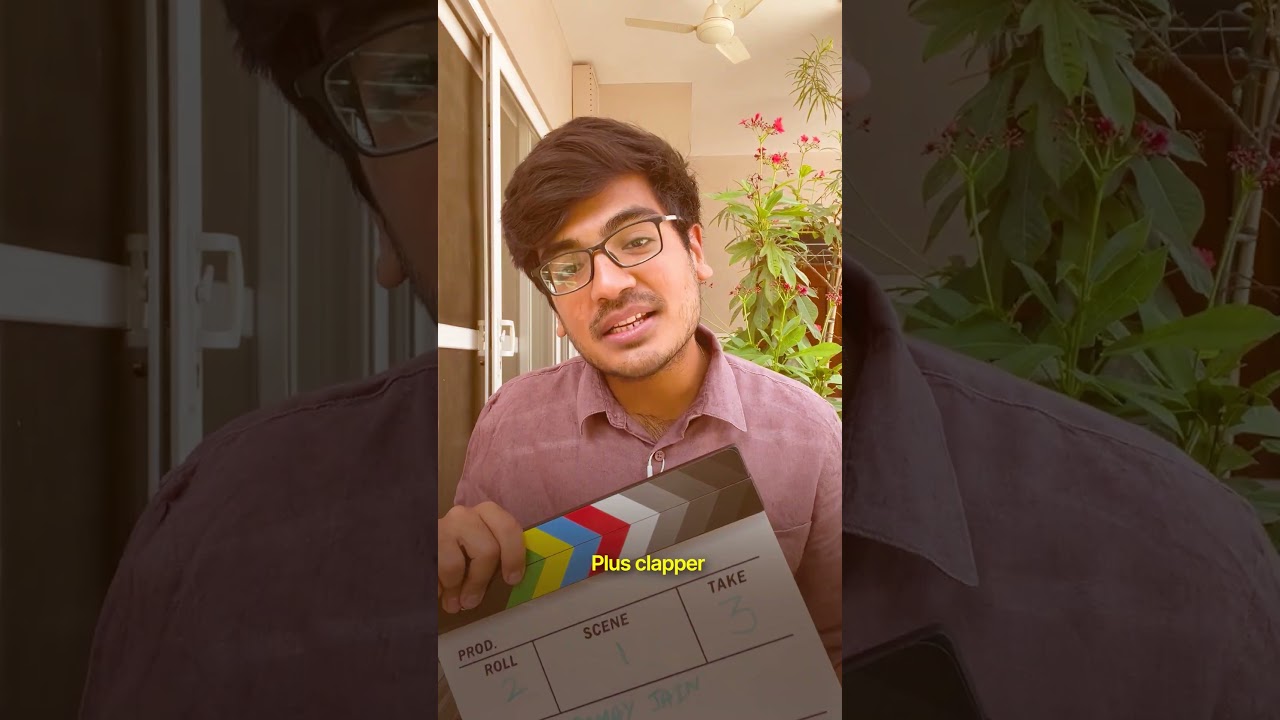
One video featured on Jain's site asks why movies use clapperboards. He appears holding one, its colored hinge almost as large as the question. Other featured shorts range from a cricketer's brush with danger in India to the symbolism of Nataraja. The selection gives the channel room to be historical without becoming solemn. Jain's manner is direct and energetic, with the props and on-screen text doing as much navigational work as an interactive tooltip.
By August 28, 2026, the channel showed about 40,900 subscribers. The more interesting number sat on a single short published ten days earlier. A video about a familiar ringtone composed long before mobile phones had passed four million views. Two other recent shorts, about an ancient Indian surgery and the unusual academic journey of a revolutionary, had reached roughly 1.1 million and 86,000 views respectively. Audience totals move, but the pattern was visible: Jain had found a repeatable way to package historical surprise for a general feed.
Three recent stories, three very different curves
The founder as editor
The transferable lesson in Jain's two-track career is not “build a personal brand.” That phrase can make a person sound like a breakfast cereal. The useful lesson is smaller and harder: learn to edit the path between complexity and comprehension. In software, that means noticing where a user hesitates, choosing the minimum helpful guidance, and preserving enough freedom for exploration. In a short video, it means selecting the fact that opens the door, then resisting every fact that merely blocks the hallway.
His move from engineering into product prepared him for this kind of editing. Code rewards precision, but product work asks precision to negotiate with behavior. The technically correct feature can still arrive in the wrong order. A complete explanation can still be exhausting. Jain's Rivia work treats demonstration as part of the product rather than promotional garnish. His creator work treats presentation as part of research rather than a curtain hung in front of it.
There is also a practical benefit in maintaining two forms of output. Company-building can be slow, collaborative, and private for long stretches. Publishing creates a shorter feedback loop. A video is framed, released, and answered by an audience. The skills do not map perfectly, nor should they. Yet each practice keeps the other from becoming automatic. The founder is reminded that attention must be earned. The creator is reminded that structure can be designed.
“Building things, telling stories.”A compact job description with room for both
A career arranged around clarity
Jain's public biography is still being written in active verbs. He is building Rivia.AI. He is publishing videos. He is moving between a B2B audience that wants to understand a product and a broad audience that wants a story worth carrying into the next conversation. The startup gives him a laboratory for guided discovery. The channel gives him a laboratory for curiosity.
Both begin with respect for the person who does not yet know. That person is not a lead to be pushed or a viewer to be tricked. They are simply standing at the threshold, asking for a good entrance. Jain's body of work suggests that explanation is less about displaying everything one knows and more about choosing the order in which another person gets to know it.
A decade ago, his questions lived on Stack Overflow and were answered in public. Today, the direction has reversed. The username remains, the engineer remains, but Jain increasingly occupies the other side of the exchange. He has become the person arranging the answer - sometimes as a clickable demo, sometimes with a clapperboard, often in less than a minute.