A friend asked Sal Lahoud for money. He wanted to leave a design job and try working for himself. The request contained a small financial problem and a potentially large social one. If the venture struggled, Lahoud could become the person his friend owed money to. Friendship already requires some diplomacy. Adding a repayment schedule seemed an ambitious complication.
Lahoud’s response was to think about sharing in the outcome. He could put money behind the attempt and benefit if it worked. If it failed to produce earnings, there would be no equivalent demand for a fixed repayment. That conversation became the origin story of Pave, the New York company he co-founded with Oren Bass and Justin Mitchell.
It is an unusually intimate beginning for a financial business. Before there was a marketplace, there were two people trying to work out how one could help the other without making their relationship unbearable. The agreement was an attempt to give encouragement a practical form. Lahoud’s subsequent career would also include writing and directing a film about an ambition that had waited decades for another chance.
Three classrooms, one untidy career
Lahoud’s education makes the combination of finance and film less surprising. He studied Information Engineering and Design at Imperial College London, Theatre and Acting at the William Esper Conservatory in New York, and Film through continuing education at the School of Visual Arts. Put those subjects on one timetable and there would be very little time left for deciding what to call yourself.
The subjects do establish a concrete breadth of interests. Engineering, performance and filmmaking were things he studied, alongside his work as a creative director. His later film credits belong in the same biography as his founding role at Pave. A company title alone would give a rather incomplete account of the work.
Asked about the boundary between work and life in a November 2013 interview, he offered a compact explanation: “I am happiest when my work is fun enough that it can qualify as life.” He named technology, engineering, film, theatre and art among his interests. The answer is cheerful, but also specific. He was describing the kinds of work he wanted to spend his time doing.
“I am happiest when my work is fun enough that it can qualify as life.”
Sal Lahoud · 2013
The contract had room for a conversation
Pave announced its pilot on December 12, 2012. Lahoud was the founding chief executive; Bass was chief operating officer; Mitchell was chief technology officer. Mitchell had previously managed engineering for photos and videos at Facebook. The founding team brought together a financial proposition and the task of turning it into a working online community.
The original arrangement connected a “prospect” with “backers.” The prospect received money and shared an agreed portion of future earnings. Backers could contribute advice, introductions and help finding opportunities. Someone with a useful contact could make that introduction knowing that the recipient’s progress also mattered to the investment. The company’s pitch put mentorship inside the financial relationship.
The model therefore asked more of a backer than an opinion about whether an applicant looked promising. It offered a reason to remain interested after the money changed hands. For a person early in a career, access to another person’s experience could be valuable alongside the cash. Pave was trying to make both available through the same arrangement.
Guidance
Introductions
A share of future income
Support first. An agreed share of earnings over time.
By June 2013, Lahoud was calling it “mentorship 2.0.” The phrase had the period’s enthusiasm for numbering things, but there was a useful example behind it. Ben Levine, who founded the Chilean dessert business KooChooFlee, sought just $3,000 through Pave. He particularly valued a backer’s experience in marketing and entrepreneurship.
Levine’s example gives the idea a human scale. Three thousand dollars is a finite sum. Advice can continue to be useful after a purchase is made or a bill is paid. His interest extended to future career ambitions as well as the business immediately in front of him. The relationship was part of what he was seeking.
Permission to fail, written into the pitch
There was another attraction to linking payments with earnings: a career experiment could disappoint without leaving the same fixed repayment obligation. In a November 2013 discussion of income-linked financing, Lahoud put it plainly: “You’re allowed to fail doing this.” His argument was that people could try again, with backers sharing an interest in their progress.
That sentence explains something about the original proposition. The money was supposed to make an attempt possible, while the terms acknowledged that an attempt might go badly. It is easy to applaud someone’s ambition before it costs anything. Designing the financial consequences of disappointment is a more demanding exercise. Pave’s early structure tried to address that part too.
The scale was still modest. In August 2013, Pave reported $350,000 disbursed by backers. Twenty campaigns had been fully funded. Those figures describe an early experiment, with individual campaigns and individual decisions behind the total. They make a useful counterweight to the size of the idea.
Disbursed by Pave backers at that point.
20 campaigns fully funded.
When the terms changed
In August 2014, Lahoud and Bass introduced a more familiar instrument: the Pave Loan. The proposed loans went up to $25,000, with terms of two to three years. The founders argued that conventional underwriting could overestimate the risk of young people with limited credit histories. Their approach would consider additional information and future potential.
The distinction matters. An agreement sharing future income and a loan with a defined term ask different things of the recipient. The company was changing the mechanism through which it pursued its early-career audience. The original concern with helping people establish themselves remained in the explanation, but the product now came with a recognisable lending structure.
That change is part of Lahoud’s founder story, rather than a footnote to a launch announcement. A founding idea meets applicants, investors, paperwork and the work of running a business. Here, the public record shows a concrete revision to the terms. By the time a Wharton FinTech group visited Pave’s offices in 2015, it described a peer-to-peer lending startup and met both Lahoud and Bass alongside members of their team.
The titles also need their dates. Pave’s 2012 announcement names Lahoud chief executive. A 2016 securities filing lists him as a director, with Bass identified as an executive officer and director. Founding CEO is a precise description of an early chapter. The later filing gives a different view of his formal position.

A singer gets another chance
Lahoud’s work also took him behind a camera. He wrote and directed the 2018 short A Minor Variation. Its protagonist, Jackie, is 75. Having set aside her wish to become a jazz singer while building a family, she returns to that unfinished part of her life. The change of subject brings ambition into a much later chapter.
The film’s credited collaborators include Perry Smith as Jackie, Jamie Diamond as cinematographer and producer, and Alberto Bof as composer. Those credits describe another kind of collective undertaking in Lahoud’s career. Writing and directing give him a defined creative role; the finished film also carries the work of performers, producers and crew. Even a short has a substantial list of people behind it.
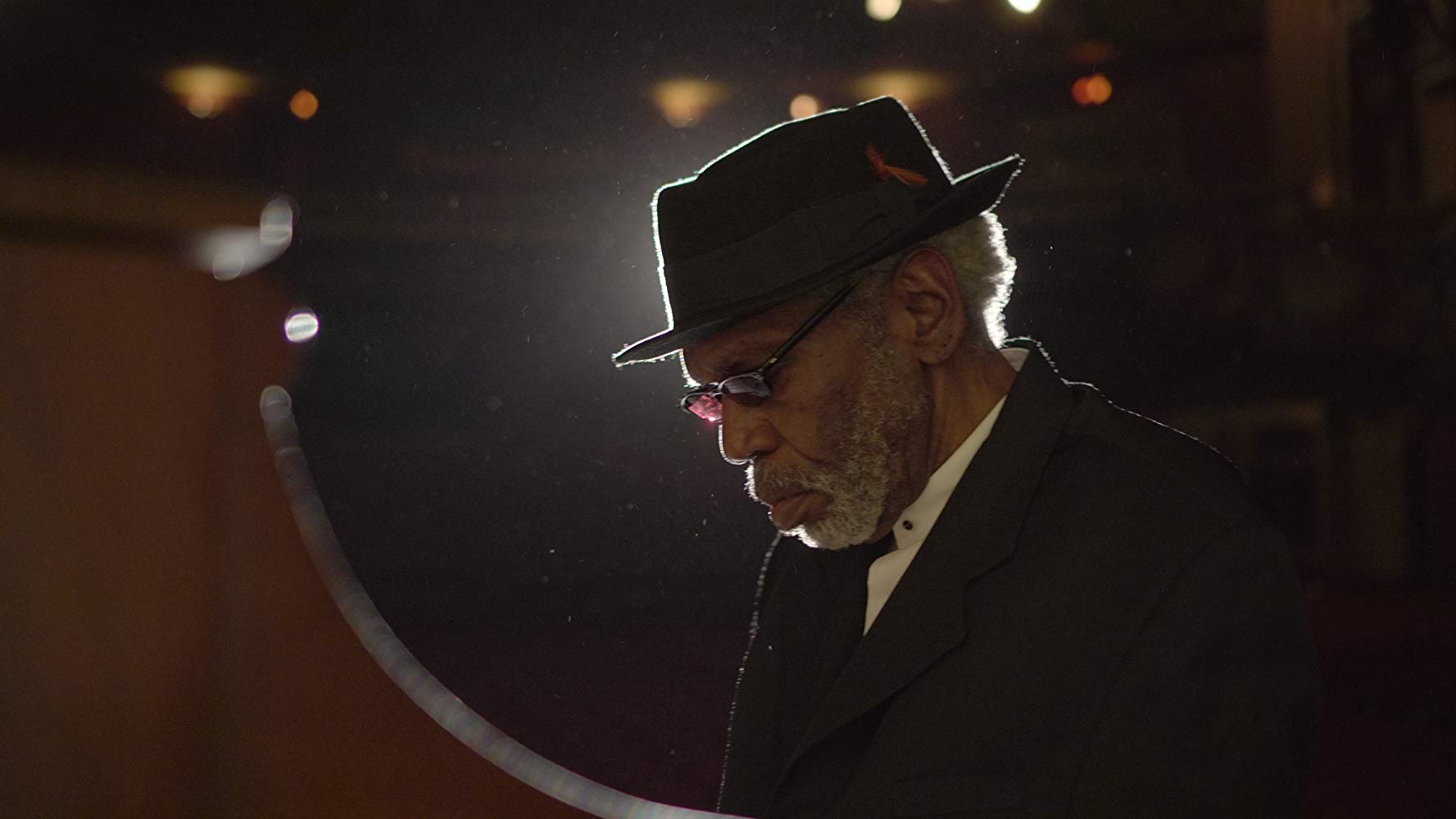
Tallahassee Film Festival programmed the film in its Shorts: Reflections selection on April 6, 2019, at the Mickee Faust Black Box. The program lists a running time of 15 minutes and classifies it as drama and romance. Its placement makes the filmmaking chapter concrete: a completed short, a named program, a scheduled audience.
Jackie’s story gives this profile an interesting echo. Pave addressed people trying to get started; the film concerns a woman returning to something she put aside. The parallel is a way to read the two projects together. In each, an ambition has practical consequences for a life. One project dealt with contracts and financing. The other put a fictional character’s unfinished wish on screen.
The 2019 Remi winners list records a Gold Remi for A Minor Variation in Dramatic - Original. Alongside the festival screening, it marks a specific achievement in the filmmaking part of Lahoud’s career. That sits comfortably next to the engineering and acting studies, and somewhat less comfortably inside a single job title.
Return to the friend asking for money, and the story becomes pleasingly practical again. Someone wanted room to try a different working life. Lahoud helped turn the problem into a company. Later, he wrote a film about another person’s long-delayed attempt. Across those documented chapters, the recurring subject is an ambition asking for some space in the real world. Sometimes that requires a financial agreement. Sometimes it requires fifteen minutes of screen time.