Weird Ideas. Real Returns.
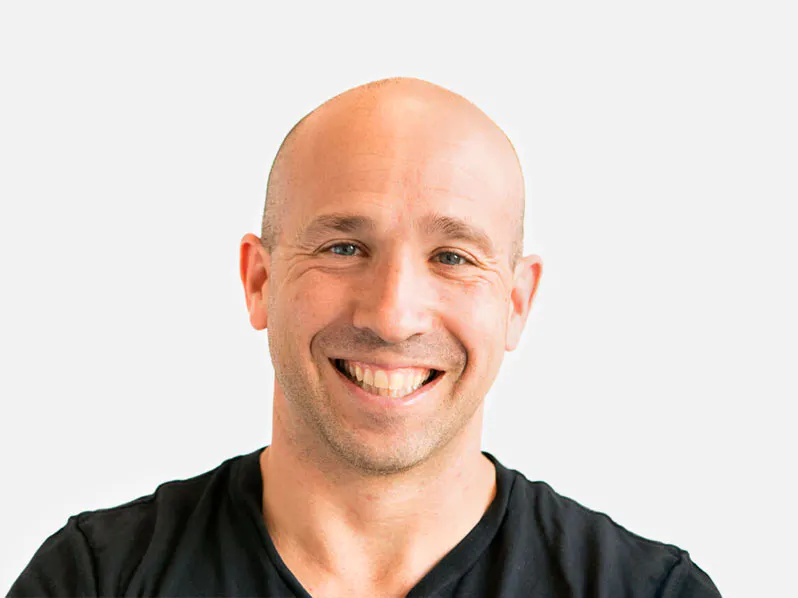
On September 12, 2013, Saar Gur wrote a seed check to a tiny startup called DoorDash - four Stanford students with a Google Doc menu and a dream about local delivery. The venture world was skeptical. But Gur had done his homework: he had called Mistie Cohen, the owner of Oren's Hummus in Palo Alto, and asked what she thought of the different delivery services. She said DoorDash was the only one that had "built a relationship" with her restaurant. He heard that and wrote the check.
It helped that his wife Patama had spent eleven years running Fraiche, an artisanal yogurt chain in the Bay Area. Open every day for eleven years. She knew exactly what restaurant operators needed and exactly what they were missing. Saar had a cheat code most venture capitalists never get: a front-row seat to the daily grind of a small business owner. When DoorDash IPO'd in December 2020, he called it "a grand slam - one of the biggest in CRV's 50-year history."
Before any of that, Gur was a biochemistry major at Wisconsin, then an MBA at Stanford, then VP of Customer Acquisition at Adteractive, where he helped grow a performance marketing company to over $160 million in revenue without touching outside capital. He learned what it meant to make every dollar scream. That instinct - find the lever, pull it hard - would shape everything he did next.
Then came BrightRoll. He co-founded the video advertising network from his San Francisco apartment in January 2006, and when Yahoo's check arrived in 2014, the number was $640 million in cash. He was 34. He did not spend the next decade on a beach. He joined CRV in March 2007 - before BrightRoll had even sold - to help build the firm's consumer practice, because he believed the next wave of massive companies would be built around shifts in everyday behavior, not just enterprise IT budgets.
His framework is deceptively simple: find the not-yet-obvious-but-soon-to-be-massive. He calls it "post-product, pre-traction" - a company that has proved the product works but hasn't yet found the flywheel. Ring is the canonical example. Jamie Simioff pitched a video doorbell on Shark Tank and got laughed out of the room. Gur invested. Amazon paid approximately one billion dollars for the company in 2018.
In 2013 he also backed Jack Conte and Sam Yam's Patreon, before the phrase "creator economy" existed. His thesis: creators deserved a direct financial relationship with their fans, and the internet had the infrastructure to make it work. Patreon now pays out hundreds of millions of dollars to creators annually. He describes the investment the same way he describes all his early-stage bets - "weird at the time, obvious in hindsight."
The portfolio now includes Dropbox, Airtable, Niantic (Pokemon GO), Vercel, Postman, Mercury, ClassPass, Oportun, Color, Viz.ai, and Kapwing. In February 2026, he co-led a $35 million Series A into Lotus Health AI alongside Kleiner Perkins - an AI doctor that offers free primary care in 50 languages, 24 hours a day. He joined the board. The thesis was the same as always: a shift in consumer behavior that most people weren't ready to call inevitable yet.
Outside the boardroom, Gur is a kitesurfer, a skier, a Yosemite backpacker, and has stood at the summit of Mount Kilimanjaro. He combines founder networking with outdoor trips, running the kind of offsite where the agenda includes actual mountains. He taught Stanford's StartupGarage program for nearly three years. He is a member of the Aspen Global Leadership Network. His Twitter handle is @saarsaar - his first name, twice, which captures something about how he operates: when he commits, he commits fully.
His compass remains a Margaret Mead quote displayed on his CRV profile page: "Never doubt that a small group of thoughtful, committed citizens can change the world; indeed, it's the only thing that ever has." He is not being ironic. He has built a career on betting that small, weird, specific groups of people can actually do it.