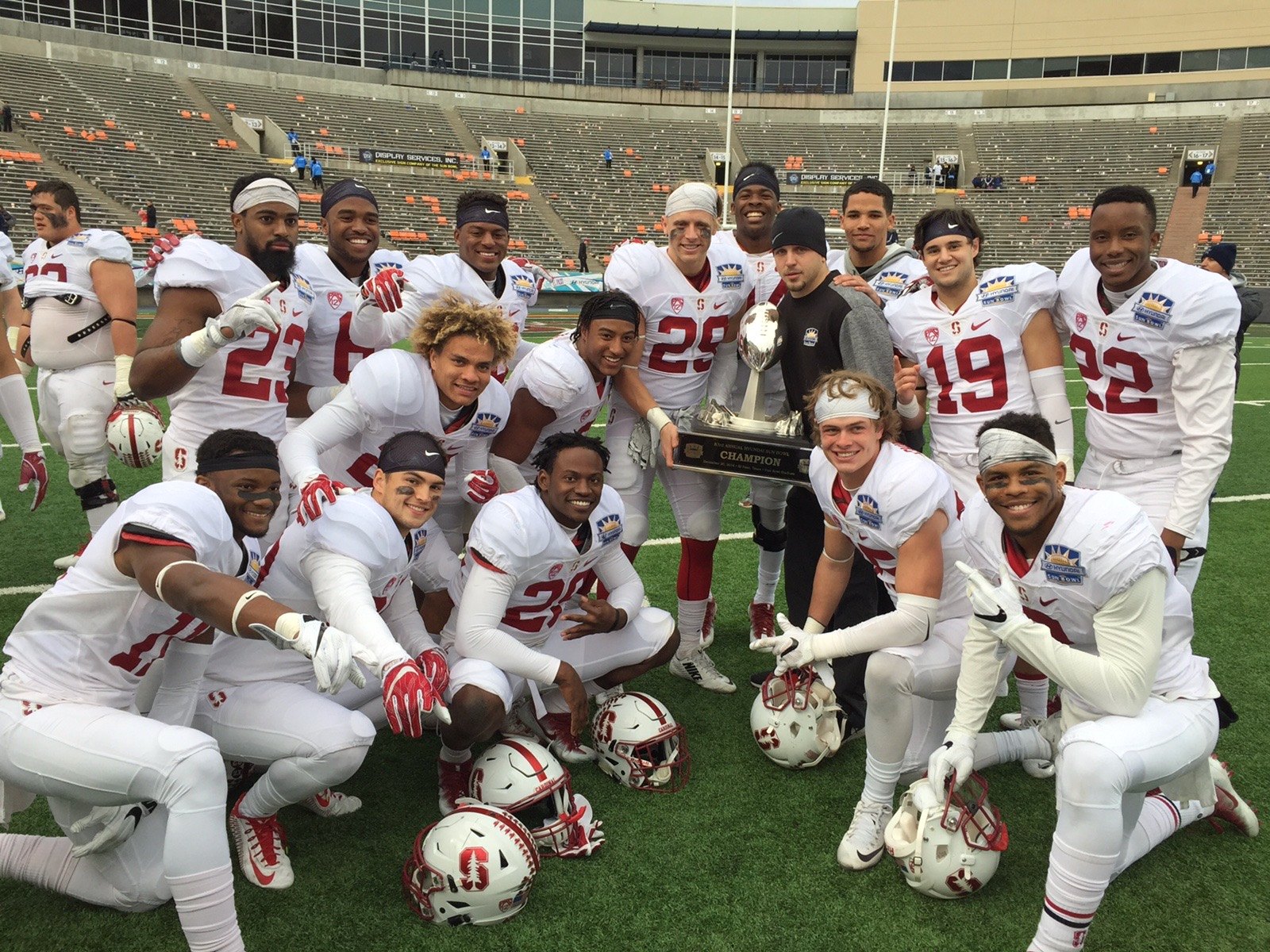
At Stanford, Ryan Gaertner sometimes missed his conditioning time. The consequence was unusually democratic: everybody ran extra. More than a hundred teammates paid for one person's mistake. Years later, when he wanted to explain accountability in a company, this was the memory he reached for. A business-school diagram might have been tidier. The football version came with witnesses.
He tells the story without awarding himself the starring role. The missed times were his. The inconvenience belonged to the team. His point is that an individual standard becomes consequential when other people depend on it. You can argue with a motivational poster. A hundred teammates doing extra conditioning make a more persuasive reminder.
That memory also supplies a useful way into Gaertner's career. He has been a college football player, an investor, and a startup CEO. He helped build DubClub, a platform for paid sports-content communities, before handing its leadership to Lewis Burik. He now serves as chief operating officer at Memories.ai. The job titles move around; the question of how one person's work affects everybody else's keeps returning.
His reflections on Stanford borrow from Bill Walsh's approach to performance: define how people should behave, hold them to it, and let the results follow. This is less glamorous than predicting a championship. It is also more useful on a Tuesday. For Gaertner, the team is where an abstract ambition acquires an actual obligation.
A captain learns the scout-team job
Before Stanford, there was Sacred Heart Prep. Gaertner played running back and cornerback, became a senior captain, and helped his school win two Central Coast Section championships. His senior season included 1,098 rushing yards and 14 touchdowns. Track supplied another form of team membership: he belonged to a school-record 4 × 100-meter relay squad.
The official college record gives the next chapter a different scale. He did not see game action in his first three Stanford seasons; as a senior in 2016, he appeared in two games. His own description of those years emphasizes preparing the starters on scout team. The high-school captain had a job whose value would often appear in somebody else's performance.
That is an interesting apprenticeship for a future executive. Scout-team work asks a player to take preparation seriously even when the Saturday spotlight goes elsewhere. It makes contribution harder to confuse with visibility. Gaertner's later emphasis on collective standards fits that experience, although the connection is his interpretation of his football years rather than a formula every athlete carries into business.
Football also ran in the family: his older brother Chris played at Stanford. Ryan studied public policy and completed his undergraduate degree in 2017. Away from the field, his college biography listed skiing, a PADI Divemaster qualification, and a brown belt in karate. Apparently, one competitive surface was insufficient.
Three founders, several places to work
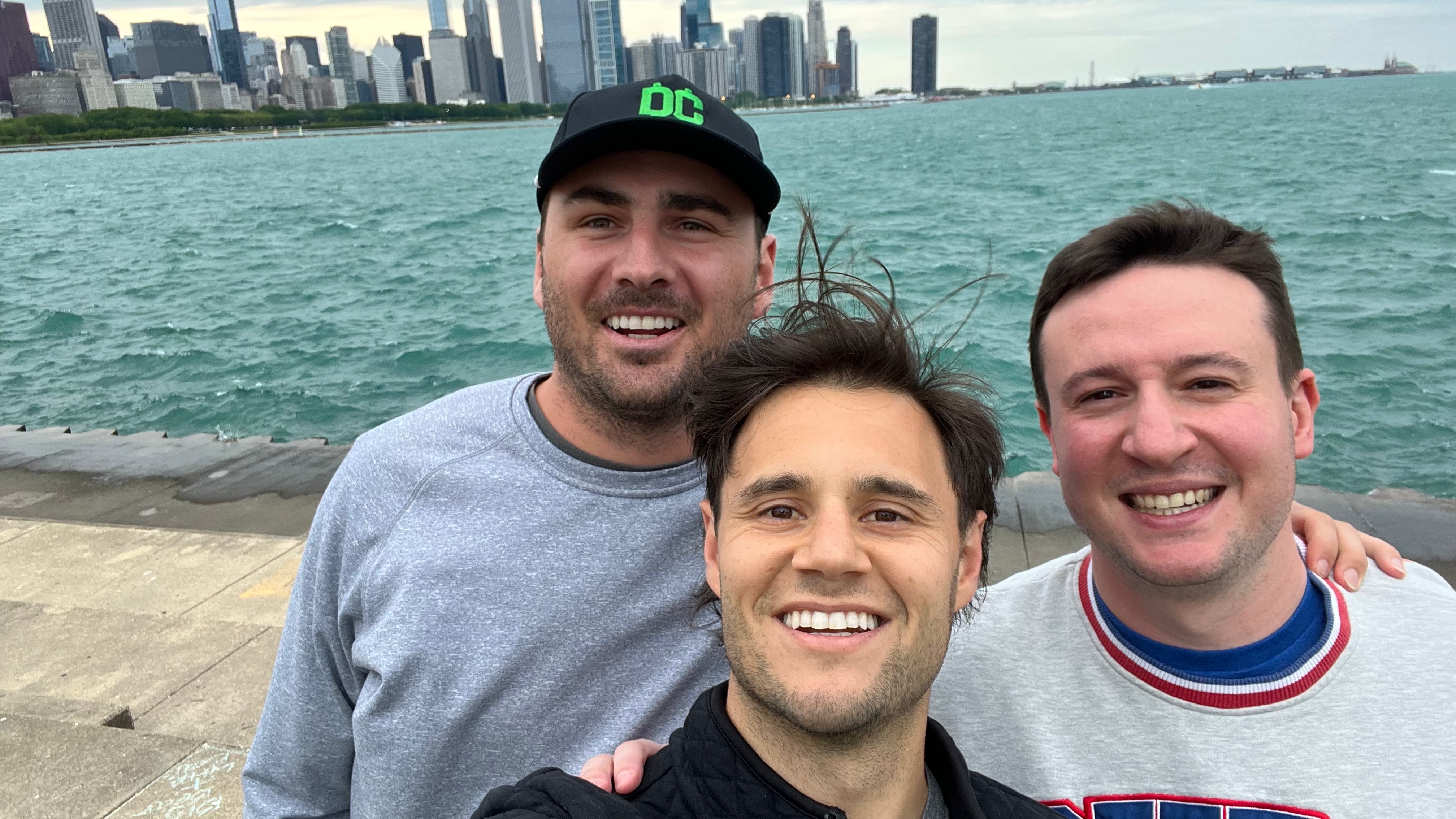
DubClub took shape in 2021. Gaertner's later account divides the founding contributions with pleasing specificity: Andrew Daschbach supplied the original idea; Burik supplied the name. Gaertner's early CEO work involved listening to creators and helping the three founders agree on a direction. Even the company name had a teammate behind it.
The founders were former Stanford athletes. Daschbach's frustration concerned access to betting content, and the business connected sports handicappers with paying subscribers. In that arrangement, a creator's expertise still needed practical machinery: subscription payments, delivery, and a place for the audience to gather. DubClub worked on the machinery around the content.
Gaertner remembered the company beginning in the founders' San Francisco apartment. The work soon spread across very different settings. He built from Stanford's Graduate School of Business while Burik worked from Chicago and Daschbach from a baseball locker room in Baltimore. Gaertner described weeks exceeding a hundred hours during those first two years. He earned his MBA in 2023.
A shared starting point did not make agreement permanent. In a later reflection, he said that keeping three founders aligned became harder as the company grew and they lived across time zones. Employees felt the disconnect. The founding team's individual perspectives began to split their shared picture of the future. This is a more useful admission than the usual retrospective in which everybody always knew exactly where they were going.
He explained the problem through an image of people steering separate canoes while blindfolded and rarely talking. The image is deliberately awkward. A group can have capable paddlers and still head toward different destinations. His lesson was to invest in a common vision instead of assuming that proximity at the beginning would keep doing the work forever.
The spreadsheet that stayed too long
For more than a year, DubClub's referral system consisted of founders updating a Google Sheet each month and paying creators manually through PayPal. Gaertner later said referrals drove 30 percent of revenue. A substantial piece of the business depended on a procedure that would not have looked especially impressive in a product demonstration.
He was candid about the delay: they should have automated after three months rather than twelve. Still, the manual process taught them what mattered. Handling the work directly exposed the human dynamics of referrals before those dynamics disappeared behind software. The spreadsheet was doing two jobs, administering payments and teaching its owners what a better system needed to understand.
There is room for both lessons. Waiting too long costs time. Automating before you understand the activity can give assumptions a very efficient delivery mechanism. Gaertner's account holds those ideas together rather than pretending that scrappiness absolves every delay. His founders learned something valuable, and they also kept doing the cumbersome thing longer than they should have.
In the same reflection, he returned to a Stanford locker-room ritual. After a game, a teammate would call out the next opponent and the team would answer. The immediate task had a name. A future bowl game was still somewhere down the schedule. He connected that habit to building a company through successive small wins. Even an ambitious business eventually has to finish this month's payments.
of revenue came through referrals, Gaertner recalled.
A company can grow beyond its founder’s appetite
The company attracted outside backing. In September 2024, Renegade Partners announced a $7.5 million Series A, with existing investors Uncork Capital and Will Ventures participating. A company announcement also identified Warby Parker cofounder Dave Gilboa among its backers. The capital supported a business built around creators selling access to sports knowledge.
Tripp Jones of Uncork later recalled initially wondering whether DubClub's market was too narrow. By the time of the Series A, he said the company had moved ahead of his expectations. That recollection adds a useful wrinkle to the funding story: the business did not begin with universal agreement about its possibilities. A niche had to earn a second look.
Gaertner also hosted CEO Corner, interviewing people running sports-content businesses. One conversation featured Sriracha DFS, whom Gaertner described as having amassed more than 50,000 DubClub subscribers. The episode covered building the brand and the work of being a creator CEO. Other guests included DNR Sports and DeadPresPicks. The subjects were customers with businesses of their own, rather than an anonymous audience on the other end of a payment.
In September 2025, Gaertner announced he was stepping down. He reported more than $100 million in gross merchandise volume and annual growth above 100 percent since inception, while describing the business as moving toward profitability. Gross merchandise volume measures transactions through a platform; it does not measure the founder's personal wealth. The distinction matters when a large number becomes the shorthand for a person's story.
He named Burik as his successor and said he would remain the largest shareholder, supporting DubClub through quarterly board meetings while leaving daily operations. It was a transfer of responsibility inside the founding team. The business could carry on without requiring its first CEO to remain in the same seat.
His later explanation made the decision more personal. Before founding DubClub, he had rarely placed a bet. Daschbach's attachment to sports betting was stronger; Gaertner's was to helping creators build sustainable businesses. As the company's mission developed, he questioned whether his own motivation still made him the right leader. Success had produced a harder question than how to get the company started.
“But my own passion was helping creators build sustainable businesses on our platform”Ryan Gaertner, reflecting on his time at DubClub
- 2021DubClub takes shape
- 2023Stanford MBA completed
- 2024$7.5M Series A announced
- 2025CEO baton passes to Lewis Burik
- 2026Joins Memories.ai; now COO
The next table has robotics researchers
By May 2026, Memories.ai founder Shawn Shen was welcoming Gaertner as the company's founding go-to-market hire. The introduction emphasized his experience taking a business from inception through a Series A and profitability. Memories.ai now lists him as COO. His assignment sits between research and customers: helping technical work become something people can use and pay for.
The company describes its work as visual memory infrastructure for AI. It indexes and retrieves video information so systems can use what they have seen. Its ambition includes robots, wearables, and agents that retain visual context over time. Gaertner's work has moved from creators distributing sports analysis to a company making accumulated footage usable.
His public posts have become correspondingly specific. He discusses searchable video data, selecting and labeling relevant clips, and adapting models to a customer's own operations. He argues that enterprises want control of the data and systems that give them an advantage. The commercial question is concrete: what can a business do with footage it already records?
There is also a more sociable part of the job. He and Shen have been convening small dinners for people building physical intelligence. Participants have come from robotics companies and research teams including 1X, Luma, Meta, and Applied Intuition. The conversations range across camera placement, training data, and trust in model-generated code. Several careers after a football locker room, Gaertner is still making room for teammates around a shared problem.
He describes his broader ambition as using AI to give people more space for creativity and connection. Read alongside his career, that aspiration has a practical edge. He has spent time on businesses where expertise needed better distribution, founders needed better coordination, and valuable information needed better tools. The new work changes the material from sports content to video memory. It keeps the interest in what people could do if less of their day disappeared into administration.
The conditioning story remains a fitting place to leave him. Gaertner remembers being the person who missed his time. He also remembers what the mistake asked of everyone else. His career now includes the decision to hand a growing company to a cofounder and take a different role on another team. For someone accustomed to keeping score, there is something consequential about learning which job is yours to do next.