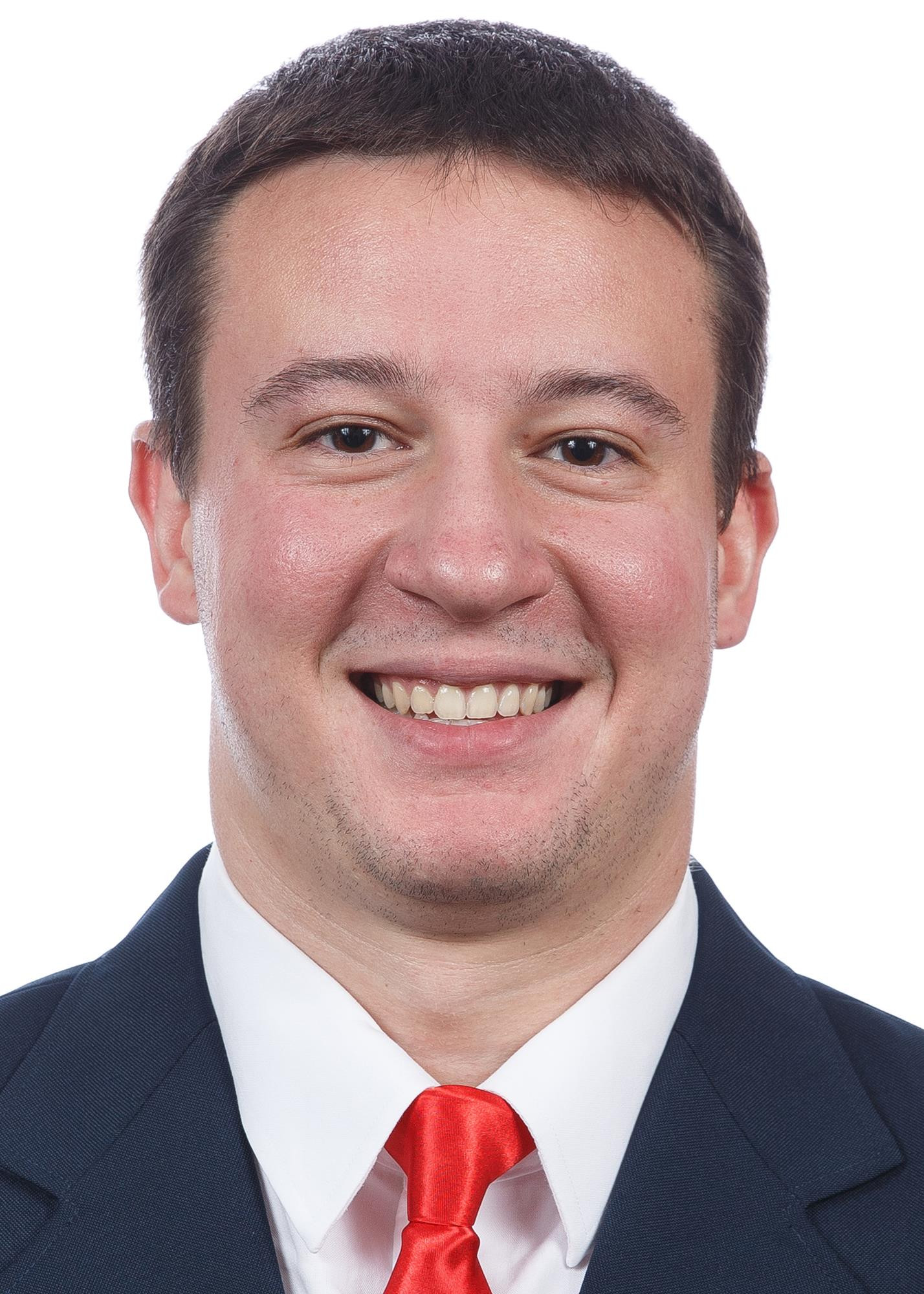
He runs the place where amateurs go to stop losing alone.
Open DubClub on a Sunday morning in football season and the thing hums. Picks arrive by text. Notifications stack in Discord. Somewhere a recreational bettor in a group chat is deciding whether to tail a capper he has never met but has paid $40 a month to trust.
Lewis Burik built the rails under all of it. As co-founder and now CEO of DubClub, he sits at the center of a marketplace that connects everyday sports bettors with vetted handicappers, the people who research games for a living and sell their predictions to fans willing to pay. By the company's fourth anniversary in October 2025, that marketplace had moved more than $95 million in lifetime gross merchandise value, served roughly 1.5 million fans, and, unusual for a venture-backed startup, turned a profit.
The pitch is almost stubbornly simple: fans and the creators they follow should win more together. Strip away the slogan and what Burik actually sells is trust in a category that has very little of it. Before DubClub, finding a good capper meant wading through anonymous Twitter accounts, sketchy payment links, and the constant low hum of being scammed. DubClub vets the cappers, handles the money, and delivers the picks. The bettor stops chasing ghosts. The capper gets paid on time. Burik takes a cut and keeps the lights on.
It is a tidy business hiding inside a messy industry. The U.S. sports-betting market generated $10.9 billion in revenue for casinos and sportsbooks in 2023, with forecasts pushing toward $30 billion. DubClub does not take the bets. It sells the information around them, which means it grows when betting grows but never has to set a line or cover a loss.
“We launched DubClub four years ago to solve our own problems as recreational bettors looking for a better way to tail our favorite cappers.”
It started as a complaint, overheard.
The company exists because of a conversation Burik was having with Andrew Daschbach, and because their teammate Ryan Gaertner happened to be listening. Daschbach wanted an edge. He had found handicappers online who were willing to share picks, but the whole experience was broken. The cappers were scattered across social platforms. The payments felt risky. Telling the real ones from the con artists was a coin flip. Gaertner heard the gripe and recognized a product.
All three had met at Stanford, where they were athletes before they were founders, bonding over football, baseball, and the shared hobby of betting on sports they understood better than most. In 2021 they turned the complaint into a company and launched DubClub out of Chicago. Burik came on as chief operating officer, the founder responsible for making the machine actually run, before stepping into the CEO seat as the company matured.
There is a useful honesty in how they describe the raise that followed. When DubClub closed a $7.5 million Series A led by Renegade Partners in September 2024, the leadership was candid that the company was not capital-intensive and did not strictly need the money. The round was fuel for better technology and more hiring, not a lifeline. An earlier $3 million seed, led by Uncork Capital in 2022, had already proven the model. The cap table reads like a sports-and-commerce all-star roster: Warby Parker co-founder Dave Gilboa, former Barstool Sports operators, and a handful of Hall of Fame NFL players among the backers.
“When betting on sports, you are at a structural disadvantage versus the sportsbooks.”
Before the cap table, there was a roster spot he had to earn.
Burik is from Chicago, where he played at Saint Ignatius College Prep and was, by any measure, a problem for opposing offenses. In nine games during 2014 he set a team record with 102 tackles. He made the All-Chicago Catholic League team and took home the Anthony Fornelli Leadership Award. He was, notably, the first member of his family to play football at any level, which makes the next part more surprising: his mother, Lisa Burik, graduated from Stanford in 1985.
He followed her to Palo Alto, but not as a recruited star. Burik walked on to Stanford football, an inside linebacker listed at 5-foot-10 and 205 pounds on a Power Five roster stocked with bigger, faster, more heavily courted athletes. The college stat line is modest, a handful of tackles across his appearances, two against UC Davis here, two solo against Oregon State there. The number that matters is not in the box score. It is the fact that he made the team at all, then majored in Management Science and Engineering while he did it.
Walk-on is a useful word for understanding how Burik operates. Nobody hands a walk-on anything. You earn the practice rep, then the roster spot, then the trust. Run a startup the same way and you get a founder who treats customer trust as something built tackle by tackle, not bought with a marketing budget.
How a creator gets paid on DubClub.
The numbers underneath the headline are where the business reveals itself. Of the GMV DubClub has moved, more than $20 million is directly attributable to the company's own product and marketing rather than creators bringing their own crowds. The creator tiers tell the rest. By late 2025, 570 cappers had earned $10,000 or more on the platform. One hundred forty had cleared $100,000. Eighteen had passed the million-dollar mark.
That distribution is the entire game. A marketplace lives or dies on whether its top creators can make real money, because the millionaires are the proof that draws the next thousand hopefuls. DubClub's fourth-anniversary push leaned into exactly that, shipping a Rewards Hub, a Verified Reviews system, and a Winner's Feed designed to surface who is actually hitting and let fans sort signal from noise. The unglamorous infrastructure, third-party tracking links and smarter discovery filters, is the part Burik tends to obsess over.
Creators by Earnings Tier · 2025
Number of DubClub cappers reaching each lifetime earnings tier. Source: DubClub, October 2025.
Details that don't fit the LinkedIn bio.
His personal handle is @Burik312, a quiet Chicago flex. 312 is the area code that wraps the Loop where DubClub keeps its office.
He went from recording two tackles against Oregon State to running a company that tracks millions of dollars in betting subscriptions. The pivot from the field to the spreadsheet was not gradual.
All three co-founders are Stanford athletes. The founding meeting was, functionally, a locker-room conversation that never ended.
He is the first in his family to play football, yet the second to attend Stanford. His mother got there first, in 1985.