Economics · Writing · The Future of Work
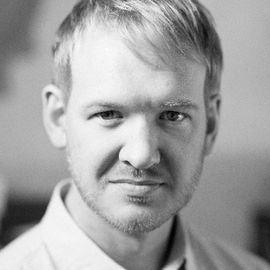
Ryan Avent
He spent six years writing the column that told the world's central bankers what to think about. Then he wrote the book on why their best policies still can't fix work.
He spent six years writing the column that told the world's central bankers what to think about. Then he wrote the book on why their best policies still can't fix work.
There are two rabbits in his house named Richard and Edith - a quiet wink at Richard and Edith Abdy, or perhaps just a household that takes its naming seriously. Ryan Avent has spent his career like that: small, exact observations stacked until they describe something enormous.
Today he runs portfolio communications at Select Equity Group, a New York investment fund, and writes The Bellows, a Substack whose one-word tagline - "Exhalations" - is about as much branding as he bothers with. The newsletter is where the column habit lives on. The arguments are the same shape they always were: patient, data-soaked, willing to follow an idea past the point where it gets uncomfortable.
For 15 years that habit belonged to The Economist. Six of those years he wrote Free Exchange, the magazine's flagship economics column - unsigned, as the house style demands, but unmistakably his. From that perch he became one of the most-read explainers of the questions that refuse to resolve: why cities cost so much, why wages stalled, and what happens to people when machines get good at their jobs.
He is best known for the answer he gave to that last question. The Wealth of Humans, published in 2016, took a phrase that sounds like good news and turned it into a warning.
What sets him apart is not a single forecast but a refusal to let a clean idea stay clean. He writes about automation without the breathless robot panic, and about housing without the moralizing. The work is closer to careful accounting than prophecy - which is, of course, exactly where he started.
Three trends - automation, globalization and the rising productivity of a highly skilled few - are combining to generate an abundance of labour: a wealth of humans.- Ryan Avent, The Wealth of Humans
The title reads like a celebration. The argument is closer to a paradox: the same forces that make economies richer also make most workers easier to replace. Three forces, one squeeze.
Software and machines absorb tasks faster than new roles appear, pushing displaced workers into a widening pool.
Billions more workers join the world labor market, deepening the supply of people available to do almost any job.
A small, highly skilled elite captures an outsized share of the gains, while the value of ordinary labor erodes.
Avent did not arrive in economics journalism by the obvious door. He started as an industry analyst at the U.S. Bureau of Labor Statistics - the federal office that does the unglamorous arithmetic of who works where and for how much. Before he ever wrote a sentence about the labor market, he was measuring it.
From there came a stint as an associate at an economics consulting firm, then a leap that looked reckless on paper: roughly two years of full-time freelancing. He sold pieces, built a name, and wrote his way into the conversation. Around 2007, The Economist hired him as its online economics editor. He edited the economics page, ran the Free Exchange blog, and herded a discussion forum stocked with some of the best-known academic economists alive - a job that is part referee, part translator.
The translator's instinct never left. His byline - or, for years, his deliberate absence of one - turned up across the field: The New York Times, The Washington Post, The Atlantic, The Guardian, Bloomberg and TIME, alongside academic work on economic geography. He could write a forum post for professional economists in the morning and a column for everyone else in the afternoon, and the second was usually the harder craft.
In 2011 he published The Gated City as a Kindle Single - a short, sharp e-book arguing that the most prosperous American cities had quietly priced out the people who most needed them by refusing to build. It landed years before "housing abundance" became a movement with a name. He was early, which in writing is indistinguishable from being right and unpopular at once.
Then came The Wealth of Humans in 2016, the book that made the abstract feel personal. Its real subject is not robots. It is status - the thing money buys but cannot replace - and what a society owes people when the old route to dignity, a good job, stops being widely available.
The book argues that the digital revolution is likely to prove as transformative as the industrial one, and that the transition will be just as wrenching. Cheap, abundant labor does not vanish; it pools. Wages stagnate not because there is too little to do but because there are too many hands able to do it. The hard question, in his telling, is political and social rather than technical: how a rich society distributes purchasing power, dignity and a sense of contribution once the job can no longer be relied on to deliver all three at once.
Reviewers across the spectrum took it seriously, from the Peterson Institute to Fortune. It is the kind of book that gets argued with rather than dismissed, which is the highest compliment a book of ideas can earn.
The institution of work - apart from family, our most important piece of social infrastructure - can no longer be counted on to fulfil its many crucial roles.- Ryan Avent, The Wealth of Humans
Why the richest American cities stopped building, priced out their own workers, and slowed the whole country down. Housing abundance, argued before it had a hashtag.
Work, power and status in the twenty-first century. The labor-glut thesis in full: automation and globalization meet a social contract that was built around the job.
A framework for how societies operate and evolve, pulling from economics, history and the study of belief itself. The widest net he has cast yet.
After 15 years, leaving The Economist could have been the end of the public writing. Instead it became a pivot. As Director of Portfolio Communications at Select Equity Group, Avent now writes for an investment fund by day - the same analytical muscle, pointed at markets and companies rather than at the wide-angle questions of a column.
But the column habit was too deep to retire. In 2020 he launched The Bellows on Substack, and it reads like Free Exchange unbuttoned: longer, more personal, free to follow a thread without a word limit or a house voice. It is where he has worked out, in public and in installments, the ideas that are becoming his next book.
That book - forthcoming from Yale University Press - widens the lens again. Where The Wealth of Humans asked what work does for us, the new project asks how belief itself shapes whether societies thrive or stall. It pulls from economics, history and beyond to assemble a single framework for how human progress actually happens. It is the most ambitious thing he has attempted, which for a man who once redefined a phrase the whole field now uses, is saying something.
Richard and Edith. The household in Raleigh runs to two kids, two dogs, two rabbits - and the rabbits have proper names.
He counted before he wrote. The path to the world's most famous economics column started at the Bureau of Labor Statistics, doing the math by hand.
Early to the e-book. The Gated City was a Kindle Single in 2011 - short-form economics writing years before Substack made it a genre.
"Exhalations." The entire brand statement for his newsletter, The Bellows, is one word long.
Anonymous, on purpose. Free Exchange runs without a byline. For six years some of the most-quoted economics in print was his and signed by no one.
From explainer to insider. He swapped the press box for an investment fund - then kept writing publicly anyway.