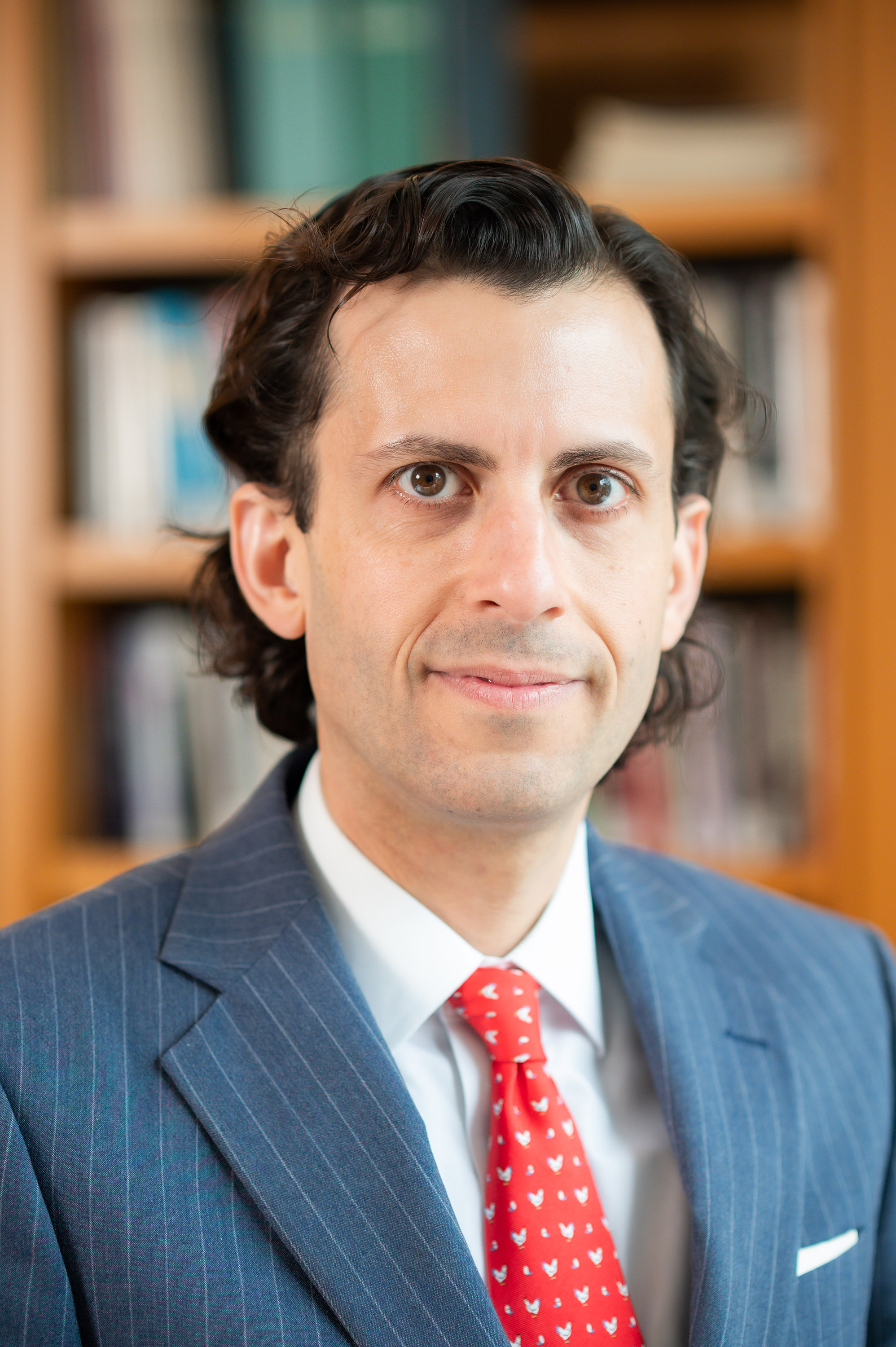
Catch him mid-argument
On a given week, Alex Nowrasteh is in a House hearing room being asked whether immigrants commit more crime, and he is answering with incarceration rates broken out by legal status. He is the rare Washington witness who arrives less interested in winning the room than in being right after the cameras leave. As Senior Vice President for Policy at the Cato Institute - a job he was promoted into in October 2025 - he now oversees the research output of an entire libertarian think tank. But the through-line of his career is narrower and stranger than a title: he has spent more than a decade taking the standard objections to immigration and treating each one as a hypothesis.
Crime. Terrorism. Welfare costs. Wages. Culture. Institutions. Each is a claim that can be tested, and Nowrasteh's instinct is to test it rather than to debate it. He calls himself, without hedging, "a radical" who supports open borders. In a town that runs on careful positioning, saying the maximalist thing out loud is its own kind of move.
The famous number came in 2016. In a risk analysis of terrorism and immigration, he worked out that an American's chance of being killed by a foreign-born terrorist in a given year was somewhere around one in 3.6 to 3.8 million. The figure traveled. It got cited by people who agreed with him, and - more telling - by people who didn't, because the math was the math. When your opponents quote your statistic to make their own point, you've changed the terms of the conversation.
The risk he keeps pointing at
A filmmaker's son who chose footnotes
He grew up in Southern California, the son of Cyrus Nowrasteh, the Iranian-American writer-director behind "The Stoning of Soraya M." and the controversial miniseries "The Path to 9/11," and Betsy Giffen Nowrasteh. The household trafficked in narrative and spectacle. Alex went the other way, toward the least cinematic discipline available.
He took a BA in economics at George Mason University, a school whose economics department is a kind of spiritual home for free-market and public-choice thinking. Then he crossed the Atlantic for a master's in economic history at the London School of Economics, where his dissertation was on - of all things - the economics of counterinsurgency strategy. It's a detail that doesn't fit the brand and that's exactly why it's worth keeping: before he was the immigration-and-welcome guy, he was sizing up the cost-benefit math of putting down rebellions.
Back in Washington, he worked as an immigration policy analyst at the Competitive Enterprise Institute before joining Cato around 2012. In 2013, ABC News ranked him #15 among the top immigration experts to follow on Twitter, and National Journal put him in print. The specialization had found him, or he had found it.
Two books, one method
Wretched Refuse? The Political Economy of Immigration and Institutions
Written with economist Benjamin Powell. The core question: do immigrants erode the very institutions that made destination countries rich? Their evidence says the fear is overstated. It won the SDAE Prize for Best Book in Austrian Economics in 2022.
The Most Common Arguments Against Immigration and Why They're Wrong
A field guide to the debate: the fifteen objections people raise about immigration, each paired with Nowrasteh's data-driven rebuttal. Built to be argued with - which is the point.
From analyst to the whole portfolio
The 2025 promotion changed his blast radius. As Senior Vice President for Policy, Nowrasteh provides organization-wide oversight of Cato's research and content - the full agenda of individual liberty, limited government, free markets, and peace, not just immigration. It is a move from being a specialist with a loud megaphone to steering the megaphones.
His academic record is the ballast under the public profile. Peer-reviewed articles in the World Bank Economic Review, the Journal of Economic Behavior & Organization, and Public Choice; chapters in edited volumes; a 2019 study finding no relationship between immigration and terrorism in destination countries. The op-eds run in the Wall Street Journal, USA Today, and the Washington Post. The TV hits land on Fox News, MSNBC, Bloomberg, and NPR - which is its own quiet proof that he plays the argument, not the team.
What makes him unusual isn't the position. Plenty of people in Washington want more immigration. It's the refusal to argue it as a feeling. He'll grant you the worry, then hand you the number that sizes it - and the number is usually smaller than the worry. That's a harder sell than outrage, and a more durable one.
Things that don't fit the headline
The counterinsurgency dissertation. The Hollywood surname. The fact that his signature statistic is bipartisan ammunition. The willingness to use the word "radical" about himself in a profession built on sounding moderate. Nowrasteh's career is a stack of small mismatches that add up to a consistent person: someone who would rather be precisely unpopular than vaguely agreeable.
He studies how newcomers change the places they arrive in - whether they corrode institutions or leave them intact - and his answer, repeated across a book and a pile of papers, is that the alarm tends to outrun the evidence. You can disagree. He'd prefer that you bring data.