At nine, Russell Ward had a business that depended on other children wanting to play baseball. He rented out his equipment at recess. The trading window was a school break, long before there were festival briefs or media lists. It is a pleasantly literal beginning for someone who would later make a career around getting people to show up.
Before college, another opportunity appeared in a local café's quietest day. Ward turned it into an open-mic night. The result was the shop's highest single-day revenue in its 25-year history. Put a microphone in a room and the room acquires a different purpose. People who might have stayed home now have a reason to come, and perhaps another reason to buy something.
Today, Ward is the founder and CEO of The Confluence, a Los Angeles media and creative agency whose work brings publicity, photography, filmmaking and campaign strategy together. Festivals run through his career, but so does an older question: what makes somebody care enough to participate?
A key, a necklace, an argument
By July 2009, Ward was already identified publicly as the founder of The Confluence Group. That summer, he was speaking for a project whose merchandise required rather more explanation than the average necklace. Trevor Hubbard's 823KeyProject sold antique skeleton keys with pewter tags, using the proceeds to pursue grants for creative people.
The number came from pager shorthand for “thinking of you.” There were to be 823 keys in each lettered series, with the project aiming to fund artists, photographers and musicians. The keys retailed for $75 at the time. An object you could wear was being asked to carry a small cultural argument.
“We need to use capitalism to help the arts.”
Russell Ward, 2009
Ward's line gives the venture its bite. Commerce could pay for creative work; a purchase could also announce an allegiance. The necklace offered both a thing and a story about owning it. A skeleton key is particularly obliging in this respect. Few household objects arrive with quite so much metaphor already attached.
“Thinking of you” became the name of an arts-funding project Ward represented in 2009.
The festival has to survive Monday
Ward's work as a publicist and filmmaker took him into a circuit that included Lightning in a Bottle, Shambhala, Decibel and Symbiosis. The combination matters. A publicist needs an account of what happened; a filmmaker has to decide where to stand while it happens. Doing both brings the story closer to the event itself.
His formal business education came at the University of Colorado Boulder's Leeds School of Business, where he studied marketing with an emphasis on entrepreneurship. His professional biography also includes teaching tastemaker marketing at General Assembly in Santa Monica and graduate teaching in Berklee's online master's program.
There is a business-school question beneath the confetti: will anyone come back? Discussing Life Is Beautiful in Las Vegas in 2016, Ward explained why young festivals can require heavy spending before they have the emotional advantages of established events. He had attended the festival during the preceding two years.
He pointed to the absence of “muscle memory in the first years, or nostalgia.” An established gathering can sell the prospect of returning to something already loved. A new one must first create the experience people will later miss. That is an expensive chronological inconvenience.
The observation is useful because it treats affection as something with financial consequences. A crowd may be large while a festival still loses money. Attendance, memory and a viable business have to develop together, and a full field does not settle every question on the spreadsheet.
When the camera joins the press office
At Wonderfruit in Thailand, The Confluence's assignment stretched across those professional boundaries. The agency handled publicity, contributed to strategy and branding, developed content and coordinated press on site. It also worked between the festival and PR agencies across Asia, while serving as the official photography and video team.
The work offers a concrete picture of Ward's business. Someone has to help journalists understand a festival; someone has to produce the photographs and films through which everyone else encounters it. In this case, both responsibilities belonged within the same agency. The eventual public impression depended on several kinds of work agreeing with one another.
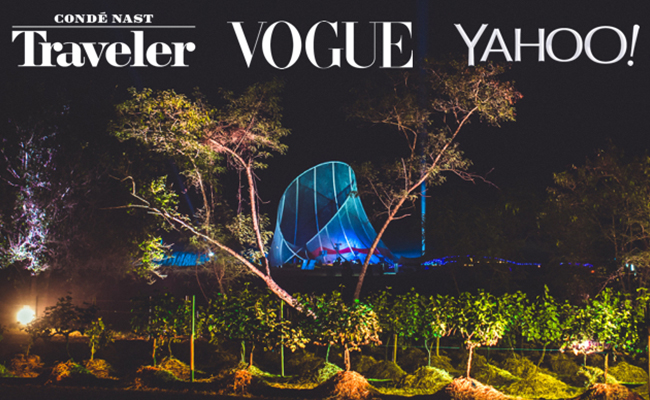
A separate film, Journey to Wonderfruit, explored the trip through Thailand, paying attention to culture and the relationship between traditional and modern life. That choice widened the frame beyond a performance schedule. The place around a festival can be part of the invitation.
A lineup gives a prospective visitor names to recognize. A film can supply a sense of distance, setting and movement. The two forms answer different questions, which helps explain why Ward's agency kept room for both.
Singapore wanted a wider audience
In 2017, the Singapore festival ZoukOut appointed The Confluence after a competitive pitch. The brief covered media strategy and outreach across Asia, North America and Australia. Zouk retained responsibility for outreach in Mandarin-speaking markets, including Hong Kong, China and Taiwan.
The distinction is instructive. An international campaign can involve several teams with different language and regional responsibilities. Reaching farther requires decisions about who knows which audience, as well as a convincing idea of what that audience might want.
Zouk CEO Andrew Li pointed to The Confluence's Wonderfruit experience and its relationships in the United States and elsewhere when explaining the choice. The earlier Thailand work had become a credential for another festival seeking recognition overseas.
For Ward, this was a connection between two assignments with different local identities. ZoukOut was already a 17-year-old festival. Its challenge was to carry an established reputation into more places. The Confluence had to help make that reputation legible to people for whom the name might still be new.
Too much to look at
Ward was also talking publicly about a problem familiar to anyone who has ever tried to take in an entire festival: there is a great deal competing for the eyes. At SXSW in 2017, he joined a panel about festival installations as art and technology became increasingly intertwined in live experiences.
“There's so much overstimulation now…”
Russell Ward, SXSW, 2017
He argued that festivals had needed to raise their game. It is a revealing concern for a publicist. The experience itself must offer something worth paying attention to before a campaign can do much with it. A striking installation can become a meeting point, a photograph or the detail someone remembers afterward.
Later that year, at XLIVE in Las Vegas, Ward sat down with Refinery29's experiential marketing executive Kelly Markus. Their conversation examined working with brands on immersive experiences, including the example of 29Rooms, Refinery29's traveling art experience.
That discussion brings a second audience into view: the brand paying to participate. Visitors arrive with their own plans and preferences. A sponsor wants a place in those plans. Designing an encounter that accommodates both interests is a more delicate assignment than putting a name on a wall.
The conversation travels, too
Ward's speaking work also included the October 2016 SF MusicTech Summit. He appeared on its “Marketing that Works” panel with David Macias of Thirty Tigers, Asya Shein of Fusicology and Sammy Andrews of Sabotage and Entertainment Intelligence. Berklee Online's Mike King moderated.
The lineup placed an agency founder beside people working across music, audiences and industry data. It was a fitting setting for a career that moves between making creative work and finding its public. The question in the panel title was practical enough to resist much decoration: does the marketing work?
His production credits provide another view of those connections. The Shocase Presents documentary series credited Ward as a producer, alongside creative director Eric Starr and cinematographer and editor James Bishop. The series featured creative and marketing figures discussing their work, including Dream Rockwell, Brendan Gahan, Kit Hinrichs and Jason Harris.
Here, the people who usually help shape a message became its subject. The format gave professional judgment a face and a voice. It also put Ward in the business of helping other creative people explain how they think.
Another kind of cultivation
In 2018, The Confluence described Food Decentralized, an initiative Ward spearheaded with Koya Aquaponics. Its ambition was to help communities grow food using aquaponics, which combines raising aquatic animals with growing plants in water. Plans included taking the approach into schools in Puerto Rico.
The project was still describing an early prototype, intended for display in the agency's downtown office. The ambition belongs in Ward's story as an ambition: a proposal to put a different kind of production system within reach of more people.
It is a surprising final turn for a career associated with stages, cameras and press lists. Yet it sits comfortably beside the key necklaces of 2009. Both projects asked whether the machinery of business could support something beyond the transaction itself.
Ward's career supplies several versions of participation: borrow the glove, take the microphone, buy the key, attend the festival. Each begins with a practical invitation. The lasting question is what happens after somebody accepts it.