The most revealing number in Runyon Saltzman's portfolio is not five billion, though five billion is difficult to ignore. It is 90 percent. During California's COVID-19 campaign, RSE says its work produced five billion impressions, and 90 percent of them ran through media serving diverse communities. That second figure explains the first. The agency was not simply buying reach. It was deciding whose radio station, neighborhood organization, language and familiar face might make an official message feel usable.
That is an odd corner of advertising in which to build a reputation. The product might be a vaccine appointment, a REAL ID, a dental visit, paid family leave or a community-college application. There is no glossy object to place on a pedestal. Often there is only a complicated instruction and a person with several excellent reasons to postpone it.
RSE, the initials by which Runyon Saltzman now goes, calls itself an integrated marketing and communications agency. The label is accurate but bland. In practice, it is a behavior-change shop: roughly six decades of strategy, research, creative, media buying, public relations, public affairs, digital work and community outreach, assembled for institutions whose success depends on the public doing something.
The boring message is the hard one
Imagine the California DMV's problem. People knew the DMV existed. They did not necessarily know which documents a REAL ID required, when enforcement would begin or why a visit should happen now instead of later. RSE analyzed field-office data, used an online panel of roughly 600 people to test three creative concepts, built a logo and guidelines, translated the campaign into eight languages and launched in less than two months.
Then the first route failed. In March 2020, shelter-in-place orders closed the field offices that the campaign had been preparing people to visit. The objective survived, but the behavior had to change. RSE shifted the message toward online DMV transactions and the agency's revamped website. By spring 2023, RSE reported nearly 900 million paid REAL ID impressions and more than 18 million conversions. Its online-services work added more than 600 million paid impressions and 11.5 million transactions.
“We believe in the power of communications to change behavior.”RSE, on its California pandemic work
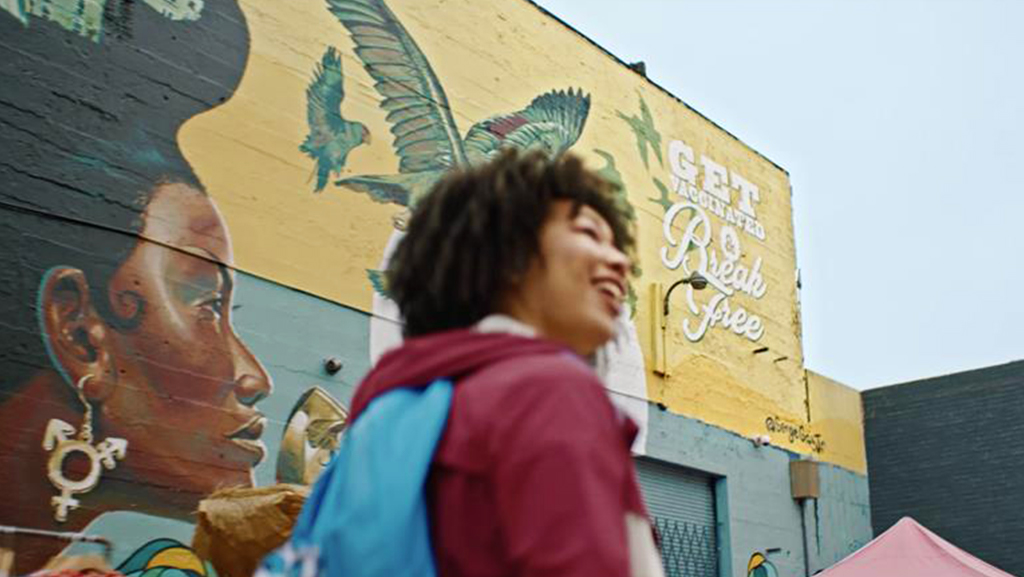
The same logic ran through the pandemic brief, only at emergency scale. Messages changed as the crisis moved from basic safety to case reduction to vaccination. Work appeared in 12 languages across social, digital, broadcast and outdoor media. The campaign recruited faith and community leaders, artists and influencers. The result was not one perfect advertisement. It was a system for repeatedly answering: who needs to hear this, whom will they trust and what can they do next?
A $40 million lesson in where the money went
The amended California Department of Social Services agreement offers a rare look at cost. The total was $40 million for 2021. Of that, $36.06 million went to paid media. The remaining $3.94 million covered fixed costs such as creative production, collateral and toolkits, management with community organizations and influencers, subcontractors, research, tracking and staff time.
2021 amended outreach budget
This distinction matters because a $40 million contract can sound like a $40 million agency fee. It was not. Most of the money purchased distribution. RSE's commercial position is to sit in the middle of a complicated network: the state, researchers, production teams, media owners, subcontractors, community-based organizations and the audience. The agency earns project and contract revenue for coordinating that machinery, and its federal GSA and California CMAS credentials make it easier for public buyers to hire it.
The method is expensive when the audience is an entire state and time is short. It also depends on infrastructure. An organization without reliable research, enough media weight, local partners or a measurable next action would be copying the surface rather than the system. A clever line cannot compensate for an unavailable appointment, an untranslated form or a messenger nobody trusts.
The thing worth stealing
The reusable part of RSE's work is not a color palette or slogan. It is sequence. The California Workers Outreach Project formalized community review through a group known as the Kitchen Cabinet. Regional leads reviewed large volumes of material; some assets became templates that local organizations could customize; others were co-built with community groups from the start. The feedback changed design, language and imagery before distribution, when it could still matter.
Find the behavioral barrier, not merely the demographic.
Test more than one message with the people expected to act.
Invite trusted local messengers into production early.
Measure the action: visits, bookings, downloads, transactions.
That sequence appears at smaller scales too. For First 5 Sacramento and Sacramento County Public Health, RSE built Unequal Birth to expose racial disparities in infant and maternal mortality. Radio, paid social, Pandora and 14 digital billboards sent more than 20,000 people to the campaign page in five months; media negotiation added 4.8 million bonus impressions. For Smile, California, a clear website and approachable oral-health work produced more than 1.25 million site visits and 692,451 clicks on Find a Dentist.
Targeted impressions supporting First 5 California's paid-family-leave policy campaign. SB 1383 passed despite opposition.
Impressions from a three-week paid-social run starring Stella, a bilingual saber-toothed dental-health guide.
These are good conditions for the model: an important behavior, a definable audience, genuine friction and an institution capable of delivering what the message promises. The model is less persuasive for a one-off awareness stunt with no next step, or for an organization that wants the credibility of community partnership without surrendering any control to community partners.
The name returned to its beginning
RSE traces its founding to 1960. Jean Runyon, an arts supporter and famously energetic party planner, became one of the early women to lead a California public-relations firm. She later joined with Estelle Saltzman, and the names became the agency. The culture still keeps some charmingly specific relics: an annual service day called Jeanitude, a Work on Wellness committee, an office with the air of an art gallery and Halloween parties important enough to mention in the corporate history.
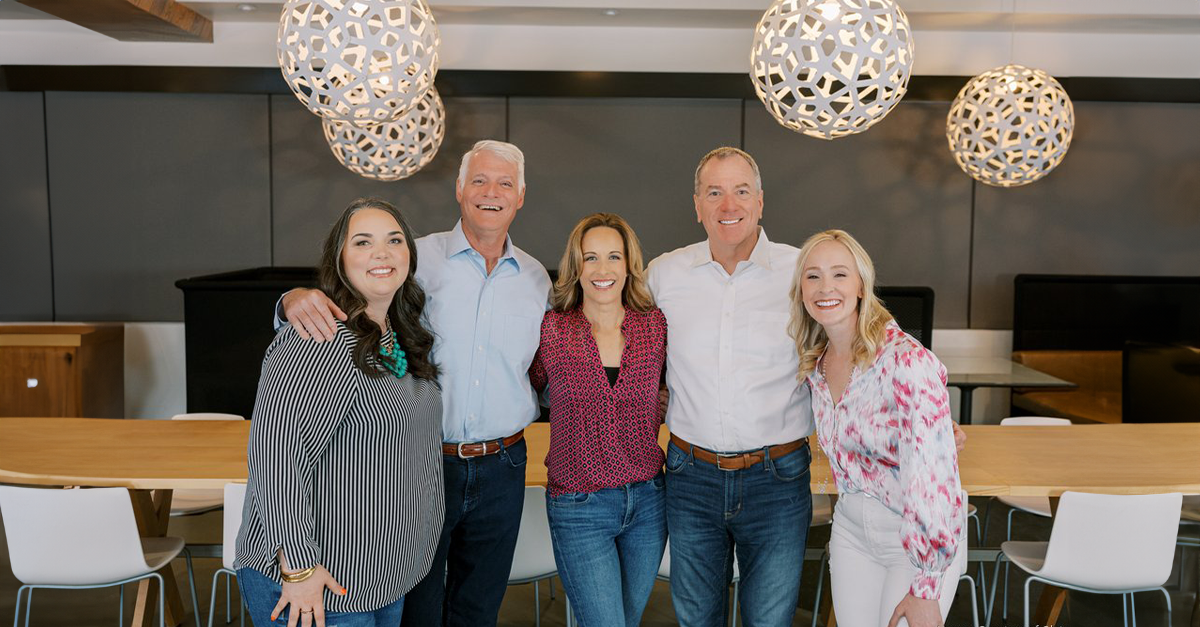
In September 2024, the ownership story looped back. Sacramento entrepreneurs Rachel Zillner and Anne Descalzo bought all shares from Chris Holben and Scott Rose. The price was not disclosed. RSE retained its name, corporate independence and existing team, described at the time as 60 people. Kierstan DeLong became CEO, with Holben and Rose staying in leadership roles.
For an agency that sells trust, independence is more than sentiment. Public-sector communications bring procurement rules, political scrutiny and long institutional memories. RSE competes with California public-affairs specialists and national integrated firms, but its advantage is the overlap: creative and media people under the same roof as public-relations, policy and community-engagement specialists.
That overlap can also make the portfolio wonderfully strange. A California earthquake-insurance campaign sits near a national postpartum-depression initiative. A bilingual saber-toothed tiger teaches small children to brush their teeth. Promotion for Al Capone's estate auction earns international coverage and helps some objects sell for triple their estimates. The subjects change. The recurring puzzle does not: there is a person on one side, an institution on the other and a piece of information failing to make the trip.
RSE's useful idea is that the trip itself is the product. Research finds the obstacle. Creative makes the message memorable. Media supplies repetition. Community partners lend context and trust. Measurement reveals whether anybody moved. It is advertising stripped of its favorite vanity - attention for attention's sake - and given a more demanding job.