In one account of a frantic server move, Ross Nordeen went shopping. The list was peculiar for a technology operation: every AirTag he could buy at a San Francisco Apple Store, then wrenches, bolt cutters and headlamps from Home Depot. The equipment needed to travel from Sacramento to Oregon, and somebody had to know where it was. The reported bill was about $2,000 for tracking tags and another $2,500 for tools. Few scenes better capture the physical comedy of the cloud. It floats, apparently, until a person has to unbolt it.
The episode is recorded in Walter Isaacson’s biography of Elon Musk. Nordeen was then a Tesla technical program manager pulled into the 2022 Twitter takeover. It is an anecdote, not a complete biography. Yet it gives an unusually clear glimpse of the work that would keep defining his career: urgent coordination around machines that everyone else experiences as software.
A career built beneath the interface
Nordeen worked in Tesla’s supercomputing and machine learning division. Those words sound abstract until one remembers the job of a training computer. Data must reach processors; processors must communicate; power and cooling must keep both alive. For a company developing driver assistance systems, the training infrastructure is part of the product’s foundation. A technical program manager in that world lives among dependencies: hardware deliveries, installation schedules, networking, testing and the many small decisions that determine whether expensive equipment does useful work.
His route into AI was distinctive among the people publicly introduced with xAI in 2023. The founding group included researchers from Google, DeepMind and other AI labs. Nordeen came from Tesla’s compute operations. He left Tesla in May of that year to join xAI. The distinction matters because the company he helped start would need far more than model researchers. It would need to make a very large quantity of computation available, quickly.
Nordeen’s name did not appear on a chatbot’s answer screen. It appeared in reporting about who made the answer screen possible. He played a major part in xAI’s compute strategy and in bringing up the hardware and software layers of its data centers. He also worked close to Musk, helping coordinate priorities and execution. The role placed him within a founding team whose public story often focused on scientists and models, while the machines beneath those models demanded their own kind of expertise.
How fast is a computer room?
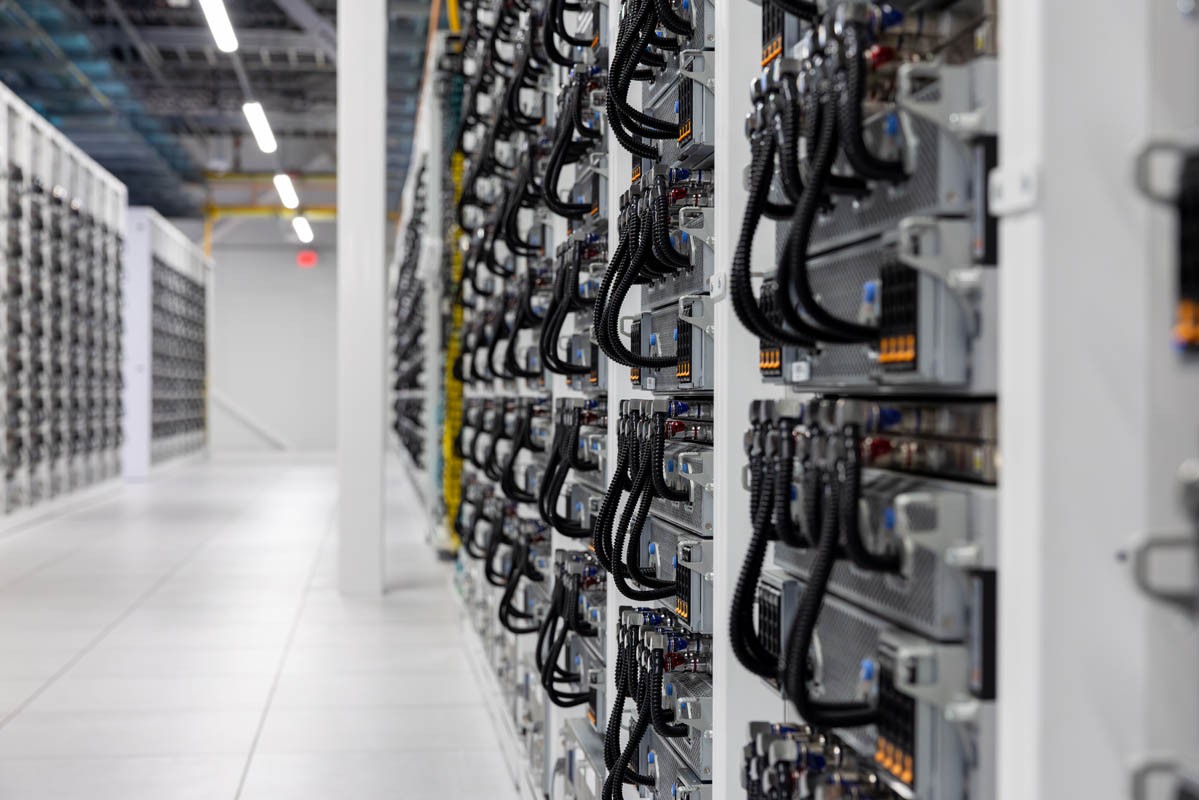
xAI said its Colossus cluster became operational in 122 days. It said workloads began 19 days after the first servers arrived. The company later described a doubling from 100,000 to 200,000 GPUs. These figures are company figures, and they describe a group achievement. They are still useful for understanding the pressure around an operator such as Nordeen. Each day shaved off a build has to come from somewhere: a permit, a delivery, a power connection, a cooling loop, a cable run or a software configuration.
A data center is often drawn as a blank rectangle in a diagram. Inside the rectangle, thousands of devices must behave with enough reliability to support a training run. They consume electricity and produce heat. They require storage and networking that can feed them at speed. When the cluster grows, a plan that worked at one size can become a new bottleneck at another. The phrase “bring up” compresses this entire practical problem into two words.
“Incredibly proud of the xAI team’s execution in bringing on an immense amount of compute so quickly”Ross Nordeen, on his departure and next role
In public, Nordeen has tended toward that collective grammar. His statement credited the xAI team’s execution. It also expressed enthusiasm for Musk’s vision of an abundant future with intelligence extending beyond Earth. The line is expansive. The work beneath it is stubbornly local: real land, real hardware and people who must get the hardware installed before an idea can be tested.
That contrast can make infrastructure specialists hard to profile. The visible milestone belongs to a company; the labor is distributed across many people. What can be said specifically about Nordeen is that his Tesla background led into xAI’s founding group, that reporting identifies him with xAI’s compute strategy and data center bring-up, and that the problem continued to define his next job. It is a coherent professional arc, even when some details of the daily work stay inside the company.
The last name on the founding list
By early 2026, xAI’s original founding group had changed substantially. Co-founders had departed over several years. In March, reports said Manuel Kroiss and then Nordeen left, making Nordeen the last of the original non-Musk co-founders to go. The departure was reported on March 28. The exit attracted attention partly because of that sequence: a founding roster had become a historical document in less than three years.
The operator who had followed Musk from Tesla into xAI was moving on. The departure closed a working relationship that had stretched through three companies and two major compute efforts. In some accounts the immediate public gesture was almost comically modest, a social post about touching grass. The line suits someone whose professional reputation had been built around machinery that rarely lets its operators do much of that.
There is an irony in the speed of the transition. In May, Nordeen said he was joining Anthropic “to focus on compute.” Around the same time, xAI announced an agreement to give Anthropic access to Colossus 1. The company said the cluster had more than 220,000 Nvidia GPUs at that point. A person who had helped bring up xAI’s compute operation was moving to a lab that would use capacity from that same operation. It is an unusual footbridge across a competitive landscape, built from servers instead of sentiment.
The bottleneck travels with him
Anthropic’s work brought a new employer, but Nordeen’s own description of the assignment stayed short. He would focus on compute. That compact description carries the scale of the task. AI companies can hire researchers and announce new models; the models still need places to run. Capacity determines how much experimentation can happen and how widely a finished service can be offered.
The agreement between Anthropic and xAI makes the point neatly. A cluster can be associated with one company’s origin story and later serve another company’s users. The chips have no interest in brand rivalry. They care about workloads, electricity, networks and maintenance. Nordeen’s move drew attention because people who understand all of those constraints are valuable in any lab that is trying to grow.
The work raises a larger question about credit. Training clusters are group projects involving engineers, electricians, construction crews, utility partners, procurement teams and local officials. Public profiles often compress all that work into a single company milestone. Nordeen’s record is best read with that collaboration intact: he was an important operator in a large effort, one that succeeded only because many kinds of work met on schedule.
Nordeen studied at Michigan Technological University. His career then crossed three companies whose ambitions depended on large computing systems: Tesla’s training infrastructure, xAI’s founding and Colossus build, and Anthropic’s expanding compute operation. At each stop, the technical challenge met an organizational one. Hardware had to be acquired, installed and connected, but people also had to agree on priorities and move at a common pace. That overlap helps explain why an operator can matter as much as a diagram of the machines.
Nordeen’s most revealing public anecdote does not involve a stage or a grand statement. It involves a trip to two stores so that a server move could happen under pressure. One can almost hear the tiny AirTag chime beside the much larger hum of a data center. The anecdote is funny because the stakes were technical and the tools were ordinary. A good deal of engineering looks like that when the camera is finally pointed in the right direction.
The Colossus numbers also show why this work cannot be reduced to buying chips. xAI published a figure of 170 petabytes per second for aggregate memory bandwidth and described more than half an exabyte of storage for training data and checkpoints. Those measurements describe different parts of a system that must move information quickly and recover when work is interrupted. They make the point that a training cluster is a networked place, not simply a pile of processors. Nordeen’s move to Anthropic carried that systems problem into a new organization at a moment when access to capacity had become a public part of both companies’ plans.
There are now larger numbers in the story than the purchase receipts: 100,000 GPUs, then 200,000, then an agreement describing more than 220,000. It is tempting to let those figures swallow the people. Nordeen’s career suggests another reading. A machine room is an accumulation of human decisions, made quickly enough to matter and carefully enough to last. He has moved from one lab to another; the central question is still whether the machines can be made ready for the ambitions placed upon them.