BREWING DISPATCH Harvard-MIT PhD trades the lab bench for the mash tun Wild yeast scaled from a swab to 500 gallons Aeronaut opens June 21, 2014 in Somerville 2023: Tasty Liquid Alliance merger with Dorchester Brewing Moss, bread flour, thin air - all of it becomes beer BREWING DISPATCH Harvard-MIT PhD trades the lab bench for the mash tun Wild yeast scaled from a swab to 500 gallons Aeronaut opens June 21, 2014 in Somerville 2023: Tasty Liquid Alliance merger with Dorchester Brewing Moss, bread flour, thin air - all of it becomes beer
Person · Founder · Scientist

Ronn Friedlander

He grows wild yeast from a swab of air and turns it into beer you didn't think you'd like. Co-founder and Co-CEO of Aeronaut Brewing.

Somerville, MA Aeronaut Brewing Co. Dr. Ronn Est. 2013
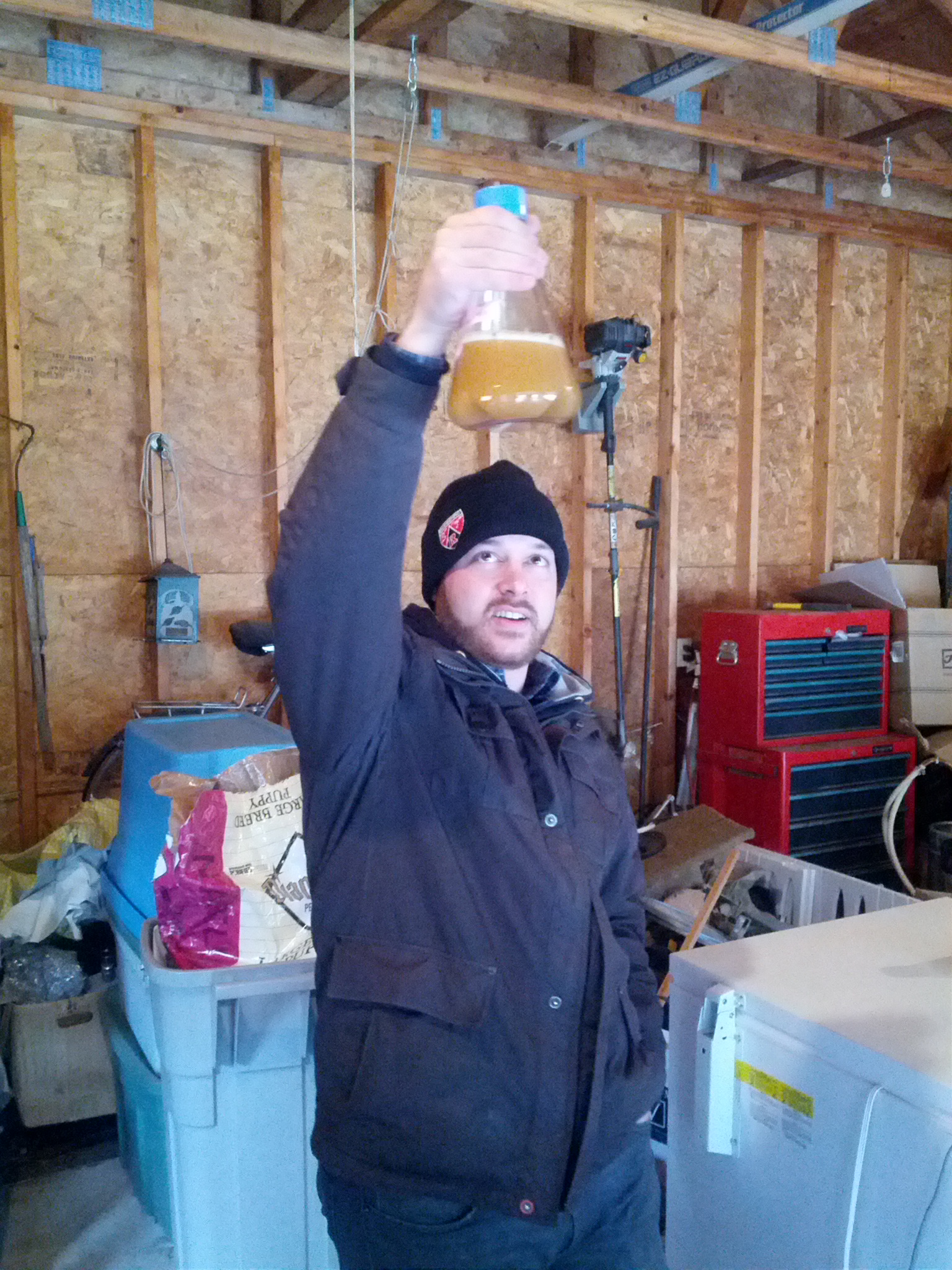
Ronn Friedlander inspecting home-grown yeast
Ronn inspects some home-grown yeast. The brewery started with a question a microscope could answer.
The Dispatch

A Brewery Disguised as a Laboratory

Walk into Aeronaut Brewing in Somerville and you can order a pint. Walk a little further and you will find something most breweries do not have: a working microbiology lab, a bioreactor, and a man in his element coaxing single-celled organisms into doing exactly what he wants. That man is Ronn Friedlander, and the beer in your hand is, in a very real sense, his experiment served cold.

Friedlander is the co-founder and Co-Chief Executive Officer of Aeronaut Brewing Company. Before that title he carried a more academic one. He came to Boston in 2009 from New Jersey to chase a PhD through the Harvard-MIT Health Sciences and Technology program, doing research in Harvard's Aizenberg Biomineralization and Biomimetics Lab. His subject was medical materials and the behavior of bacteria. His tools were the same ones he now points at a glass of saison.

The pivot from biomaterials researcher to brewery executive sounds like a clean break. It was nothing of the sort. The same curiosity that pulled him toward bacteria in a medical lab pulled him toward the invisible life inside fermentation. He simply followed it from the bench to the brewhouse and kept the microscope.

Today he runs a regional craft brand with a Somerville home, a second production facility in Everett, and a 2023 merger under its belt. The through-line across all of it is the same stubborn idea he started with: understand the microbe, and the flavor follows.

His co-founders came from the same intellectual neighborhood. Aeronaut grew out of a circle of graduate students and researchers - the kind of people who treat a beer recipe like a hypothesis. The brewery's name and its "aeronaut" identity nod to flight and exploration. Friedlander's exploration just happens to run in the opposite direction, downward into the microscopic, where a single strain of yeast can decide whether a batch tastes like citrus, barnyard, or bread.
2013
Company founded
500gal
Full batch size
3
Roommate founders
Everett capacity jump
Yeast and other microbes account for much of the flavor in beer, so the more we can understand them and cater to their needs, the better our beer will taste. - Ronn Friedlander
The Origin

It Started With a Craigslist Barrel

The honest version of the Aeronaut founding story has no grand mission statement in it. Three roommates - Ronn, Dan Rassi, and Ben Holmes - liked to brew. They scaled from five-gallon batches in the living room to sixty-gallon batches in the backyard. Then they bought an expensive barrel system off Craigslist, looked at the receipt, and reached the only logical conclusion: the purchase could only be justified by opening a brewery.

So they did. Aeronaut Brewing Company was founded in January 2013. The doors opened on June 21, 2014, inside a 12,000-square-foot warehouse near Union Square, sharing the building with a cluster of other food startups. The neighborhood was reinventing itself, and Aeronaut became one of the bubbliest additions to it.

Friedlander did not arrive as a brewer. He arrived as a fermenter of everything else first. Long before beer, he was making kimchi, hard cheeses, and bread. The hobby crept from the kitchen to the carboy, and once it landed on beer it became an obsession with styles, methods, and the microbes that drive them.

That obsession had a natural home in him. He was already studying microbial behavior for a living. The brewery let him aim a PhD's worth of training at a target he actually wanted to drink.

The Somerville location did not just give him a brewhouse. It gave him a lab inside a brewhouse - a dedicated space to grow, sort, and store the microbes that would define Aeronaut's house character. That decision, made early, is what separates Aeronaut from a brewery that simply orders its yeast and hopes for the best.

Living room
Backyard
Aeronaut full

Batch size, roughly to scale: 5 gal → 60 gal → 500 gal.

The Method

Swab Anything. Separate the Yeast.

Most brewers buy their yeast in a tidy package. Friedlander goes hunting for his. His lab cultivates wild and custom strains, then a bioreactor scales them from a pilot pour all the way up to a full production batch.

01

Catch It

Wild yeast from the air for farmhouse ales. Strains grown from water and bread flour. Samples cultured from moss picked up on a hike. As he puts it, you can swab almost anything.

02

Sort It

"If you have a decent microbiology background, you can separate the yeast from the bacteria." The PhD is not a decoration here - it is the filter between a good ferment and a ruined tank.

03

Scale It

A bioreactor steps the chosen strain up through pilot batches to the full 500-gallon run, keeping a living library of brewing microbes ready for the next recipe.

The Mission

Convert the Skeptics, One Glass at a Time

"I would love to get people to like beers they don't like or don't think they like."

It is a small sentence with a big agenda. Friedlander is not chasing the beer everyone already orders. He is chasing the wild, funky, barrel-aged, spontaneously-fermented end of the spectrum - the styles brewers were only beginning to take seriously when he entered the trade - and trying to make them so drinkable that a skeptic finishes the glass without noticing they have changed their mind.

The Flight Path

From New Jersey to 500 Gallons

  • 2009Moves from New Jersey to Boston for a PhD in the Harvard-MIT Health Sciences and Technology program; works in Harvard's Aizenberg Biomineralization & Biomimetics Lab.
  • 2012After scaling from living-room to backyard batches, the roommates decide to "go pro."
  • 2013Aeronaut Brewing Company is founded with Dan Rassi and Ben Holmes.
  • 2014Aeronaut opens at 14 Tyler St, Somerville, on June 21 - a 12,000 sq ft Union Square warehouse, yeast lab included.
  • 2020The Everett "Cannery" launches in the former Down the Road space, quadrupling production.
  • 2023Aeronaut and Dorchester Brewing announce a strategic merger forming the Tasty Liquid Alliance; Ronn serves as Co-CEO.
The Expansion

Two Rooms, Two Personalities

By 2020 the Somerville brewery had run out of room. The answer was a second site in Everett - the "Cannery" - built to multiply production roughly fourfold and to pump out cans at five to six times the old rate. Friedlander framed it as more than a bigger tank farm: the Cannery has its own taproom, its own live music and events, and its own neighborhood character.

The split let each room be itself. Everett scales the beers people already love into wider distribution across New England. Somerville gets to stay the playground - experimental brews, recipe development, and an expanded barrel-aging program. For a founder who got into this to chase strange yeast, keeping a dedicated room for experiments may be the real prize.

Can output (old)
Can output (Cannery)

Everett raised can production an estimated 5-6×.

The Alliance

When Two Breweries Pool the Hard Parts

In December 2023, Aeronaut and Dorchester Brewing Company announced a strategic merger. The two brands keep their own identities and keep brewing their own beer, but they fold their operations under a single parent entity called the Tasty Liquid Alliance. The logic is the unglamorous math of a maturing industry: shared scale, shared back-office muscle, and an open door for other growing beverage makers to join.

Friedlander, as Co-CEO of Aeronaut, helped steer the deal and spoke openly about his enthusiasm for joining forces. It is a notable turn for someone whose instincts run experimental. Building a durable alliance is a different discipline than cultivating a yeast strain - slower, more political, less reversible. He took it on anyway, betting that consolidation done thoughtfully protects the very experimentation he loves.

That tension defines him. He is curious enough to grow beer from moss and disciplined enough to sign a merger. The brewery he co-founded on a Craigslist whim now sits inside a multi-brand alliance, and the scientist who once studied bacteria for medicine spends his days deciding which microbe gets to define the next batch. Few founders carry both halves of that story as comfortably.

The Margins

Notes From the Notebook

Fun Facts

  • Degrees from Rutgers, Cambridge, and the Harvard-MIT program - all aimed, eventually, at beer.
  • His brewery keeps a living library of yeast and microbes, curated like a wine cellar.
  • Once grew brewing yeast from moss collected on a hike.
  • Fermentation resume before beer: kimchi, hard cheeses, bread.
  • Has taught the business of brewing as an instructor at General Assembly.

The Quotes

  • "You can swab anything... if you have a decent microbiology background, you can separate the yeast from the bacteria."
  • "I would love to get people to like beers they don't like or don't think they like."
  • "The more we can understand them and cater to their needs, the better our beer will taste."
The Index

Follow the Aeronaut