There is a photograph you can almost see without seeing it: two young agency founders in a small rented office in Savannah, attended by a phone line, a fax machine and a typewriter. The year was 1990. Ted Robertson and Lisa Markowitz had met at a Thursday Night Sunset social event, which is an appropriately Savannah origin for a company that would spend the next three and a half decades translating relationships into media.
Their firm was called Robertson & Markowitz Advertising & Public Relations. The name was long, the equipment list was short, and the first lesson arrived quickly. Larger accounts such as Comcast and Carson Products required more hands. A media buyer came aboard, then a graphic designer. By the end of year one, two people had become four.
The first thing to fail was the handoff
By the mid-2000s, a client could no longer be neatly divided into a press release, a print ad and a phone number. The website had become the place where every other piece landed. Demand kept rising, yet web development sat outside the original agency. Outsourcing could produce a site, but it split responsibility for the brand from responsibility for the destination.
In 2008, the founders changed their minds about that arrangement. They opened a sister operation, Robmark Web, to bring development inside the relationship. It was a practical bet, not a manifesto: control the build, shorten the feedback loop and give the client one team to call. Nine years later, the organizational chart caught up with the work. The companies merged under the simpler RobMark name, with Web, Advertising and PR spelled out beside it.
“We jumped into web development in 2008 to collectively serve our clients rather than outsourcing those services.”Lisa Markowitz Henderson, co-founder and president
The fewer-handoffs model
One brief can move from audience and message to website, media and measurement without changing companies.
A small agency with four doors into the same room
Today, RobMark is a professional-services business. It takes on individual projects and broader ongoing assignments; fees are scoped rather than posted on a shelf. The work enters through four doors: websites, digital marketing, advertising and public relations. Behind them sits a more detailed menu - responsive development, accessibility, SEO, paid search, social media, email, brand systems, media buying, television, streaming, crisis communications, community affairs and reputation management.
This is useful for a client whose problem refuses to stay in its lane. A new factory is not merely an announcement. It can be a community concern, an elected-official briefing, a groundwater question, a site visit and a news story. For the Development Authority of Bulloch County, RobMark built a communications plan around nearly $1 billion in announced manufacturing investment and roughly 1,600 new jobs. The deliverable was not one clever slogan. It was coordination among people who did not begin with the same priorities.
When the assignment is bigger than marketing
The clearest view of RobMark appears when ordinary promotion gives way to public consequence. Days before Savannah's 2020 St. Patrick's Day Parade, the event was canceled for the first time in nearly two centuries. Residents, visitors, businesses, city officials and the parade committee all needed answers. RobMark developed and ran a communications plan across local, regional and national audiences, then rebuilt it when the 2021 celebration was canceled too.
The company later designed the parade's 200th-anniversary logo. That arc - from crisis explanation to celebratory mark - neatly captures the range. A PR specialist can manage reporters. A designer can make an anniversary identity. The advantage here is institutional memory crossing from one task to the next.
A similar pattern shows up in golf. The agency helped launch the professional tournament now called the Club Car Championship, building support among business groups, public officials, military families, volunteers and nonprofits. It stayed through director changes, the pandemic and a new tour affiliation. In 2024, the tournament reported a record $458,336 charitable impact, and Club Car extended its commitment through 2029. RobMark cannot claim the tournament's whole result, but continuity is part of the result.
Advertising and public relations open the account.
Growing web demand produces a sister company.
The sister company and original agency become one brand.
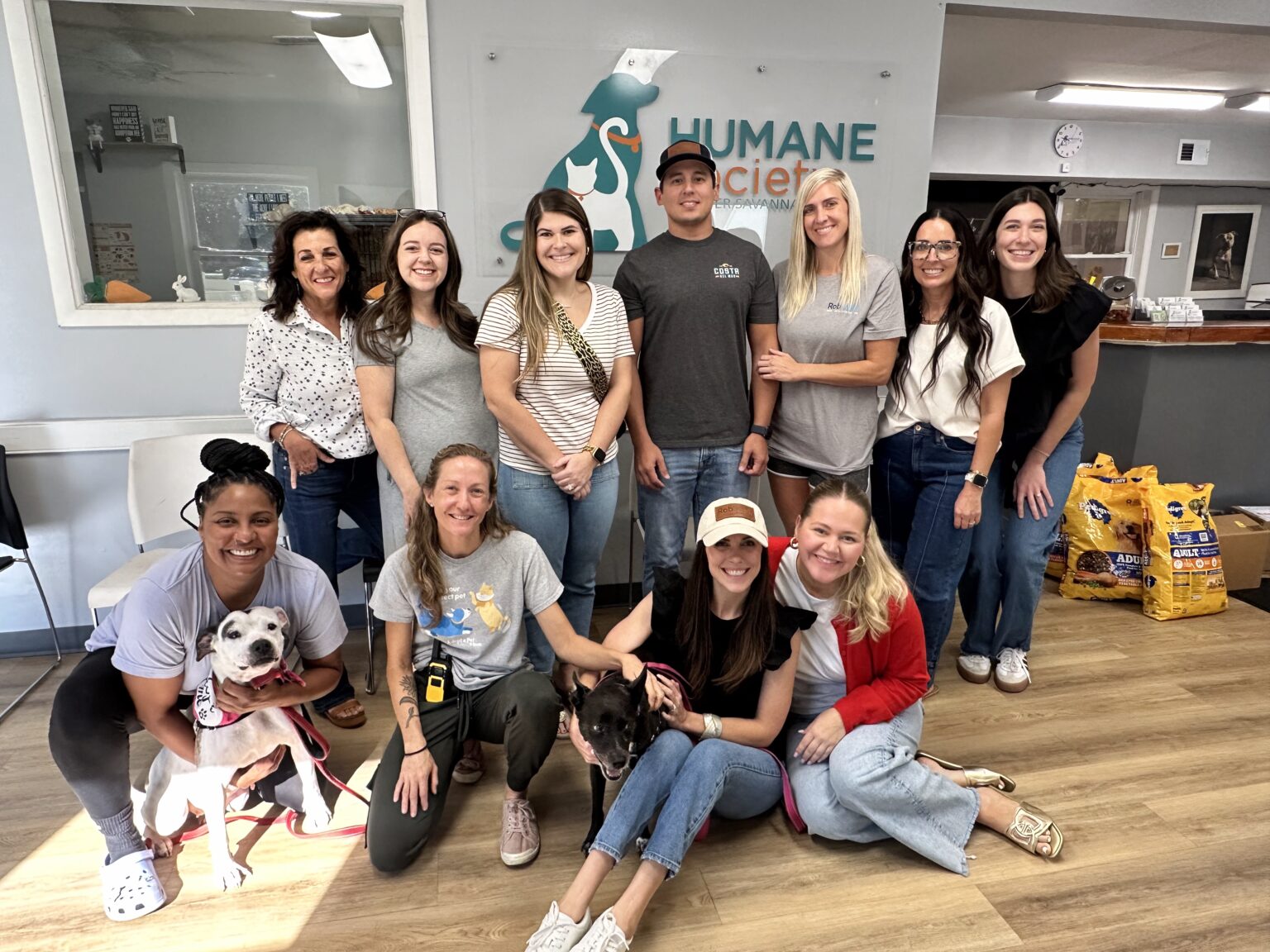
RobMark reaches 35 years and starts Mark of Kindness.
Do not copy the menu. Copy the sequence.
RobMark calls its process T.E.D.: target, engage, deliver. The initials wink at the CEO's name, but the order matters more. First agree on the audience and outcome. Then choose the channels. Then implement, watch and adjust. Many marketing plans begin in the middle - “we need TikTok” or “we need a new website” - because a channel is easier to name than a business problem.
A portable version of the RobMark playbook
Put everyone who controls the message, the destination and the public response into the first meeting. Give them one target. Assign one owner for the handoffs. Review performance after launch, not merely the creative before it.
There are conditions. An integrated agency works when the assignment genuinely crosses disciplines, when the client values a continuing relationship and when the team has real depth in each promised service. It is less compelling for a one-off commodity task, a buyer who needs a fixed self-serve price or a problem that demands a specialist beyond the firm's listed expertise. “Everything under one roof” is only an advantage when the rooms are occupied.
RobMark's position in the market is therefore specific. It is not a software platform, a giant holding-company network or a boutique devoted to one channel. It is a Savannah-based generalist with local media and civic experience, serving organizations that may operate far beyond Savannah. Its current team includes developers, designers, account strategists, media planners, social specialists and public-relations staff. The culture it presents is close-knit and slightly caffeinated; its 35th-anniversary Mark of Kindness program lets a randomly chosen employee select a charity each quarter for a team project.
The company says its ambition is not to be the biggest agency. That line is more interesting after 35 years than it would be after three. Survival in this business has meant adding capabilities without mistaking novelty for strategy: web development in 2008, search and social as they matured, AI tools now used behind the scenes. The phone, fax and typewriter are gone. The founding problem remains recognizable. Someone still has to understand what the client means, decide where it should travel and make sure it arrives intact.