The first business Roberto Blake remembers starting had no investors, no platform, and a customer base that went home when the school bell rang. At six, he sold his drawings and hand-drawn comics to classmates. The exchange was small, but the question behind it stayed with him: could the things a person liked making also pay for the time it took to make them?
His career would carry that question through a design office, an advertising agency, a freelance practice, YouTube, and finally into classrooms of his own making. He now teaches other creators to earn from their work. The pitch sounds tidy only if one skips the many years in which he had to work out the answer for himself.
A grandmother’s computer, a child’s curiosity
Blake was born in Brooklyn in 1984, the oldest of four children. His family moved around the United States because of military service, which made him, by his account, the new kid again and again. Drawing offered something portable. So did the computer his grandmother Marjorie gave the family. At 13, during the AOL years, he taught himself HTML, CSS and JavaScript. A teenager could make an image, build a page and send it into the world without asking a publisher for room.
He also wrote. At 14, his work appeared in a collection of young North Carolina poets; by 16, he was entering art competitions. None of those details makes his later YouTube career inevitable. They show a person trying several kinds of creative work before anyone had settled on the word “creator” as a profession. The young Blake sold comics, wrote poetry and learned to make websites. The medium kept changing. His curiosity did not.
At 22 he began formal work as an in-house graphic and web designer. Agency work followed, including out-of-home campaigns for cable and broadcast clients such as HBO Sports and Big Ten Network. Design taught him to arrange information so someone would stop and look. Advertising taught him that attention had to serve a purpose. Those skills would prove unusually handy when every YouTube lesson needed a title, thumbnail and clear reason to click.
A career in six turns
The camera was the excuse
Blake opened his YouTube channel in 2009, largely to demonstrate early digital cameras and answer questions about them. It was a modest beginning: a person who knew a piece of equipment showing someone else how to use it. Yet it contained the shape of his later work. Identify a specific problem. Explain it plainly. Leave an answer that can be found after the conversation is over.
In the summer of 2013, he made a more deliberate commitment to video, uploading tutorials and advice about creative work at least once a week. That was also the year he left corporate employment for freelance creative services and social media work. The two moves supported each other. Client work supplied practical questions; videos let people see how he thought. He had 10,000 subscribers within about 11 months of that commitment, according to his account. By 2016, the channel had reached 100,000.
There is a tempting version of this story in which the subscriber milestones do all the explaining. Blake’s own account is less magical. He had already worked in design, editing and search optimization. He made tutorials on subjects he knew, took care with thumbnails and built videos that could remain useful long after upload day. He has described discipline, consistency and patience as the causes of his progress. The camera helped him start; the library gave people a reason to return.
“Where motivation fails you, discipline won’t.”Roberto Blake
The channel also made his work legible to people beyond a client list. While freelance writing for FW Media in 2015, he was offered a chance to speak at HOW Design Live. More events followed, among them Social Media Marketing World, VidCon and VidSummit. A designer who once had to show work in a portfolio was now explaining the business of creative work from a stage.
A classroom built around the invoice
As questions from other creators accumulated, Blake began coaching them directly. In late 2017 he started the work that became Awesome Creator Academy, adding group calls and educational products to individual advice. He moved his operation to the Atlanta area that December. The academy’s central subject was practical and sometimes awkward: how to turn a creative practice into a full-time income.
His own business became part of the curriculum. He has discussed YouTube advertising, sponsorships, affiliate partnerships, memberships, speaking, consulting and book royalties as different ways a creator can earn. His site says he has earned more than $2 million in cumulative revenue as a full-time creator. That is a business revenue claim, not a measure of personal wealth, and it helps explain why he returns so often to the mechanics of monetization. A view count is easy to admire. A mix of income sources takes longer to understand.
In 2018, Pat Flynn invited him onto the Smart Passive Income podcast and asked him to imagine advising someone just after losing a job. Blake’s answer focused on skills, a body of work and a reputation that others can see. It is advice informed by the years before his own channel took off. He knew how to design and how to teach before he had an audience of any size.
He went on to write Create Something Awesome, self-published in 2022. The book described how creators build audiences and earn from content, extending his lessons into a form that could sit on a shelf. In an interview that followed, Blake mentioned that one of his first jobs had been in a bookstore. Becoming the author on the cover two decades later struck him as a full-circle moment. It is a pleasing detail for someone whose work has moved so often between pictures, screens and words.
A clear signal in a crowded room
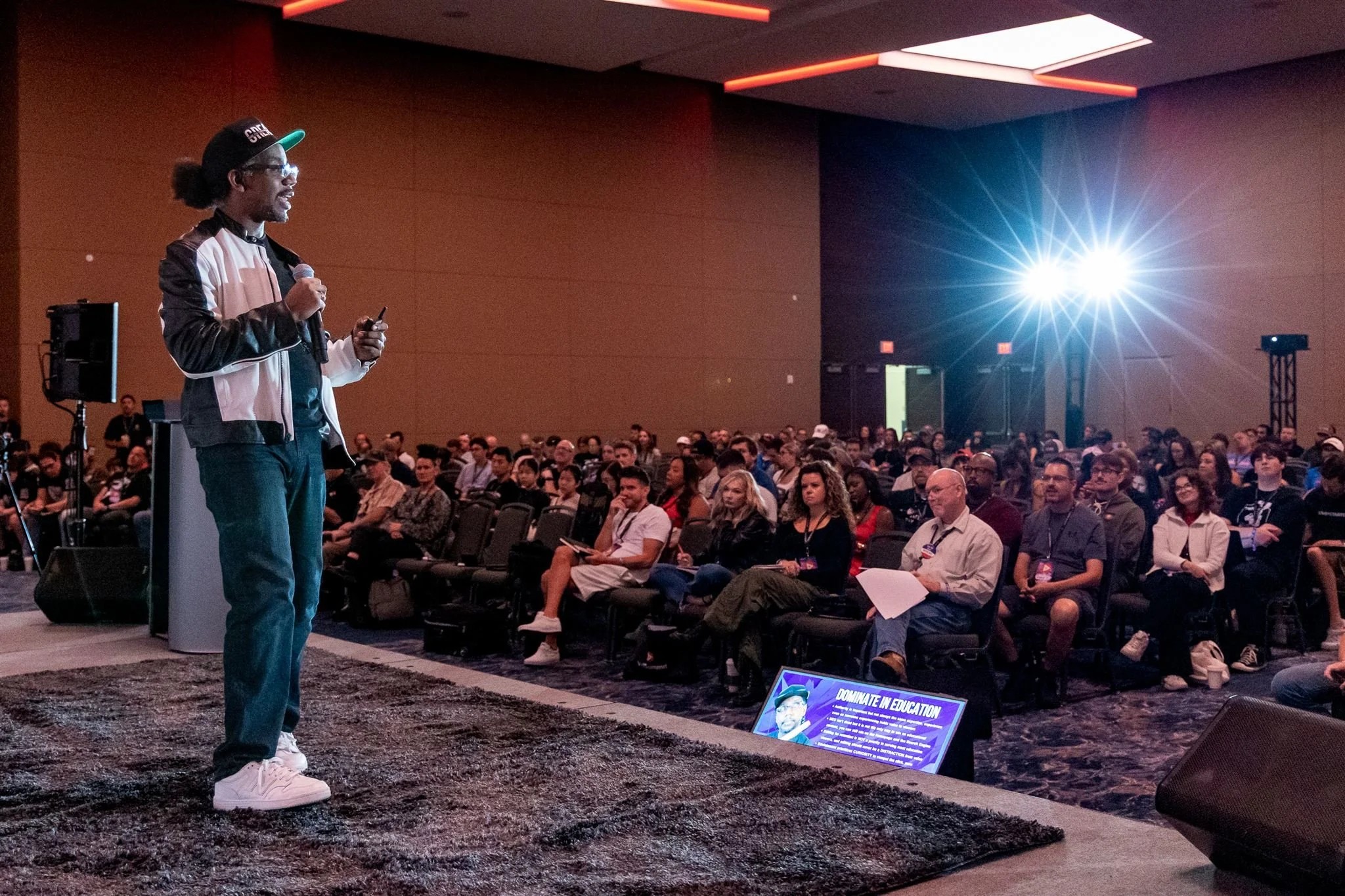
At VidSummit in 2025, Blake presented an idea he called “Big Creator Energy.” Its less theatrical core was audience clarity. What is the viewer trying to do? What does a title promise? Does the video deliver? A talk recap describes his “unified signal of value” across topic, thumbnail, opening and tone. The point was to make each piece work for the same person rather than chase a different stranger with every upload.
One of his lines from the stage was short enough to write on a studio wall: “Never let a viewer regret a click.” It sounds like a rule for thumbnails, but reaches further. An honest promise creates repeat visits. Repeated help can become trust. Trust is the raw material for a business that does more than collect ad revenue. He illustrated the point with examples from education, entertainment, short videos and live streams, keeping the emphasis on whom each format serves.
There is an appealing tension in Blake’s public manner. He has a bright slogan, “Create Something Awesome Today!”, and a fondness for neat frameworks. Yet the advice underneath is stubbornly unglamorous. Make a useful thing. Improve it. Know who wants it. Learn how the money works. Repeat. The internet often markets creation as sudden discovery; Blake has spent much of his working life teaching the slow parts.
“Make content for people, not algorithms.”Roberto Blake at VidSummit 2025
His circle now includes founders and creators he has interviewed on the Create Something Awesome Today podcast, among them Marques Brownlee, Pat Flynn, iJustine and Sara Dietschy. He also speaks with people at earlier stages, the ones whose questions may resemble the camera questions that first drew him onto YouTube. His stated goal is to help 10,000 creators reach six-figure annual incomes. It is an aspiration, not a completed tally, and a large one. It makes sense of why he built an academy rather than remaining a one-person channel.
What remains after the upload
In September 2026, Blake joined a discussion about what comes after calling oneself a YouTuber, podcaster or streamer. His argument was that those names describe ways to distribute work. The more durable question concerns the value made, the connection with an audience and the business a creator controls. It is a broader version of the lesson from his first camera tutorials. A format can introduce the work; it should not be the only thing holding it up.
He is still publishing about YouTube and its changing features. That makes the argument more interesting, because it comes from someone who continues to use the platform that helped build his career. He is asking creators to be attentive to its rules while also thinking beyond them. The work can travel through a video, a book, a podcast, a stage or a classroom. Each form is a door to the same practical conversation.
Blake lives in the Atlanta area, travels for speaking work and still lists photography among his interests. The boy selling comics to classmates has become a teacher of invoices, audience relationships and creative careers. In both scenes, there is someone with a thing they made and someone else who might value it. The difference is that Blake now spends his days helping people build everything that must stand between those two people for the exchange to last.