The text message was supposed to be the easy part. At Zaypay, Robert Vis’s mobile-payments business, a customer needed to verify a phone number. The company could then get on with the transaction. Except the messages sometimes arrived late, or disappeared altogether. Somewhere between the software and the handset, the business was losing money. A small square of text had acquired the power to hold everything up.
Vis and his colleagues built their own messaging technology and connected it to a Dutch carrier. Then came the satisfying reversal: the supplier whose service had disappointed them became a customer. Usually, a complaint ends with an apology and a ticket number. This one helped produce a company.
When Zaypay was sold in 2011, the communications operation survived. It became MessageBird, now Bird. Fifteen years later, Vis is trying to give AI agents access to messages, email and phone calls. The intervening story contains a garage, international flights, investors and a $600 million acquisition. Its original concern would fit on a Post-it: please make the message arrive.
The supplier becomes the customer
Vis was born in Amsterdam in 1984. At sixteen, he started a video-platform business. Other ventures followed, including events in Amsterdam clubs. His eventual partnership with Adriaan Mol brought together different appetites: Mol’s product and programming background, and Vis’s commercial instincts. Zaypay allowed purchases to be charged to mobile-phone bills across more than fifty countries. That reach made the humble verification text a serious operational dependency.
The garage in Amsterdam-West is a familiar startup setting, but the work inside it was unusually concerned with what happened outside. Telecommunications involves carriers, gateways and intermediaries. Every handoff can add cost or another opportunity for failure. The team’s answer was to get closer to the carrier. Building the underlying machinery meant taking on a job that a small company might reasonably have preferred to rent.
That choice explains much of Vis’s later career. He kept pursuing control over the route a message travelled. A polished interface could make sending look easy; the network underneath still had to perform. For the customer, none of this needed to be interesting. Reliability is a peculiar product: people tend to discuss it most when they have stopped receiving it.

An Amsterdam business learns to travel
By 2017, the network had direct integrations with more than 220 carriers. Accel’s account of its investment described Vis spending years travelling to establish relationships across 140 countries. These were connections in the literal and social senses. Software could simplify access to a carrier; someone still had to persuade that carrier to work with the company.
There is an instructive scene in that investment account. One Accel partner struggled to contact a rideshare driver in Amsterdam. Another, in Singapore, reached his driver smoothly through a service powered by MessageBird. Same ordinary need, different plumbing. The comparison puts a face on a dry infrastructure argument: a person on a street corner, holding a phone and waiting.
Vis wanted an American network of another kind, too. MessageBird joined Y Combinator in 2016. Years later, he described the programme as a way to open doors in the United States, with Airbnb among the customers it brought. Admission helped make a Dutch supplier legible to people far from its home market. The business had crossed borders already; its reputation needed to catch up.
Y Combinator became an early outside investor. The $60 million institutional Series A followed in 2017, with Accel and Atomico. Vis said the money would expand teams in the US, Asia and Amsterdam. He also discussed acquisitions as a way to bring in customers and people. The years of operating on the company’s own earnings had established one pace. Outside capital offered another.
“Build a business, not an exit strategy.”
Robert Vis, 2018
That advice has a practical edge. A founder who wants independence needs a business capable of supporting the choice. Revenue, customer loyalty and useful technology make refusal easier. They also give the company something to discuss when an investor finally arrives, beyond a handsome diagram of what might happen someday.
The email arrives with a $600 million price tag
In April 2021, MessageBird announced the acquisition of SparkPost for $600 million, alongside an extended Series C totalling $1 billion. SparkPost brought an established email operation and a substantial US presence. Texting had been the opening act. The company was assembling more of the ways businesses reached customers.
The point of combining channels is easy to grasp from the receiving end. A business may see email, messaging and voice as separate systems. A customer experiences them as parts of one relationship. Having to explain the same problem again because a conversation has moved from one channel to another is an administrative task quietly handed to the customer.
Vis had been describing that irritation for years. In 2018, MessageBird’s Programmable Conversations product gathered interactions from different channels into one thread. The aspiration was to preserve context as the conversation moved. Adding a large email operation extended the places where that idea could work. It also brought the less photogenic work of combining organisations and systems.
In 2023, Vis announced that SparkPost’s brand was being folded into MessageBird Email after two years of integration. A deal can happen on a particular day. Making the acquired company function inside the buyer is a much longer event. The announcement acknowledged the people who had carried that process, including SparkPost founder George Schlossnagle.
Then, in February 2024, MessageBird became Bird. Vis paired the new name with customer software for marketing, sales and payments, and a challenge to prevailing messaging prices. Bird advertised reductions of up to 90% on SMS. His argument was that value would increasingly come from what customers could do through a channel, alongside access to the channel itself.
It was a consequential position for someone who had spent years building that access. Vis was asking the company to keep changing around an asset it already owned. The carrier relationships remained useful. The product built on top of them could be reconsidered, even when reconsideration threatened the economics of the old offering.
Speed has passengers
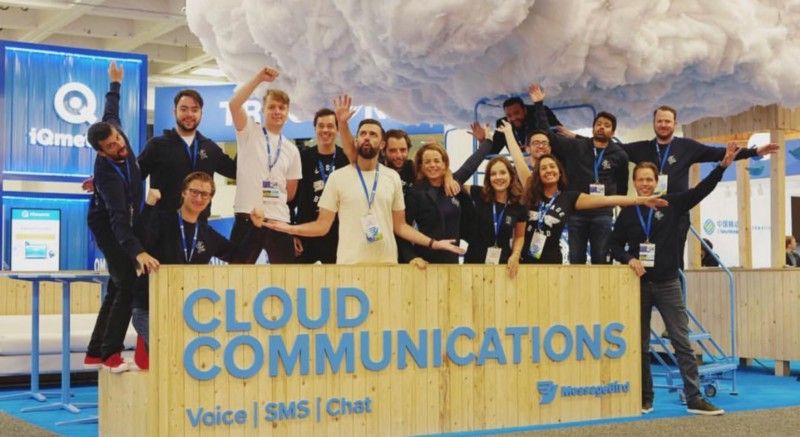
For all the engineering, some of Vis’s early customer acquisition sounds pleasantly analogue. In the first three years, the company held dinners with twenty important customers. Later came digital advertising and a more deliberate brand. Vis even took pride in company T-shirts that employees would wear to festivals. Infrastructure may be invisible, but apparently its merchandise need not be.
His instincts also acquired a numerical discipline. During the sale of Zaypay, an experienced American deal specialist challenged him for not knowing the figures well enough. Vis has retold the encounter as a lesson he carried into MessageBird. Confidence could get him into the room. It would not substitute for knowing what the business actually did.
The founder’s proximity to the details has become a defining feature of his management. It is also contested. Former employees have described a demanding, tightly controlled working environment. Bird went through layoffs in 2022 and again in 2024. A portrait that treats speed purely as a virtue misses the people who must keep pace with it.
Vis’s impatience extends beyond his company. He has publicly criticised the Netherlands’ business climate and announced plans to leave. In February 2026, he said Bird’s proposed departure had not been implemented, describing his earlier words as a serious warning. The distinction matters: an angry announcement and a completed relocation are different events. His attachment to Amsterdam sits uneasily beside his frustration with its rules.
Another partnership reveals where an urge to act quickly can lead. After Russia’s invasion of Ukraine in 2022, Vis joined bunq founder Ali Niknam and Picnic co-founder Joris Beckers to establish People for People. The foundation traces its beginning to a LinkedIn post and the mobilisation that followed. It works with local partners to identify urgent needs and deliver essentials such as clothing, food and shelter.
That undertaking belongs in the same life as the carrier negotiations and the pricing arguments. It shows Vis working through a network of fellow founders to address a problem beyond the company. The common thread is a preference for organising an immediate response. The circumstances determine what that preference accomplishes and whom it affects.
Now the caller is software
On September 23, 2026, Bird announced $450 million in debt financing and its Agentic Harness. The financing comprises a $400 million term loan and a $50 million revolving credit facility. It is designed to provide liquidity to existing shareholders, including employees with equity, while the company remains private. Independence has become a financial arrangement as well as a founder’s preference.
The company reported $165 million in EBITDA for 2025 and a workforce of 120, down from more than 1,000 at its peak. Vis presents automation as the explanation for a business operating with fewer people. Those figures are company-reported; EBITDA is an earnings measure, and the debt package is financing. Neither is the founder’s personal bank balance.
The product launch returns him to familiar ground. An AI agent may work out what needs doing and still require a way to contact someone. Bird’s new layer gives agents access to its communications infrastructure, including messages, calls, email and eSIM phone plans. It puts another kind of user in front of the network Vis has spent years building.
In 2024, sharing a stage with Skype co-founder and Atomico founder Niklas Zennström, Vis discussed changing a company at scale. He spoke about the mixture of excitement and uncertainty that founders experience. That is a more revealing picture than the tidy retrospective in which each decision seems to have led naturally to the next.
The payments entrepreneur could not have known every use that would follow from fixing his verification texts. He knew the existing service was failing him. Bird’s latest chapter asks whether that accumulated infrastructure can serve software that acts on people’s behalf. A new caller has entered the conversation. Somewhere at the other end, someone still expects a useful answer.
Continue the conversation
Interviews, writing and places to follow Vis.
- Bird: Robert Vis and the team
- Personal website listed on his LinkedIn profile
- Robert Vis on LinkedIn · X
- Watch: Vis and Niklas Zennström at Founders Forum 2024
- Watch: Bird’s founder conversation
- The 2018 Y Combinator Q&A
- Customer dinners, marketing and knowing the numbers (Dutch)
- Vis’s announcement of the Bird name
- People for People: how the foundation began
- The Netherlands departure reconsidered (Dutch)
- Bird’s September 2026 financing and product announcement