He sells franchises by the thousand now. He started by grading history essays in Paterson, New Jersey - and the line between those two jobs is shorter than you'd think.
Walk down Bleecker Street in Greenwich Village, past the guitar shops and the espresso, and somewhere above the sidewalk sits the control room for one of the least glamorous, most American businesses there is: helping people buy a franchise. Robert Huntington runs it. His title is CEO - of Oakscale Franchise Partners and of Metric Collective, the holding company that quietly owns much of the plumbing behind how a stranger on the internet finds the franchise they will spend their savings on.
Figures per Oakscale and the company's 2019 seed-round announcement.
Franchising is a trillion-dollar corner of the economy that, for decades, ran on relationships, trade-show booths, and gut feel. A brand wants to grow. An entrepreneur wants to own something. Somebody, somewhere, makes the introduction. Huntington's bet is that the introduction is a data problem - that response time, lead quality, and digital marketing decide who scales and who stalls.
Metric Collective is the structure he built around that bet. It develops and invests in franchisors, then connects them with would-be franchisees. Under one roof sit FranchiseHelp, FranFunnel, and Westside Franchise Brands. Oakscale is the growth arm - the team that takes an emerging concept and tries to turn it into a national one. Two service doors, plainly named: Scale Your Franchise and Join a Franchise.
Nobody would call it a flashy pitch, but it is a useful one. And in an industry where most growth still happens over steak dinners, useful turns out to be a competitive advantage.
Huntington's favorite metaphor: franchising spent years "riding a bicycle downhill," mistaking momentum for strength. Then the hill flattened. His whole company is an argument that it's time to pedal.
Oakscale operates from the heart of Greenwich Village, New York - a downtown address for an industry usually run from suburban office parks.
Every brand needs to grow, change, and evolve with customer needs and technology to capture the next generation of buyers.
Here is the thing about the franchise industry that bothers Huntington: it worked. For a long time, it worked well enough that nobody had to question how it worked. A brand printed brochures, rented a booth at a discovery day, and waited for motivated people to walk up. The model rewarded patience and a thick rolodex. It did not reward speed, measurement, or anything resembling a marketing funnel.
That is the bicycle-downhill problem. When you're coasting, your pedaling form doesn't matter. You feel fast, you feel strong, and you have no idea that the only thing carrying you is the slope. Huntington's argument, made plainly in a 2021 interview, is that the slope ran out. The buyers got younger and more impatient. They research on their phones at midnight and expect a human reply by morning. The brands that still run on brochures and patience are not strong - they're just standing still on flat ground, wondering why the scenery stopped moving.
His answer is not to throw out the relationships. Franchising is, at its core, a trust business: someone hands over their savings to run a stranger's playbook. No algorithm replaces that. What software can do is everything around it - surface the right brand to the right person, score which leads are real, and shorten the agonizing gap between interest and a conversation. Response time, in this world, is destiny. The franchise that calls back in five minutes beats the one that calls back in five days, every time, regardless of which has the better brochure.
In lead generation, the winner is rarely the prettiest pitch. It's the fastest, best-matched response. Huntington built a company around treating that as a measurable, improvable thing rather than a personality trait.
He's clear-eyed that the human moment - someone deciding to bet their future on a brand - can be supported by technology but never automated away. The software earns the meeting. The people earn the signature.
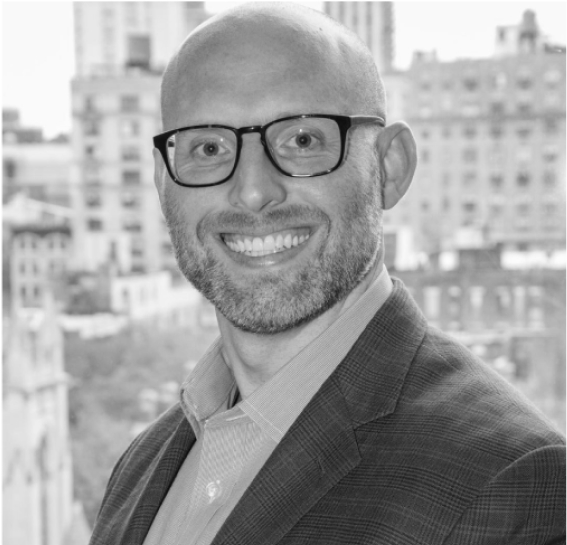
Read his resume cold and it looks like four different people wrote it. A history teacher. A franchise operator. A management consultant. A franchise-tech CEO. The trick is that each chapter taught him something the next one needed - and he kept the receipts.
Out of Dartmouth with a history degree, he taught high school history in Paterson, New Jersey. Standing in front of a room and making people care is its own kind of sales training.
He joined Huntington Learning Center and ran the largest center in a network of roughly 270 - then bought a franchise location of his own. He learned the business from the franchisee's chair, not the boardroom.
A Kellogg MBA in finance, then two years at Boston Consulting Group across a wide range of clients. He came back to franchising with a consultant's toolkit and an operator's scars.
Bars are illustrative of relative scale, drawn from publicly stated Oakscale figures.
In October 2019, a small franchise-tech startup called Oakscale closed an oversubscribed $1.2 million seed round. The angel list read like a who's-who - among them Brett Barna, Timothy Tully, Pen King Jr., and Huntington himself, with Oakscale incubated by Metric Collective. Huntington didn't hedge about why he wrote the check.
He had sold franchises as a franchisor and brokered them as a middleman. He had seen every lead-generation gimmick the industry had to offer. By his own account, Oakscale's was the best he'd found. So he backed it - and eventually ended up running it.
It's a quietly telling move. Plenty of investors write checks and move on, content to watch from a board seat. Huntington went the other direction, taking on the day-to-day of a company he could have simply funded. The reasons he gave for investing - the people, the tech, the brands - read in hindsight less like an investor's checklist and more like an operator talking himself into a job. The round itself was oversubscribed and stacked with serious names, with the company incubated inside his own Metric Collective, so the line between backer and builder was thin from the start.
I invested in Oakscale for 3 reasons - the people, the tech and the franchise concepts they partner with.
"I haven't found one that's close to as good as the lead generation tactics executed by Oakscale." Coming from a man who'd seen them all, that's less a compliment than a verdict.
He spent years running Huntington Learning Center. Yes, it's the same surname. No, that's not why people remember him - the largest center in the network is.
He didn't just manage a franchise. He bought one. Selling franchises is easier when you've signed the franchisee paperwork yourself.
From a Paterson classroom to investor pitches, the job never really changed: take something people find dull and make them lean in.
Most franchise development runs from office parks. He runs his from Bleecker Street. The location is a small statement of intent.
Huntington's stated ambition is unglamorous and large at the same time: drag a handshake industry into the software era without losing what made it work. Match the right entrepreneur to the right brand. Shrink the time between a curious click and a real conversation. Give emerging concepts the digital reach that used to belong only to the giants.
He frames it generationally. The buyers changed - how they research, how they decide, how fast they expect an answer. Brands that adapt capture them. Brands that coast lose them. The bicycle, in his telling, is already on flat ground.
There's a tidy symmetry to where he's landed. The teacher who once had to make teenagers care about the past now spends his days convincing a century-old industry to care about the future. The franchisee who once signed his own paperwork now builds the tools that get other people to the table. Every chapter that looked like a detour turns out to have been research. He just didn't know what he was researching until he got here.
Josh and the team he is building are exceptional. They understand why people invest in owning a franchise.
Profile compiled from public sources: Oakscale, Metric Collective, the 2019 Oakscale seed announcement, Authority Magazine, and LinkedIn. Facts limited to what those sources state.