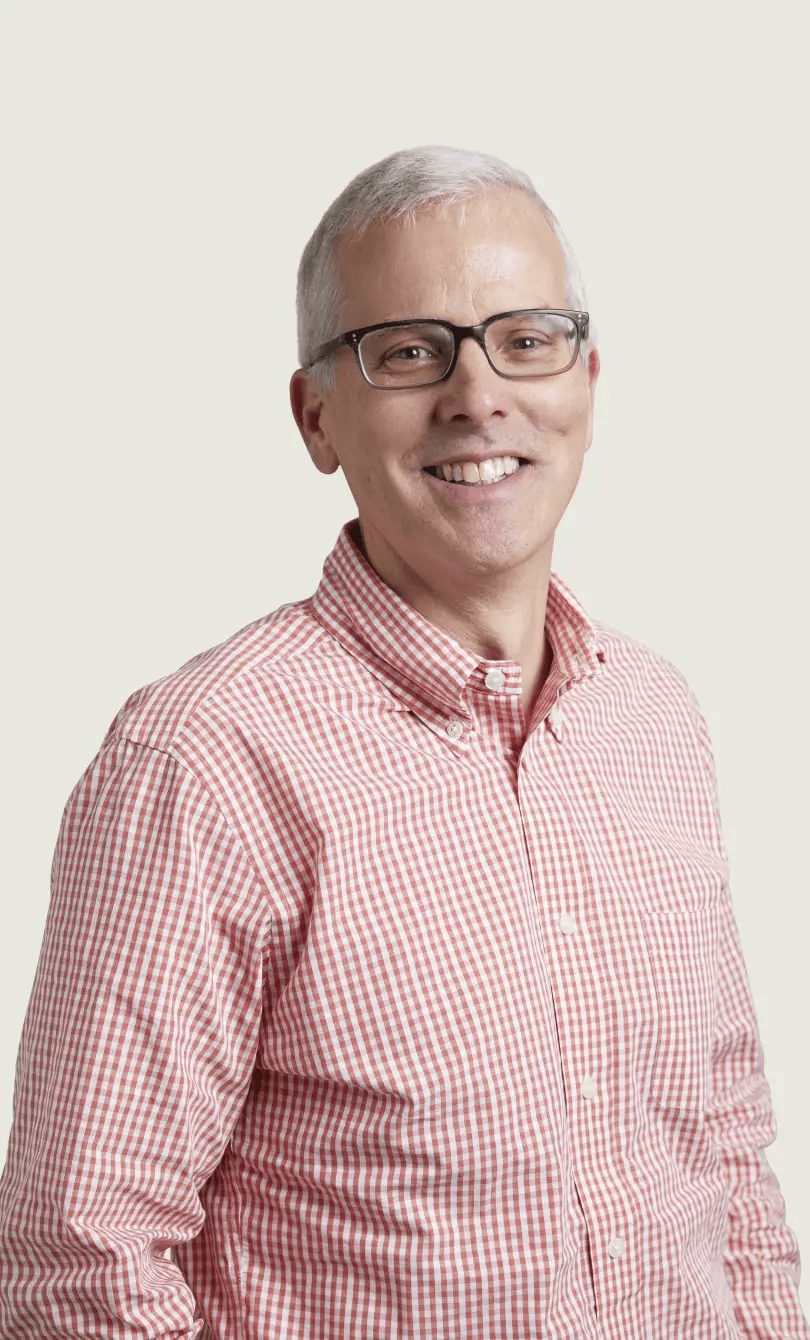
In 1999, when most venture funds were chasing seed rounds and Series A moonshots, Rob Ward and his co-founders at Meritech Capital made a bet that turned out to be decades ahead of its time: that growth-stage investing deserved its own dedicated firm. Not an afterthought fund, not a hedge fund dabbling in tech - a purpose-built operation for companies that had already proven themselves and needed serious capital to press the advantage.
That thesis, now completely unremarkable, was genuinely radical in the late 1990s. Meritech was among the first VC funds built exclusively around what is now called growth equity. Ward and his partners planted their flag at 245 Lytton Avenue in Palo Alto and started writing checks in the $5M-$25M range to companies at Series B - the size of bet most funds either considered too small for a buyout or too late for early-stage venture. Ward's sweet spot was $12M. Boring on paper. Extraordinary in practice.
AI investment requires careful analysis of revenue durability and data strategy - not just the hype cycle.
- Rob Ward, CMO Confidential Podcast, January 2026Before the Fund
Ward's path to Meritech ran through Smith Barney - both the New York and San Francisco offices - where he cut his teeth in corporate finance. Then came Montgomery Securities, where he joined the Private Equity Group as a Principal and started working directly with late-stage technology companies: Citysearch, CommQuest, Total Entertainment Network, Vastera, Vixel. He was raising growth capital for companies before raising growth capital was a category. He earned a B.A. from Williams College and an M.S. from MIT, and arrived in Silicon Valley with a banker's precision and an investor's conviction.
Ward's investment universe: analytics, data services, enterprise applications, infrastructure, and healthcare software. He has held this focus for 25 years and does not apologize for it.
Source: Meritech Capital team profile, Signal NFX investor profile
The Portfolio as a Record
Talk to anyone who studies enterprise technology investing and they will eventually point to Meritech's track record as something singular. The exits alone are a survey course in modern tech: Tableau Software, acquired by Salesforce. NetSuite, acquired by Oracle. Fortinet, which became one of the most valuable cybersecurity companies in the world. Proofpoint. Cloudera. Cornerstone OnDemand. Veracode. Zipcar. BigFix, acquired by IBM. Greenplum, acquired by EMC. PopCap Games, acquired by EA.
And those are just the fully-realized exits. Ward also has Snowflake on his record - the largest software IPO in history at the time of its 2020 debut. Roblox. Box. Coupa. Anaplan. Segment, acquired by Twilio. Looker, acquired by Google. Duo Security, acquired by Cisco. The portfolio reads less like a list and more like a timeline of where enterprise software went over the past quarter century.
We look for market-leading companies with enduring brands and strong data advantages.
- Rob Ward, Meritech CapitalThe Forbes Midas List and What It Means
Forbes has named Ward to its Midas List multiple times - the annual ranking of the world's top technology investors. It is a list that requires two things: enough winners to make the math work, and a long enough track record that the pattern is undeniable. Ward qualifies on both counts. His consistency across 25 years, through multiple market cycles including the 2000 dot-com bust, the 2008 financial crisis, and the 2022 valuation correction, separates him from investors who were brilliant in one era and invisible in the next.
The AI Question
In January 2026, Ward sat down with the CMO Confidential podcast for a 41-minute conversation about what the AI wave actually means for investors and operators. His answer cut against the hype: durability of revenue matters, data strategy matters, and the ability to distinguish genuine AI transformation from surface-level feature sprints matters more than most founders want to hear. It was a characteristically precise take from an investor who has watched many technology cycles come and go, and whose discipline of asking "will this still matter in five years?" has proven unusually reliable.
Outside the Office
Ward grew up in Rochester, New York, and has lived in the San Francisco Bay Area with his wife, Lee, for decades. The outdoors claim a real portion of his attention - running, skiing, hiking, and paddleboarding. In December 2024, he was announced as one of ten new limited partners added to the Buffalo Bills ownership group. For a Rochester native, it lands as something more than a financial stake. The Bills are a homecoming of sorts.
Closer to home, Ward volunteers as an algebra tutor at Eastside College Preparatory School in East Palo Alto - a school that specifically serves first-generation college students. It is not a marquee philanthropic gesture. It is a Tuesday afternoon in a classroom in a community a few miles from Meritech's offices, and it has been part of his life without fanfare.
Ward joined the Buffalo Bills ownership group in December 2024 - one of ten new limited partners added to the franchise. For a Rochester, NY native, the investment carries obvious personal resonance.
Source: BuffaloBills.com, December 2024
The Meritech Method
What Meritech does - and what Ward has practiced for over two decades - is deceptively unglamorous. No seed bets on unproven founders. No speculative rounds in technologies that might become markets. By Series B, you know the product works and you know customers are paying. The question is whether the company can scale from "successful startup" to "market-defining company." That is the question Meritech was built to answer, and it is the question Ward has been refining his answer to since 1999.
The firm now manages over $4 billion in assets. The most recent fund raised $800 million. The team sits at 23 people. By the standards of multi-billion-dollar asset managers, it is lean. That is probably the point.