Rob Kosberg once had enough house to hang art in, and too little money to leave the art there. After his real estate businesses closed, he has recalled taking pieces off the walls to sell so he could buy Christmas presents for his children. The possessions of the old life were helping finance the ordinary obligations of the next one.
It is a useful place to begin with someone who now sells the idea of becoming an author. Before the book, before the publishing company, there was a father trying to work out what he could do next. The grand plan would arrive considerably later. At the time, a plan that paid would have been welcome.
Kosberg is now the founder and CEO of Best Seller Publishing. His particular interest is the business book that makes an introduction: to a prospective client, a broadcaster, an audience, somebody who has a reason to listen. He came to that interest through the uncomfortable experience of needing such an introduction himself.
The telephone came first
His early business education had a much noisier instrument. His father owned a real estate brokerage, and the young Kosberg entered the trade at eighteen. The instructions were precise: get to the office at seven, find the expired listings, and be calling by eight. An expired listing offered a possible customer whose previous attempt to sell a home had failed. It also offered ample opportunity to hear someone put down the phone.
Kosberg has said he sold five homes in his second month. The routine had worked. It taught him that business could be made through repeated, deliberate contact, even when the person making that contact was young and inexperienced.
He sold property while attending college, studied political science, and considered becoming an attorney. He became a broker at nineteen. The law-school ambition gave way to a career in selling and running businesses. Later, his interests included real estate, mortgages and title work. These were adjacent businesses with a shared vulnerability. When property financing stopped behaving as it had before, diversification within the same market offered little shelter.
Eighteen months to a different introduction
By early 2008, those businesses had closed. Kosberg puts their earlier transaction volume above $100 million annually. That figure describes property transactions, rather than his personal earnings. Its significance is the amount of activity that could disappear when the machinery supporting the deals broke down.
He wanted to enter financial services, where his existing reputation would only carry him so far. Mentors suggested a book. In his telling, the advice sounded sensible even though writing one had never been part of his ambitions. His experience contained material. Turning it into a manuscript proved another matter.
He describes paying for ghostwriting that did not work out, followed by a process lasting eighteen months. Life After Debt emerged around 2009-2010. A future publisher had received a prolonged education in how a book can resist being finished. The experience would give his later sales conversations an unusually practical point of reference: he had already been the customer with an expensive problem and an unfinished manuscript.
- 2008Property businesses close.
- 2009-10Life After Debt becomes his introduction to a new field.
- 2011-12Publishing becomes the next business.
- 2023A new writing experiment: Write With AI.
A paperback goes on the radio
The revealing part of the recovery is what he did with the finished object. Kosberg sent his book to local radio stations and offered to discuss the financial problems their listeners were facing. Small broadcast appearances developed into a more substantial radio presence. He offered listeners copies of the book, creating a way for interested people to identify themselves.
The logic ran in both directions. A book helped make its author a plausible guest. Broadcasting helped the book find people who might need its author’s services. Readers could get acquainted with his approach before a sales conversation began. The first contact had acquired a subject, a context and a reason to continue.
He says the resulting financial-services business reached roughly $1 million within its first year or so. The number belongs to his account of the turnaround. More interesting than its size is the change in the work: he had found a way for some prospective customers to arrive already interested.
Other business owners started asking how he was doing it. Helping them with their books gradually became work he preferred. Best Seller Publishing took shape in the early 2010s as he moved out of financial services. The experiment had become something he could organize for someone else.
Talk first. Edit carefully.
A publishing business has to solve a stubborn problem before it can arrange any applause. Many experts are better at explaining their subject to another person than at producing chapters alone. Knowledge and a writing habit do not necessarily share an office.
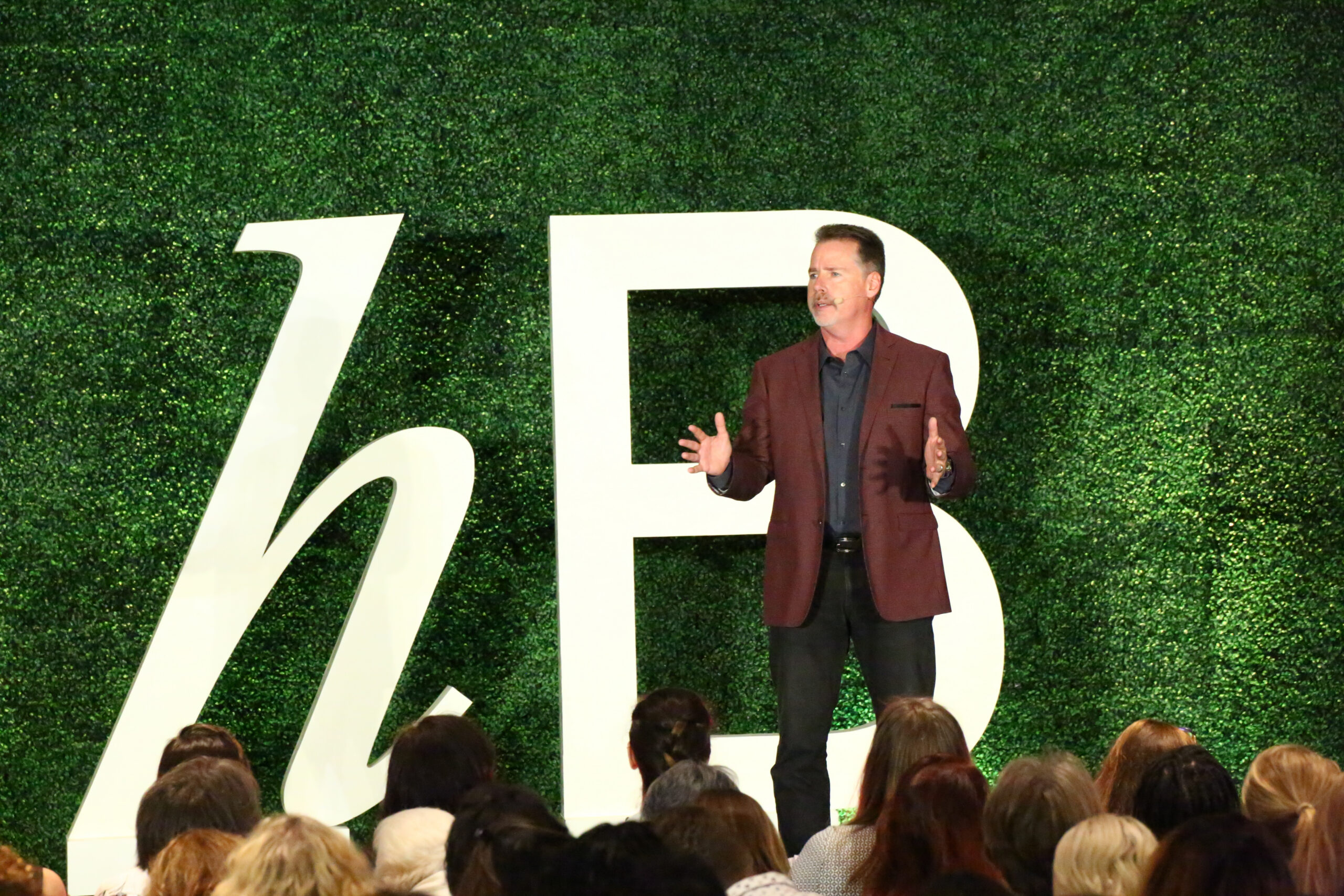
Kosberg’s approach uses structured spoken material. The author prepares stories and ideas around a chapter, then records them for the writing team. In a 2017 discussion, he described a typical rhythm of one chapter a week, with preparation and a conversation supplying the raw material. Editors still had to turn speech into prose.
One example involved coach Taki Moore, who produced hours of webinar content within a week. Kosberg recalled that the volume created considerable cutting and rewriting for the team. Talking faster had moved work into the editing stage. It is a wonderfully unromantic detail in a business associated with promises of getting books done.
A recording can preserve a phrase, an example or a way of explaining something that a generic chapter outline misses. Yet a reader needs a book that moves. The useful craft lies between those requirements: enough of the person to sound recognizably human, enough selection to spare the reader every minute of the recording.
The reader has somewhere to go
By 2018, Publish. Promote. Profit. had put his method into a title. The book later appeared in hardcover and became associated with Wall Street Journal and USA Today bestseller credentials. Its three verbs also describe his continuing preoccupation with what happens after a manuscript becomes a product.
He explores that work through books, interviews and his Best Seller Secrets podcast. A 2023 conversation with advertising specialist Chris Benetti, based in Perth, Australia, dealt with paid traffic, book offers and the economics of acquiring readers. The discussion ranged well beyond getting a cover onto a retail page. Someone had to discover the book, choose it, and have a reason to continue.
A sequence of activities, not a forecast of sales.
Kosberg’s more recent teaching puts increasing emphasis on reader fit. A book aimed at a particular problem can help its author find people seeking a particular kind of help. A relevant resource, workshop or conversation can extend what the reader has already learned. The connection needs to be clear enough for a person to follow it.
This gives his work a distinct commercial setting. Coaches and consultants may have services to offer after the book. Their interest in a reader extends beyond the price of a paperback. It also creates an editorial obligation: the pages must deliver something useful before asking for further attention. A book that feels like an overgrown advertisement has rather a lot of paper working against it.
A weekend, a draft, and a new tool
Kosberg’s latest methods return to the difficulty that delayed his first manuscript. With Write With AI, he experimented with artificial intelligence as a writing assistant. He says he produced the book over a weekend in 2023 and documented the process. That is his experience of one project, rather than a timetable for every aspiring author.
The contrast with his first book is striking. Eighteen months had become two days in his telling. But speed leaves questions that a stopwatch cannot answer. Is the material useful? Does it belong to this author? Will somebody want to read it?
Manuscriptr, the platform identified in his biography as his creation, applies AI assistance to organizing, outlining, drafting and refining nonfiction. Its stated aim includes preserving the author’s voice. A 2024 ClickFunnels Radio appearance placed him in conversation about these newer tools and his longer experience with book marketing.
For someone whose work depends on making an expert recognizable, voice is a commercial concern as well as a literary one. If a prospective client reads the book and then meets its author, there should be a person to recognize. The software changes the route to the draft. The encounter with the reader still has to work.
The book he wants to leave at home
Kosberg can be cheerfully blunt about authors who finish a book and neglect it. A self-described car enthusiast, he has compared the habit to acquiring a Ferrari and leaving it in the garage. The analogy makes the publisher sound briefly like an exasperated driving instructor. Something has been built to move. Please take it out.
His own ambitions also leave room for a quieter kind of book. He has spoken about wanting to write a personal legacy volume for future generations, with a purpose separate from attracting clients. Some readers belong to the family before they ever open the cover.
“Keep taking imperfect action.”
Rob Kosberg, discussing entrepreneurship
Now based in St. Augustine, Florida, he continues to teach the business uses of authorship. Yet the personal story gives the work its stakes. He learned selling in his father’s brokerage; after the crash, responsibility to his own family pushed him to find another way forward. A book became part of that effort.
The art once came off the walls. The book went out to radio stations. Years later, his working life still follows the consequences of that second decision: put something useful into another person’s hands, and see whether a conversation begins.
Keep the conversation going
Books, broadcasts and the places Kosberg shares his work.