The odd thing about a business book is that almost everyone can agree it is valuable while disagreeing about what the value is. A reader sees ideas. A bookstore sees inventory. An author sees a finished ambition. Rob Kosberg saw a lead form with a spine.
That insight did not arrive in a tasteful conference room. It arrived after the 2008 financial crisis tore through Kosberg's real-estate, mortgage, and title businesses. He had spent years selling property and financial services. Then the market removed the stage. Looking for a way to rebuild credibility, he wrote Life After Debt, began appearing on radio, and offered listeners a free copy. People called. They gave their names and addresses. His sales team followed up. The book was useful, but the list of people who wanted it was more useful.
Kosberg says the new financial-services operation passed $1 million in revenue within roughly 12 to 18 months. That is a founder's account, not audited disclosure, but the mechanism matters more than the victory lap. The book made a cold prospect warmer. Radio provided attention. The giveaway converted attention into contact information. A service offer converted some of those contacts into clients.

A wrecked business model became the field test for the next one.
The book is a credential you can mail
Best Seller Publishing, founded in 2011, packages that personal experiment for coaches, consultants, executives, speakers, and entrepreneurs. It is not a traditional publisher that pays an advance and recoups its bet from sales. It is not a software shelf where an author uploads a PDF. It is a service business. The client pays for the work and keeps the rights and royalties.
The work begins before a sentence is polished. The team identifies the reader, promise, title, and chapter map. Its interview-led process has historically used roughly eight weekly conversations, each supplying raw material for a chapter. Writers turn the transcripts into prose; editors, designers, and production staff turn the prose into a book; launch specialists prepare categories, promotion, reviews, and retail setup. Publicists then pitch the author to podcasts, websites, television, and radio.
Extract the expert's ideas through planning and interviews, then write, edit, design, and distribute.
Coordinate a launch around rankings, reviews, ads, social posts, and press material.
Connect the book to media, speaking, a lead funnel, and a valuable professional offer.
The three verbs - Publish. Promote. Profit. - sound like a sequence. They are better understood as a funnel. The printed object is the top. The expensive work is downstream.
The book is not the reward. It is the foundation.Best Seller Publishing, describing its approach in 2026
A bestseller badge is a moment; a funnel is a machine
A business author can earn perhaps a few dollars on a paperback. One new consulting client may be worth thousands. That asymmetry explains the target customer and the price tolerance. An independent review published in 2020 reported that the company's former online course cost $997 and that anonymous applicants had been quoted between $45,000 and $60,000 for the done-for-you program. Those figures are historical, anecdotal, and not a current price list. Best Seller Publishing now asks prospects to book a strategy call.
At $6 per copy, a $45,000 publishing investment would require 7,500 royalty-bearing sales simply to break even. At $10,000 per engagement, it takes five clients before delivery costs and taxes. The latter calculation is why the pitch is aimed at established experts, not novelists hoping to live from book income. A dentist, adviser, or consultant does not need every reader to buy. They need the right reader to call.
This is also where the word bestseller can distract. Amazon category ranks move quickly and differ from national lists. A coordinated launch can create a visible badge, but a badge does not automatically create demand. The more durable system is less glamorous: a relevant book, a clear next step, an email sequence, a conversation, and an offer worth buying.
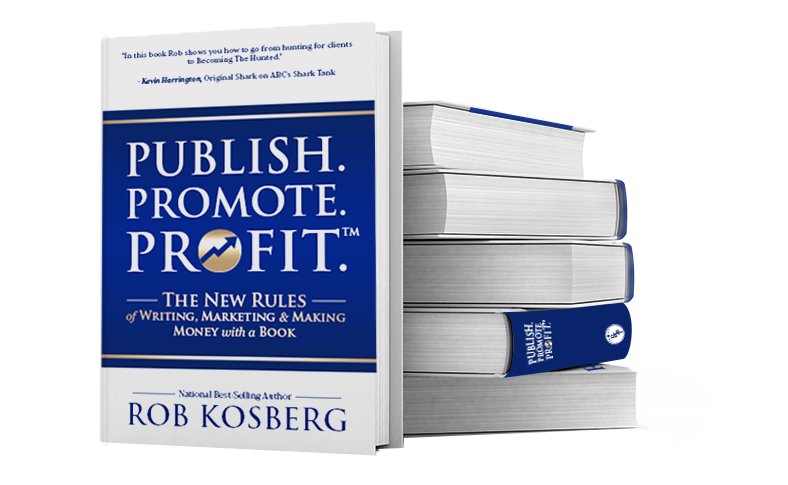
The second problem appeared after the book was finished
When Best Seller Publishing began, it did not offer media or PR. Kosberg later described noticing a second pain point: clients had books but still needed attention. He hired one publicist as a test. The work produced enough promise that he added a second, third, and fourth. The company had discovered the classic service-business expansion - solve the next problem your successful delivery creates.
That move is the clearest answer to what changed the company. Ghostwriting solved the blank page. Publishing solved the finished-file problem. A launch solved the empty-ranking problem for a moment. But the client still had to become known. Media outreach moved BSP closer to the outcome customers actually wanted: authority that could travel beyond Amazon.
The company now presents the whole chain as a done-for-you alternative to coordinating freelancers. Its public materials list book strategy, ghostwriting, developmental and copy editing, proofreading, cover and interior design, KDP setup, launch campaigns, and media placement. It says it has served more than 2,000 authors and arranged 1,167 media and television opportunities. Those totals are company-reported. LinkedIn places the team in the 11-to-50 employee range, which makes the breadth of the offer revealing: this is a project-management company as much as a publisher.
Now the interviewer has an AI colleague
In 2026, BSP added Manuscriptr, an AI-assisted writing product designed to organize ideas, create structure, and help draft and refine nonfiction. The positioning is careful: preserve the author's voice, do not replace it. That makes sense. The company's advantage has never been cheap word production. It is extracting a useful point of view from a busy person, wrapping it in editorial judgment, and connecting the result to a commercial system.
AI can reduce the friction between conversation and draft. It cannot decide whether the author's offer is distinctive, whether a television appearance reaches likely buyers, or whether the final prose deserves a reader's trust. Manuscriptr makes the top of the funnel faster. Editors and marketers still have to make it credible.
Four ideas worth stealing
You do not need a publishing package to borrow the useful logic. You do need to be honest about the conditions.
The model has conditions. It is poorly suited to an author whose only monetizable outcome is royalties, whose offer is vague, or whose target customer cannot be reached through the chosen media. It weakens when the economics require mass-market sales, when the author has no appetite for follow-up, or when “bestseller” is expected to substitute for expertise. Media exposure is an amplifier. It cannot rescue a message that the market does not need.
A publisher built around the second sale
Best Seller Publishing sits in the busy territory between traditional publishing, DIY platforms, freelance ghostwriters, and premium authority firms. Its difference is not any single task. Authors can hire an editor, designer, publicist, or KDP specialist separately. The difference is orchestration - and the insistence that the book should point toward a larger commercial event.
That insistence came from a precise observation made during a bad year: a person who asks for your book has raised a hand. Kosberg built a recovery around those raised hands, then a publishing company around the recovery. The model is neither literary romance nor passive income. It is a carefully manufactured reason for the right stranger to trust you sooner.