The apartment had a working oven. Cristina Suarez Krumsick simply preferred to leave it alone. In Brooklyn, while working as a book publicist, she started a sweets business with a blog, a PayPal account, and recipes that dispensed with baking. In its first four months, No Bake Makery fulfilled orders for more than 3,000 treats, hand-delivered around New York. There are more ceremonial ways to enter entrepreneurship. Hers involved making dessert and getting it to the person who wanted it.
That earlier business deserves a place beside her current title: founder and CEO of Isetta. It puts a product maker inside the publicist’s story. Long before her agency represented food, beverage, and home brands, she had something of her own to explain, sell, and deliver. A two-bite sweet is a modest object. It still has to make good on its promise.
A business small enough to fit in a kitchen
Krumsick is a first-generation American, the daughter of Cuban refugees, originally from Miami. Her family remains there. Food and company belong close together in her account of growing up, and the business she eventually built in her apartment makes sense against that background. There was an audience she understood: people who wanted to feed other people without spending the entire occasion negotiating with an oven.
Her cookbook, No Bake Makery, appeared in 2013. Its subtitle promised more than 80 two-bite treats. Across 224 pages, the project made room for truffles, barks, bars, puddings, and miniature pies. Smallness was part of the appeal. So was presentation. These were things to put on a table and pass around, with an approach that treated convenience as a perfectly respectable ingredient.
At an Adelphi University workshop that year, she demonstrated maple pecan bites with student volunteers. Her husband had helped photograph and taste-test the book’s recipes. When the question of using store-bought cookies arose, she offered an admirably economical defense: “but the whole point is cheating!” There is a certain freedom in a cookbook author declining to make dinner guests earn their dessert.
The episode also makes her an unusually tangible sort of marketing founder. A person who has written instructions for someone else’s kitchen knows that an appealing idea needs to survive use. The reader has cupboards, preferences, a limited amount of counter space. In this earlier chapter, the distance between a promise and its execution was short enough to measure in ingredients.
The education between the covers
Journalism came first. Krumsick attended Miami Palmetto Senior High School and graduated from Boston University with a journalism degree. Her professional beginnings included editorial work at London’s Intersection magazine. She later worked at Simon & Schuster and Workman Publishing, moving among cookbooks and books whose design was part of their attraction.
Her own shorthand for the lesson is “words & design working in lockstep.” It is a useful phrase because it describes something a reader can actually experience. A title, an image, a page: they arrive together. The person picking up a book does not pause to consider which department contributed which part.
“words & design working in lockstep”
Cristina Suarez Krumsick
Her background also includes Baltz & Company and experience on both sides of the client-agency relationship. She knew the business of commissioning outside help and the business of providing it. Those are different views of the same assignment. One side lives with the product every day; the other has to understand it well enough to introduce it to strangers.
Publishing offers an especially concentrated version of that problem. An author may have spent years on a book. A reader may give its cover a few seconds. The publicist works across those unequal investments of time. Read alongside her own cookbook, Krumsick’s career suggests a lasting interest in that crossing: how much can a clear introduction carry, and what must already be true behind it?
Leaving the salary, finding the room
Isetta began in 2019. Krumsick has recalled being frightened to give up a stable salary. At the free A/D/O coworking space, finding herself among other people trying to build businesses made the move feel less solitary. The memory has none of the polished inevitability that tends to creep into founding stories once a company has a website.
The agency’s service list gives her broad idea a practical shape. Positioning includes concept development, competitive mapping, tone, and the language used to explain a product’s value. These are decisions about what a company means before anyone asks for attention on its behalf. A founder can know a product intimately and still need help finding the sentence that lets somebody else understand it.
Design extends to identity, illustration, animation, art direction, and packaging. Public relations includes communications strategy, press relationships, affiliate management, and partnerships. The arrangement gives words and images several opportunities to meet before the final pitch. A package and an email can then sound as though they belong to the same business.
- 01PositioningDecide what the brand has to say.
- 02DesignGive the idea a visible form.
- 03Public relationsBuild the relationships that carry it.
An editorial illustration of the agency’s published disciplines.
For Krumsick, this makes the older publishing lesson operational. The combination matters because it changes where the conversation starts. A request for publicity can become a discussion about the product’s introduction to the world: the premise, the appearance, the context, and the people most likely to care. Each part has to withstand a little scrutiny.
When the noodles went dancing
The work has produced some memorable pairings. Isetta supported Gotham Greens’ partnership with the Grateful Dead, bringing a produce brand together with a band around shared interests in sustainability and community. It also helped bring Omsom and Pepper Teigen together for a limited-edition dish starter in Ajinomoto’s Know MSG campaign. Both projects appeared in the agency’s 2023 PR Net Next Gen recognition.
The following year’s recognition included a more boisterous example: the Omsom Saucy Noodles campaign, whose launch event took the form of a rave. There was also work on the SOMOS Salsa Macha launch. These are agency achievements, made by a team. Together, they give a clearer picture of the company Krumsick founded than an abstract claim about creative thinking ever could.
A noodle rave is an entertaining phrase. Its usefulness lies in the practical question beneath it. What kind of gathering belongs to this product? A launch has an invitation, a room, an atmosphere, and something people can remember afterward. Those choices can tell the story before a guest reads a line of copy.
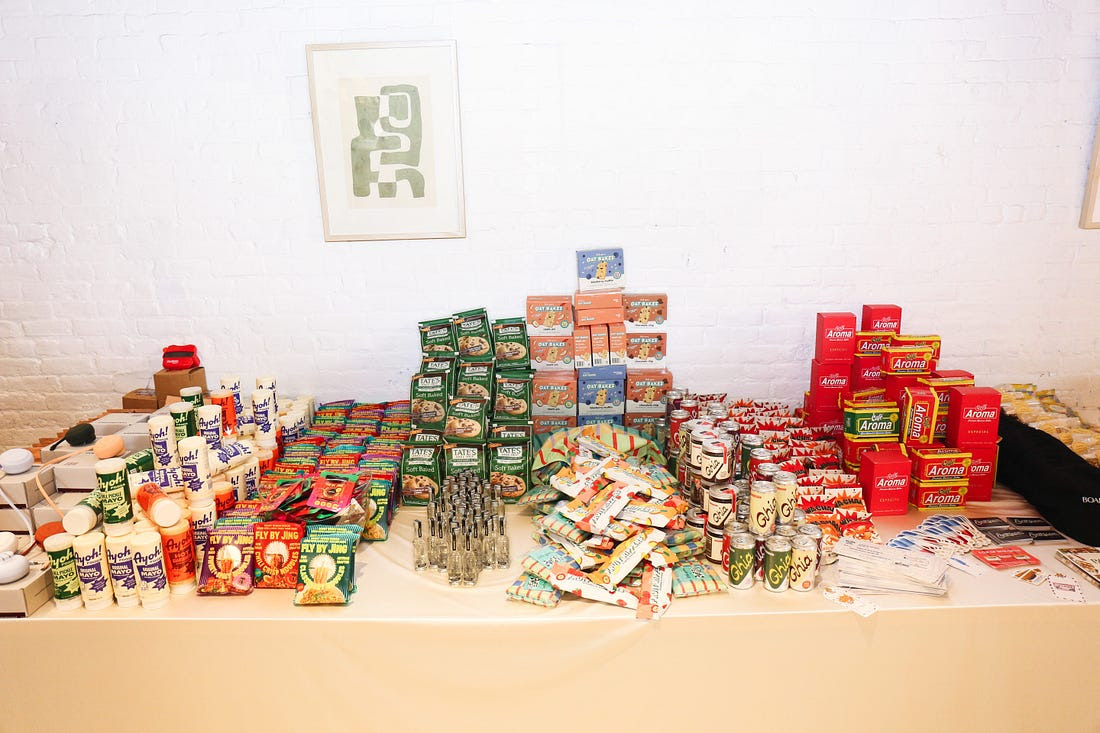
In July 2025, Krumsick described another format, Holiday in July, which presented clients’ products as gifts in an entertainment setting. She also passed along a line from colleague Camille: “We’re a PR firm with good PR.” The joke is useful partly because she credits its author. Even an agency’s description of itself has someone behind the words.
The company she keeps
Her team’s backgrounds have their own narrative possibilities. Emma Garrett, identified as Isetta’s first employee, previously managed an Anthropologie flagship. Camille Wooddall came through spice trading and marketing. Jeremy Krumsick brought engineering and Roku experience to business development and affiliate services. Abigail Koffler started writing while working in nonprofits. It is a group whose experience reaches beyond the conventional publicity ladder.
The agency’s Working Together series has brought founders, writers, editors, and publicists into the same room. Its 2024 recognition also noted graphic design support for New York City public schools. These details put some activity behind the language of relationships. People meet; work gets made; an introduction can outlast the immediate occasion.
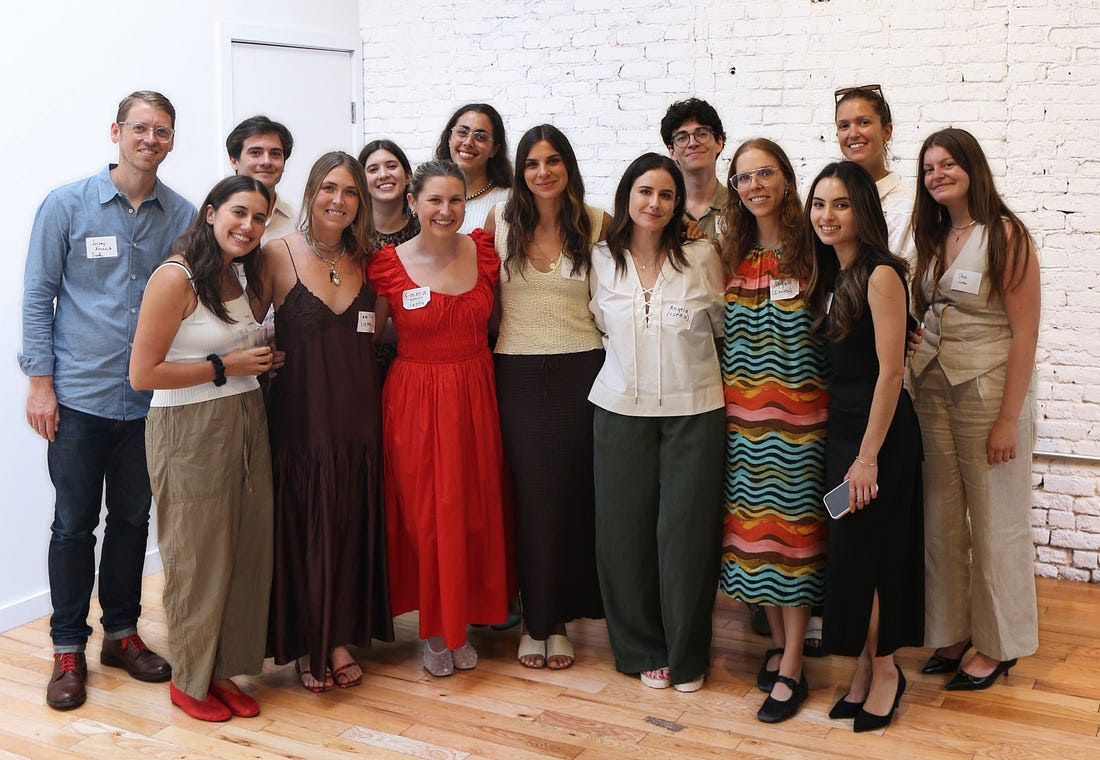
There is a through line here that does not require turning every part of her life into a business lesson. The apartment sweets, the cookbook, the agency gatherings all involve making something that other people encounter together. Her work keeps placing a product in a social situation. What happens next depends on the experience being worth somebody’s time.
A notebook before the inbox
For a closer view of the working day, consider the Tuesday routine she described in June 2024. From 8:30 to 10:30 in the morning, she would work at a Williamsburg coffee shop, often Variety Coffee or Lella Alimentari. An Americano with steamed milk, a notebook, priorities on paper, the hardest tasks first. She acknowledged that she could be quite capable of interrupting herself.
By May 2025, she was putting her thinking about earned media into an essay for The Sociology of Business. Its title, How to earn new media, keeps the emphasis on earning. Her public introduction connects identity and strategy to trust. The subject fits a career spent thinking about how an object or an idea reaches someone who has other choices.
Meanwhile, No Bake Makery has continued to have a life: Apple Books lists a digital edition released in April 2025. The cookbook and the agency sit comfortably beside each other. One invites someone to make a small sweet. The other helps businesses make an introduction. Both leave the final verdict with the person receiving it. Back in the apartment, that verdict arrived one order at a time.
More of the conversation
Listen / Creative Juicy / 41 minutes / April 2024The power in positioning ↗ Listen / The PR Podcast / 27 minutes / May 2023Cristina on human connection ↗- Isetta
- Cristina on LinkedIn
- Cristina on Instagram
- The original dessert blog
- No Bake Makery: publisher’s edition
- No Bake Makery: digital edition
- The Miami beginnings
- The Adelphi recipe workshop
- The Williamsburg working day
- The 2025 conversation & photographs
- How to earn new media
- The PR Net: 2023 recognition
- The PR Net: 2024 recognition