On two vessels in the North Sea, RMI’s medics had a list of duties that would disappoint a television producer. Inspect the galley. Test the water. Check supplies. Train the crew. The ships, working for a Norwegian offshore seismic company, carried 95 people between them. RMI’s August 2024 account reports no medical incidents during the project. The drama, such as it was, consisted of making drama less likely.
- Medical care, safety and security for operations far from easy backup.
- Customers include offshore energy, maritime, mining and government teams.
- The offer combines people on site with planning and specialist support elsewhere.
That assignment explains RMI better than a photograph of a helicopter ever could. A remote worksite has ordinary human needs under extraordinary constraints. People get sick. Drinking water needs checking. Someone must know which hospital can receive a patient, and how to reach it. Distance turns housekeeping into a serious operational question.
A training company follows the questions
RMI began in 2003 with Andrew Cull, a paramedic, and medical training. It later operated as Remote Medical International. The name described a business teaching and supporting care where familiar infrastructure was scarce. Eventually, customers began asking for help with the problems surrounding the patient: safety, staffing and the conditions in which a team could work.
The company acquired HSE Offshore in 2018, expanding its health, safety and environment capabilities. Buying SSI Group in 2020 added security and technical staffing. In July 2022, Remote Medical International became RMI. Its explanation was refreshingly practical: some projects were no longer particularly remote, and some services were no longer medical. The initials had room for both.
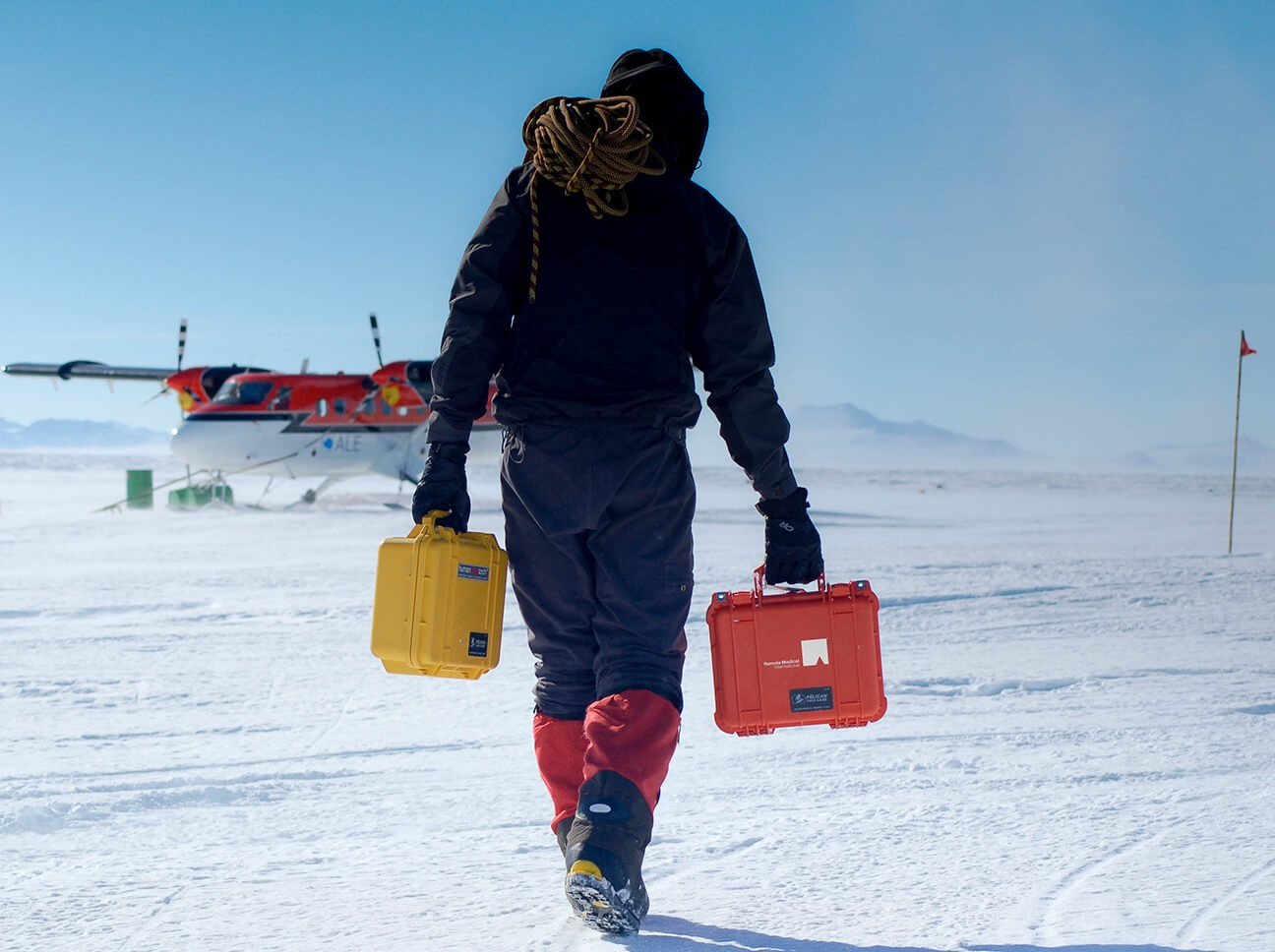
Expansion followed adjacent needs rather than a tidy industry label. Offshore wind farms, oil operations, research vessels and mines differ enormously, yet each may employ people beyond convenient access to care. RMI sells services into that shared predicament. Renewable energy belongs in the customer list for the same reason oil and gas does: somebody still has to work out there.
The medic comes with a system
The medical offering ranges from on-site medics to physicians, occupational health coordination and configurable mobile medical units. Medical assistance includes a 24-hour emergency helpline, advice, case management and evacuation coordination. A clinical governance team checks staffing plans against local regulations and practice requirements. The person carrying the kit has colleagues behind the scenes.
“Calling 911 is simply not an option.”RMI on offshore medical planning, 2021
HSE services bring safety advisors, inspections and program management. A particularly revealing option is the dual-role safety medic, qualified to perform both medical and safety duties. On a remote or space-constrained project, combining responsibilities can reduce deployment costs and the demand for accommodation. It is a staffing choice with physical consequences: people need beds as well as job descriptions.
Security adds another set of questions: who poses a threat, what routes are usable, how should executives travel, and what happens if a situation deteriorates? RMI offers intelligence, risk consulting, protection and crisis management. Its collaboration with Trustwave adds cybersecurity expertise for energy and critical infrastructure clients. The project determines which pieces belong together.
The price of the right person
This is a contract services business. Clients buy a package shaped by location, risk, staffing and scope. Its commercial logic is visible in RMI’s account of Pacific island medical support: a physician increases on-site capability but costs more than a medic. At one location, RMI proposed a lower staffing level in 2014 after assessing the island’s needs.
Qualifications can complicate that arithmetic. The same account describes islands accepting providers credentialed in Hawaii and Alaska, narrowing recruitment choices. A cheap staffing proposal is of little use if its personnel cannot legally practise. Buyers should compare the capability delivered, the qualifications required and the support behind it, alongside the price.
International SOS is an established alternative in international medical assistance. Operators can also hire separate medical, safety and security contractors. RMI’s positioning centres on assembling these functions around a particular assignment. That may reduce handoffs for the client; it still requires clear responsibilities and a plan that fits the site.
Healthcare has a freight department
The company’s reach also includes medical supply chains. In 2015, RMI announced a $95 million U.S. Government contract for HIV rapid test kits. By July 2024, it reported procuring and distributing more than 350 million kits to 39 countries. These are the company’s reported delivery figures, rather than a count of people diagnosed.
39 countries · RMI’s July 2024 report
Its 2013 financing had a similar concern with connections. Columbia Pacific Management invested $8 million, and RMI announced a partnership with the Columbia Asia hospital network. For remote care, somewhere to refer a patient is part of the service. A good first response becomes more useful when it connects to the next stage.
When the plan meets the weather
In December 2020, then-CEO Wayne Wager described an annual business plan overtaken by the pandemic. RMI developed screening, testing and consulting services; teams built lab relationships and tracked changing requirements. Clients’ question had become how to return to work while protecting employees. Remote-care experience found a new setting.
A smaller adaptation appears in an April 2026 offshore wind case study. An onboard medic delivered practical CPR training, then used weather delays for additional sessions. In July, RMI published a security account involving a cable project connecting Oman and Somalia. Together, the stories show the range of work behind the shortened name.
The lesson an operator can copy is concrete: connect prevention, on-site capability and onward care before deployment. A combined provider helps only when the staffing, communications, legal permissions and transport arrangements fit the assignment. No collection of services makes those constraints disappear. The galley inspection deserves its place on the list.
Follow the work
Explore RMI’s services, its case studies and updates, and the Fault Lines intelligence briefing. Follow RMI on LinkedIn, X and Facebook.