Richard Small has a credit in a hockey broadcast. In the 2016 regional Excellence Awards, the winning nonprofessional sports coverage entry was Medfield TV’s production of the Medfield Warriors Boys Hockey MIAA Division 2 State Championship. Small appears among the people credited for it. There are eight names on that line. It is a pleasing place to begin a story about a chief executive: somewhere in the middle of a team list.
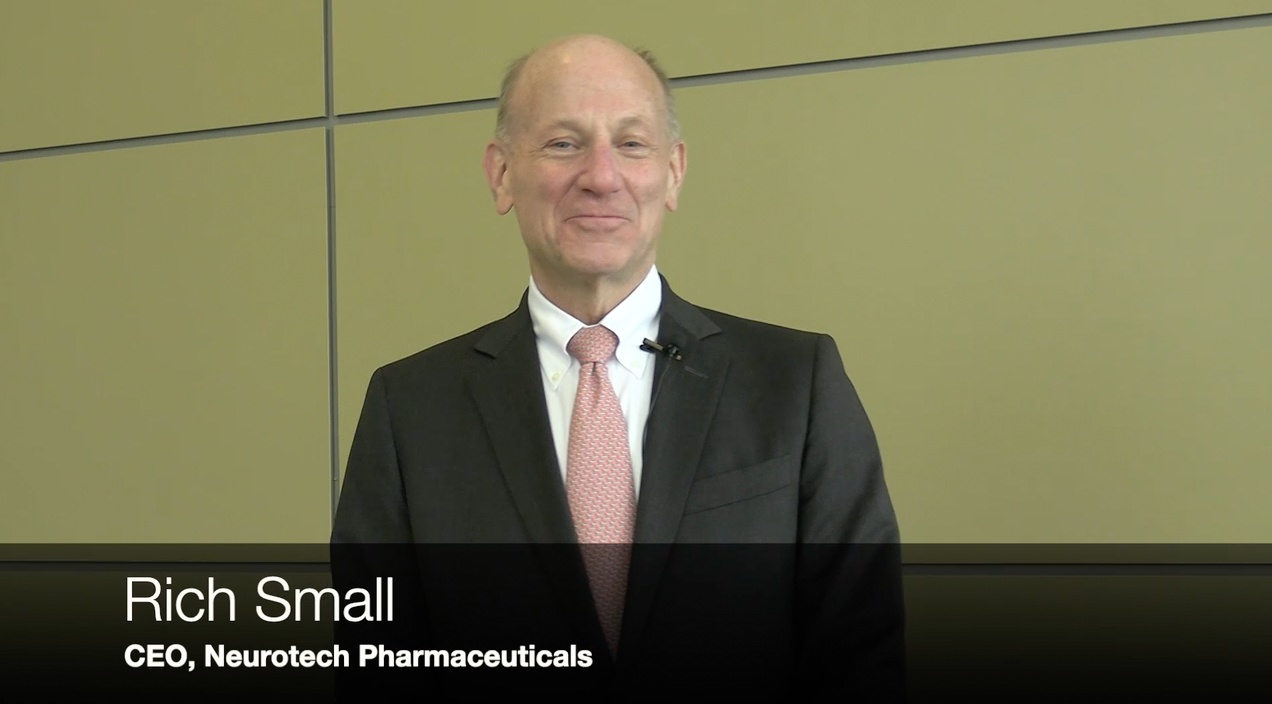
The corporate version of his name comes with rather more furniture. Richard Small, CPA, is chief executive officer and a board member at Neurotech Pharmaceuticals. He has worked in accounting, treasury, finance and operations. Those are occupations in which the figures must reconcile, whatever the speech promised. The hockey credit offers a different kind of evidence about his working life. Alongside company responsibilities, there has been a local audience and a shared production.
A championship broadcast preserves more than the final score. It keeps the game available to people who were elsewhere, and lets the people who were there revisit it. Small’s contribution is part of that collective record. The award belongs to the production and its credited team. Giving him sole ownership would spoil the very detail that makes it interesting.
An executive biography usually travels upward: one title, then a larger one, then a seat on the board. Small’s story also travels sideways, into a Massachusetts town’s sports life. Follow both directions and the person becomes easier to see. The office supplies one set of responsibilities. The team sheet supplies another.
The accountant before the chief executive
His professional starting point was Coopers & Lybrand, the public accounting firm. He went on to financial and treasury positions at Dennison Manufacturing. He holds a bachelor’s degree in business administration from Northeastern University and is a certified public accountant. This is the early outline of a career built around the mechanics of organizations: their accounts, their funds and the decisions that connect the two.
At Immulogic Pharmaceutical, Small became vice president and chief financial officer. His work included licensing agreements and public equity offerings. Those two activities put a finance executive between different constituencies. A licensing agreement involves another organization; an equity offering involves investors. Both require a company to make commitments that extend beyond its own walls.
One transaction gives that period a useful numerical anchor. In September 1995, Immulogic sold 2.4 million shares at $10.75 each, bringing in $25.8 million in gross proceeds. The company had originally intended to sell two million shares. The larger offering reflected demand, and Small discussed the timing from the position of a company with financial strength.
“We didn’t do it from any need for cash,” he said. The sentence has the dry satisfaction of an accountant allowed to be pleased. Raising money when it is available, rather than waiting until it is desperately required, is an intelligible piece of business judgment. In this particular transaction, the timing was part of the story he chose to tell.
The numbers also help keep the biography honest. A completed financing is a defined event: a share count, a price and proceeds. It can be described without decorating Small with a heroic temperament. Before the chief executive title, there was already a record of participating in the practical transactions on which companies depend.
“We didn’t do it from any need for cash.”Richard Small on Immulogic’s 1995 offering
2.4 million shares × $10.75
A founding role, then a difficult July
Point Therapeutics brought him into a founding team. He served as senior vice president and chief financial officer, helped take the company public and worked on private and public equity offerings. Founding membership belongs in his story, though the company he runs today is Neurotech. The distinction matters: his experience of building a business predates his arrival there.
Point’s history also contains an abrupt ending to his employment. In July 2007, the company announced management reductions that included Small, chief executive Donald Kiepert, general counsel Michael Duffy and chief scientific officer Barry Jones. Their employment ended effective July 25. A résumé compresses that into a transition between employers. The announcement describes a collective management cut.
There is no need to supply a private emotional scene around that departure. The event itself is substantial. Small had been part of the company’s founding and financial leadership; he was then among the executives whose positions were eliminated. Both facts belong to the same career. Keeping them together makes the later continuity at Neurotech more meaningful.
His move to Neurotech came in July 2007, with the appointment announced in August. The new job was vice president and chief financial officer. Its remit covered financial planning, reporting, treasury and investor relations, as well as participation in corporate development, strategy and operations. Even at entry, the position reached beyond the accounts.
For a reader following the titles, this is the hinge. Small entered a new organization through finance, carrying experience from a founding team and public companies. Over the years that followed, operations became an explicit part of his title, and executive leadership became his current responsibility. The change happened within one company.
The responsibility grows wider
In April 2016, Neurotech announced a reorganization and appointed Small chief operating officer and chief financial officer. Quinton Oswald stepped down as president and chief executive. The announcement placed Small’s expanded responsibilities inside an organizational change, rather than presenting them as an isolated promotion. A finance role had become a combined finance-and-operations role.
Operations is a broad word with a very ordinary consequence: more of the organization falls within the job. Finance has to connect with the people doing the work. Plans have to connect with capacity. The combined title gives a concrete indication of how Small’s remit widened; it does not require an invented account of what he said in a meeting.
By the current leadership roster, he is chief executive and a director. Around him are separate leaders for finance, manufacturing, quality, development, commercial work and legal affairs. Paul Brannelly is chief financial officer; Mike Duffy is general counsel; Crystal Cortellessa leads manufacturing. The present roster makes visible the division of responsibility inside the company he leads.
Duffy’s name also appeared beside Small’s in the 2007 Point management reductions. The shared names create a small thread of continuity between two companies and two periods. That is as far as the public record needs to take the connection. A story about their private conversations would require more than a pair of job announcements.
When Neurotech appointed Scott Hunter its first chief commercial officer in January 2023, Small described the importance of building the commercial strategy and infrastructure. In his April 2024 conference interview, he again spoke about growing the organization. “We are creating and growing our infrastructure,” he said. The choice of subject is characteristic of the job: a company needs people and functions as well as plans.
- 2007Joins Neurotech as CFO
- 2016Appointed COO and CFO
- TodayCEO and board member
The assistant coach gets a line of his own
The local sports record brings the narrative back to Medfield. The Warriors’ 2023-24 girls hockey roster lists Sarah Small as head coach and Molly Slowe, Rich Small and John Summers as assistant coaches. Rich is the name Richard uses publicly. Here, the title following it is assistant coach. The team’s leadership has several names, just as the broadcast credits did.
That roster makes an attractive companion to the corporate leadership list. In each, Small occupies a defined position among other people with defined positions. The responsibilities differ, of course. A school team has its own purpose and its own season. The comparison rests on a simple, visible fact: the same person appears in both kinds of organization.
His volunteer record also includes coaching youth basketball, softball and baseball, coordinating softball, and announcing high school sports for Medfield TV. These are distinct contributions. Organizing a sport, coaching it and describing it for viewers place someone at different points around the same activity. The variety gives the hockey credit some context.
There is a gentle joke in finding an accountant among sports announcers. Both occupations spend time getting the numbers right, although one audience is considerably more willing to shout about the result. The joke belongs to the juxtaposition, rather than to any claim about Small’s announcing style. His actual voice can be left to the people who heard it.
A local team roster also has a useful resistance to executive grandeur. It records who is doing which job. It gives assistant coaches their place without turning them into the principal attraction. In a profile of a CEO, that modest line offers a welcome change of scale.
Twenty-seven years in another institution
Small’s institutional work extended to the New England College of Optometry, where he served as a trustee from 1995 to 2022. That is a 27-year span between the listed years. He chaired the Finance and Business Affairs Committee and served on the Executive Committee for more than 15 years. These responsibilities ran alongside his company career.
The committee names are revealing in a practical way. Finance and business affairs are precisely the areas in which his professional experience could be put to use. The college role connected that experience to governance in an educational institution. His résumé therefore includes responsibility for organizations with different purposes, rather than a single succession of employers.
Put the dates next to one another and the overlap becomes visible. The trusteeship began in the year of the Immulogic offering described earlier. It continued through Point, through his move to Neurotech and through the expansion of his executive responsibilities there. The college appointment supplies a long horizontal line beneath the changes in his main job.
As of October 2026, Neurotech still lists Small as chief executive and a director. His public professional appearances also extend internationally: he was listed among contributors to the 2025 Euretina Innovation Spotlight in Paris, and the 2026 Eyecelerator program includes him as Neurotech’s CEO. The accountant’s career now takes him into rooms well beyond the local sports circuit.
Yet the hockey credit remains a good ending. It puts his name beside the names of people making something together. The corporate positions, college committees and assistant coaching role each have their own weight, but they share that plain feature. Small’s story is carried by specific jobs inside specific teams. Sometimes the title is chief executive. Sometimes it is one name among eight.
Trustee, New England College of Optometry