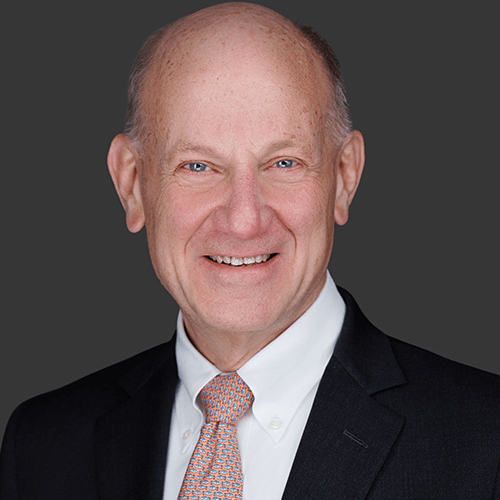
Rich Small is the chief executive of Neurotech Pharmaceuticals, a clinical-stage biotech in Cumberland, Rhode Island that, in March 2025, received FDA approval for ENCELTO, an implant containing genetically engineered human cells that live inside a patient's eye and secrete a neurotrophic protein for years at a time. It is the first and, for now, only approved treatment for macular telangiectasia type 2, a slow-moving retinal disease that had, up to that point, produced exactly zero approved drugs.
Small is a certified public accountant. He graduated from Northeastern University in 1977 with a bachelor's in accounting and started at Coopers & Lybrand. This is not the résumé most people picture when they picture the boss of a company selling gene-engineered ocular implants. It is, in fact, a résumé that helps explain why Neurotech exists at all - a small biotech that survived long enough to ship.
He joined Neurotech in July 2007 as chief financial officer. He became CEO in March 2016. In 2025 the FDA said yes. That is a nine-year run as CEO to get to approval, and about eighteen years total inside one company. The average tenure for a biotech CEO is somewhere around five years. The average time a life-sciences investor is willing to wait for a lead product is - well, less than eighteen years.
This is the thing to notice about Rich Small. The interesting fact is not that he ran a company; a lot of people run companies. The interesting fact is that he stayed.
The technology Neurotech is built around is called encapsulated cell therapy, or ECT. Picture a small semi-permeable capsule, roughly the size of a grain of rice, containing a line of genetically engineered human cells that have been instructed to continuously produce ciliary neurotrophic factor - a protein that supports the survival of photoreceptors and retinal ganglion cells. Surgeons place the capsule inside the eye. The cells inside stay alive. They keep making the drug. Nutrients move in, the therapeutic protein moves out, and the patient's immune system is kept away from the cells by the capsule wall. It is, effectively, a tiny, living, sustained-release drug delivery device.
The idea has been around for decades. Getting it approved has not. What Neurotech had to prove to the FDA was not just that the device was safe, or that it worked, but that a slow-progressing retinal disease - one that eats away at the macula in millimeters per year - could be treated in a way the agency would recognize as meaningful. That required convincing regulators to accept structural endpoints, essentially arguing that measured preservation of retinal tissue is itself a valid clinical benefit. Small's team helped write that argument.
Before Neurotech, Small was chief financial officer at Point Therapeutics, an oncology biotech he helped take public, and before that at Immulogic Pharmaceutical, another public biotech. He also spent time in senior financial and treasury roles at Dennison Manufacturing, the office-products company that eventually became Avery Dennison. He is a finance person in the classical sense: he did public accounting, he did public-company reporting, he did equity offerings, he did licensing deals. Then he did a drug.
There is a related and less-noted piece of his background. From 1995 to 2022 - twenty-seven years - Small served as a trustee of the New England College of Optometry in Boston, where he chaired the Finance and Business Affairs Committee. He was inside vision science governance for essentially the entire arc of his executive career, long before he became CEO of a company that would eventually get an eye drug approved. Whether that is causation, correlation, or coincidence is not clear. But it is worth noting when a finance chief joins a retinal-implant company and then stays there for eighteen years.
Neurotech itself is not a Cambridge or South San Francisco company. It is headquartered at 900 Highland Corporate Drive in Cumberland, a suburb of Providence, Rhode Island. That is unusual for a biotech that just launched a first-in-class product. Rhode Island does not have the deep bench of life-sciences hiring, or the venture density, or the biotech-adjacent commercial real estate that Kendall Square offers. It has a somewhat lower cost base, a small and stable workforce, and, apparently, a functioning CEO who did not feel the need to move.
The company's disclosed funding history reads as modest by contemporary biotech standards: total raised around $63 million, with a $15 million Series B logged in October 2008. That is not a lot of capital, given how long the program took. It is not what one associates with a first-in-class ophthalmology launch. It is, in other words, an unusually capital-efficient outcome, and capital efficiency is the sort of thing a CPA is likely to think about.
The chairman of Neurotech is Jim Mazzo, a veteran of the ophthalmic device world (Advanced Medical Optics, Abbott Medical Optics, Carl Zeiss Meditec). Together, Mazzo and Small have been the public faces of the company at investor conferences - most notably the annual J.P. Morgan Healthcare Conference - and Small has taken to the media rounds after approval, appearing on HCPLive's New Insight program, Ophthalmology Times' ASCRS coverage, and Healio's AAO reporting. In each appearance the register is the same: measured, technical, unshowy, more accountant-with-a-drug than cult-of-personality founder.
There is a certain kind of biotech CEO who arrives on stage with a story about a personal medical crisis and a mission. Small is not that CEO. He is the one who came up through the numbers, who joined a company because it needed a CFO, who ended up running it because it needed running, and who kept it running long enough for a very difficult drug to get through the very difficult clinical and regulatory process. It is, in its way, a more interesting biography.
Now that ENCELTO exists as a commercial product, the strategic question for Neurotech is what to do with the ECT platform beyond MacTel. The company's language points at additional retinal diseases, at neurodegenerative eye conditions, at the general concept of long-term biologic delivery to the eye. Small has said publicly that the approval unlocks a broader platform play. Whether he stays around to build that next chapter, or hands it off, is a question worth watching.
For the moment, though, the fact of the matter is simple enough. There is a rare eye disease. There is now a drug. The company that made it is in Rhode Island. The person running it is a CPA. He has been at his desk since 2007. That is the story.