The chickens had something to teach him. Richard Okello was twelve, growing up in Uganda, when he noticed that a bird bought far from the city could fetch a considerably higher price once it reached town. During family visits to the area where his father grew up, he bought chickens and brought them back in the car to sell. His first business had feathers, a journey and a price gap.
It is an unusually concrete beginning for a career in private capital. Before the funds and investment committees, there was a product whose value changed with its location. The two sets of buyers and sellers had little information about each other’s prices. A child paying attention could make a trade between them. The family car acquired a second occupation.
Decades later, Okello’s working world includes institutional investors and businesses across Africa. The early episode offers a useful way into that world. A distant view can miss what a closer observer sees. Bringing those views together is work, whether the cargo is poultry or a portfolio.
The scholarship, and the question after it
A scholarship took Okello to the United World College of the Atlantic in Wales. From there, he went to Swarthmore College outside Philadelphia. He graduated in 1998, completing a degree in economics, with a minor in public policy, in three years. An MBA at Pace University followed.
His early ambition was direct: go back to Uganda, employ people and make money. At Swarthmore, philosophy professor Richard Schuldenfrei encouraged him to think beyond that single route. Okello had questioned the usefulness of philosophy. It proceeded to interfere, rather helpfully, with his plans.
He later described developing a broader public mindset
. That phrase helps explain why education matters in this story beyond the qualifications. The scholarship expanded the places he could reach. The classroom expanded what he thought he might do once he got there. A career can turn on a question as readily as an offer letter.
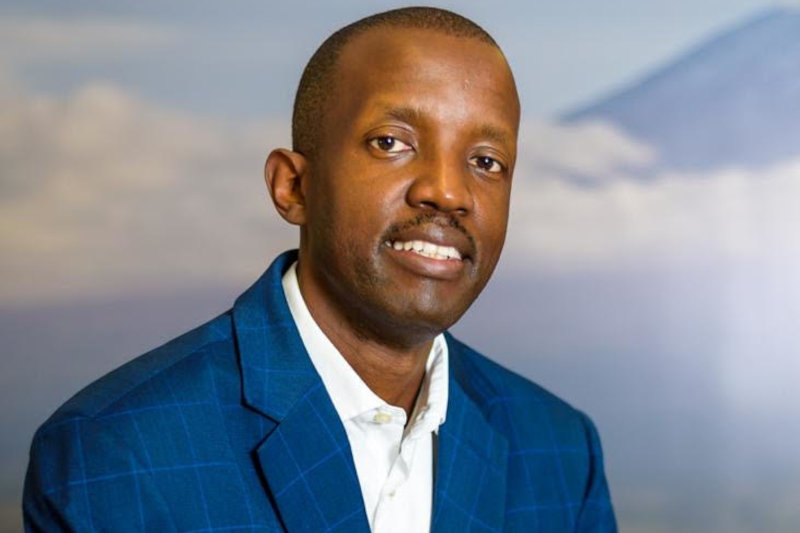
Learning to think in portfolios
Okello’s professional training passed through Bridgewater Associates, where he became a partner, and Makena Capital, where he worked as a principal. These were institutions dealing with opportunities across markets, rather than a single business in a single place.
At Makena, his responsibilities included investment research and portfolios with emerging-market exposure. He participated in a twenty-person investment forum that examined opportunities across public and private assets. There is a distinction here between knowing a business and deciding how it belongs beside other investments. The latter requires asking what happens to the whole collection when circumstances change.
A portfolio is a set of decisions that must live together. An attractive investment may still introduce a risk that the investor already has elsewhere. That way of thinking helps explain the breadth of Sango’s eventual approach: different markets, different vehicles and different routes into ownership. Geography supplies context; it does not finish the analysis.
- UgandaEarly enterprise
- WalesUWC Atlantic
- United StatesStudy + global investing
- AfricaSango Capital
A firm built between two worlds
In 2011, Okello and Charles Mwebeiha established Sango Capital. Okello’s transition into an Africa-focused firm followed his work helping Makena explore investments on the continent. The founding brought a regional focus to experience acquired in global finance.
By April 2026, Sango was described as managing just under a billion dollars. Such a number conveys scale, but it leaves the more interesting question unanswered: what does an investor do with that position between international capital and local businesses?
Okello’s answer begins with the practicalities of understanding a market. He has compared investing in Africa to carrying a glass of wine on a speedboat in rough water. Reaching the destination matters; so does what remains in the glass. The image gives volatility a physical form. Growth can be impressive while the investor’s eventual outcome depends on the journey, including the currency in which that outcome is measured.
The supermarket test
A grocery store provides a useful examination of that thinking. Sango backed entrepreneur Ebele Enunwa when he opened Sundry Markets’ first store in 2015. The business operates the Market Square chain in Nigeria. Its proposition rests on purchases people make repeatedly, rather than an invention they must first learn to want.
By the August 2022 investment announcement with Tana Africa Capital, the retailer had twenty-one stores and had created more than two thousand direct jobs since inception. The transaction allowed Sango’s first fund to realize part of its investment while its third fund invested alongside Tana. One relationship could therefore accommodate both a sale and continued ownership.
Sango’s subsequent case study reported that the partial exit returned more than five times the original dollar investment, despite substantial naira depreciation over the holding period. The result is specific to that transaction. It nevertheless illustrates the distinction between a business expanding and an investor actually receiving a return. Customers, execution and the terms of ownership all have to cooperate.
An investment also needs a way out
The recent Sango story includes buying interests in existing funds. In July 2024, the firm’s transaction involving a Synergy Capital Managers fund used an arrangement to share future proceeds from asset sales, rather than simply paying a negotiated purchase price for the increased stake.
That is a less familiar transaction to explain over dinner than backing a new shop. It addresses a recognisable problem, however: an owner’s need for liquidity and a company’s stage of development may fail to coincide. A business can still have work to do when an investor is ready to leave.
Structuring a transfer creates another route through that mismatch. It also puts considerable weight on understanding what remains in the portfolio and how it might be sold. The price gap now concerns ownership, time and expectations. The buyer needs a reason to believe that the remaining journey can be completed on worthwhile terms.
Knowing when to stay away
Okello’s account of trusted local relationships includes a decision to avoid a market. A partner with their own long-term capital at stake advised against entering. The market subsequently deteriorated, and Sango later found an opportunity to invest at a better valuation through a secondary transaction.
He also stresses checking guidance against other informed perspectives. A relationship supplies access and judgement; it still needs scrutiny. The useful friend in an investment discussion may be the one who ruins the enthusiasm before it becomes expensive.
This is a more demanding view of local knowledge than the familiar suggestion that knowing people opens doors. Sometimes its value is keeping a door closed. It requires listening to information that complicates the opportunity and accepting that the right decision can be to wait. An investor’s activity is visible. The transactions they decide against are harder to count, although those decisions also shape the outcome.
The clocks inside a fund
In July 2026, Sango announced an appointment to manage approximately $460 million in committed capital across three African fund portfolios. Institutional limited partners initiated the management change. The assignment covers ongoing management and value creation under the separate mandates of those funds.
The appointment followed a continuation vehicle for Sango’s inaugural fund and a $120 million secondary transaction across four African funds. These are different measures of activity, rather than numbers to add into a claim about Okello’s wealth. What connects them is responsibility for investments already in motion.
Such work gives his career a second dimension. Finding an opportunity starts the relationship. Later come decisions about ownership, further development and distributions. A fund’s timetable, a company’s timetable and its investors’ timetables can pull in different directions. Someone has to work through the differences. The formal language of portfolio management contains a very ordinary question: what happens next, and who will do it?
Secondary transactions and continuation vehicles can help accommodate different holding periods.
Keeping options open
When advising founders, Okello argues for building a business attractive to several kinds of buyer or investor. Growth, margins, management and resilience matter because they give a company choices. He also credits the fund teams behind successful investments, including Sango’s exposure to RapidDeploy through a manager it backed.
His thinking about long-term partners is equally plain. A label alone gives founders little assurance about the future.
“What will matter is who stays with you for the journey.”
Richard Okello · January 2026
It is a useful sentence in an industry fond of categories. A label alone cannot establish whether capital will be available when a company needs it, or whether a partner understands the next difficult stage.
The thread reaches beyond the firm. Okello chairs the African Leadership Academy Investment Committee, and the academy has listed him on its Global Advisory Council. Education opened his own route into a wider world. His involvement gives that part of the story a continuing place beside the investments.
The chickens belong at the beginning because they keep the questions concrete. Where is the value? What does each side understand? What must survive the trip? The cargo has changed. Those questions still earn their keep.