Richard Lewis has an 18-16 victory buried in his biography. At Yeshiva University’s Mac Madness celebration in November 2003, he beat Shayna Greenwald in a foul-shooting contest. The students also defeated the faculty that evening. There were dunks, raffles and cotton candy. For once, an institution of higher learning supplied a score everyone could understand.
It is a small result to preserve beside the financial numbers now attached to his career. Lewis founded Redwood Services in 2020. Five years later, the home services group reported more than $500 million in annual revenue. Yet the basketball detail belongs here. Long before he was asking contractors to join a larger organization, Lewis was spending his time in teams, then helping to run them.
His business proposition would eventually turn on a question familiar to anyone who has assembled one: how do you bring capable people together while giving each a reason to keep caring about the result?
A return ticket to Memphis
Lewis was born and raised in Memphis. He went to Yeshiva University, played four years of NCAA basketball and graduated with a business degree, summa cum laude. His early career took him to Bear Stearns as an analyst. Finance gave him a starting point; home services became the longer occupation.
In 2008, he returned to Memphis and joined ServiceMaster. Nearly twelve years there exposed him to businesses whose work happened far beyond a corporate office: Terminix, TruGreen, Merry Maids and other service brands. From 2017 to 2020, he served on the Terminix senior leadership team, responsible for strategy, analytics and growth initiatives. He also earned an MBA from Emory University.
Those jobs placed him near the junction of financial plans and everyday operations. A service company has to translate an idea about growth into somebody’s actual working day. The numbers matter, but so does the organization that produces them. Lewis’s eventual company would offer contractors help with both.
Memphis also kept him connected to a smaller world. In 2012, while working in business development at ServiceMaster, he volunteered to talk to local parents and students about Yeshiva. He understood the distance between a university in New York and teenagers who knew it mostly through other people. A familiar person from the neighborhood could make that distant place easier to imagine.
The coach had another day job
During his ServiceMaster years, Lewis coached the Cooper Yeshiva boys basketball team. In 2012, Tennessee’s legislature honored Lewis, the assistant coach and the players for capturing the Tier 2 championship at the Yeshiva University High School Basketball Tournament. The governor signed the resolution that May. Most coaches must settle for a trophy; this team acquired a legislative record.
A year later, the coaching problem was more ordinary and more revealing. Eli Osdoba, a player who had supplied roughly twenty points a game, was leaving. Lewis and assistant Craig Wiener had to prepare for the next season without him. Lewis singled out Osdoba’s ability to improve the players around him. The missing points were obvious. Replacing that effect on everyone else was a different assignment.
In 2014, Yeshiva included Lewis on the advisory committee for its search for a head men’s basketball coach. The listing gave him two jobs: director of development at ServiceMaster Franchise Brands and head coach at Cooper Yeshiva. Both belonged on the same line.
There is a temptation to turn every sporting detail in an executive’s life into a management parable. The record needs less decoration here. Lewis actually played, actually coached and actually helped evaluate a coaching appointment. When his business later used the language of coaching, it came with experience beyond a conference-room metaphor.
A deal with work left in it
Redwood’s starting point was an owner who had built a worthwhile business and still wanted to be involved. Lewis organized the investment proposition around that continuing ambition. A contractor could take investment, retain an ownership interest and keep a role in running the company while gaining access to additional resources.
That structure changes what the buyer is asking the owner to do. Someone who expects to leave immediately has a different set of needs from someone who wants help with the next stage. Redwood sought the latter. Local knowledge, an established name and the owner’s relationships could remain useful inside a larger organization.
By April 2024, Redwood’s network included fifteen partner companies and roughly 1,700 employees, supported by a central staff of twenty-nine. The distinction between those two headcounts matters. The support center existed to serve an operating network much larger than itself. Its effectiveness depended on how useful it could be to the people doing the work locally.
“What happens after the transaction is way more important than what happens during the transaction.”
Richard Lewis · 2024
That is a demanding way for an investor to describe the job. A closing date is easy to put on a schedule. The work afterward keeps generating new appointments. Finance, marketing, recruiting and operating support have to become things a local manager can use. A signed agreement gets the relationship started; repeated useful assistance gives it substance.
Daily leadership
Local relationships
Operating support
Shared expertise
A simplified view of Lewis’s publicly described model. Individual transaction terms vary.
Permission to spend time together
Lewis’s public advice about culture is often pleasingly administrative. Put the gatherings on the calendar. Book them ahead. Give them the seriousness of an appointment with an important client. In his writing, December is when the following year’s events get planned. The calendar becomes a record of what management intends to protect.
He recommends regular all-hands meetings, management sessions away from daily operations and family gatherings. There are lawn games and volleyball in his account of picnic days. The underlying request is practical: leaders should make room for people to know one another beyond the immediate demands of their jobs.
“You never have to ask permission to spend money on your team.”
Richard Lewis · 2024
The interesting part is how easily these plans can be displaced. A gathering has to survive the first crowded week and the first apparently more urgent obligation. Lewis puts responsibility for that choice with the employer. If participation is difficult, he suggests starting with events during working hours, with the company contributing its own time.
That advice makes his interest in connection more concrete. An event requires a date, a budget and somebody willing to keep the commitment. The instruction is modest enough to follow and specific enough to notice when it has been ignored.
The numbers get larger. So does the assignment.
Redwood’s expansion gave those management ideas a growing audience. In 2023, Lewis appeared on the HVAC trade’s Top 40 Under 40 list. At that point, Redwood was described as having eleven partners and $250 million in annual revenue. The company had also invested in technician training and development, including programs intended to build talent within its partner businesses.
The East Memphis Partner Support Center brought together business coaches with finance, accounting, marketing and human resources staff. That combination helps explain what Lewis was building: an organization capable of supplying expertise that a local contractor might otherwise struggle to assemble alone. Supporting managers and technicians was part of the investment proposition.
Annual revenue across Redwood’s network
In May 2025, Redwood announced an equity investment from Altas Partners alongside founding backer Union Main Group. It reported more than $500 million in annual revenue and over 2,500 employees. The stated plans included strengthening infrastructure, adding partnerships and supporting further acquisitions by local businesses. Financial terms were undisclosed.
There were experienced colleagues around Lewis as the organization grew. Chairman Adam Hanover connected Redwood to Union Main. John Conway led operations. Shaun Hardick’s responsibilities covered finance and acquisitions. A founder can set the proposition; an expanding network needs people who can carry its different parts.
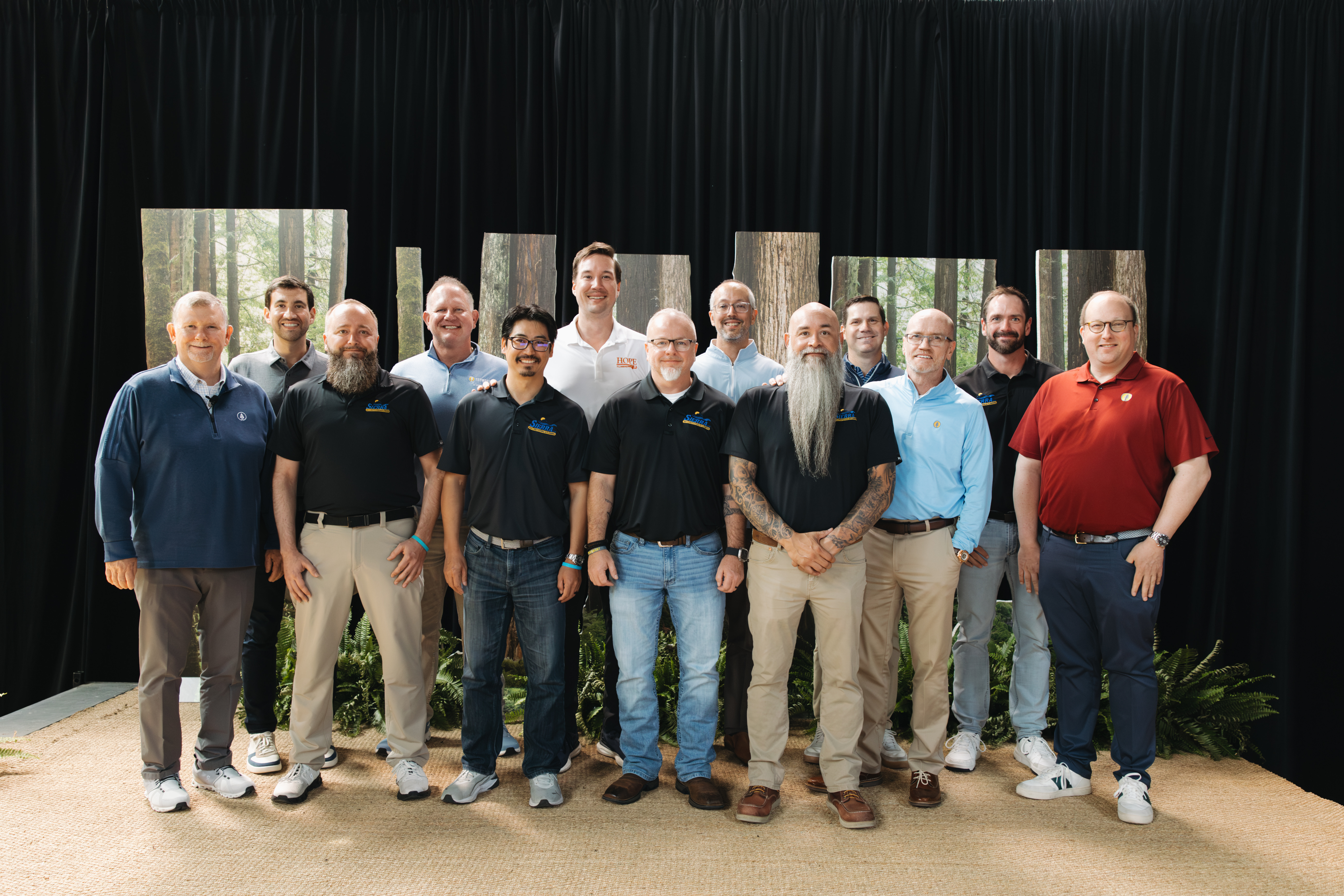
In May 2026, Redwood acquired the Sierra Platform from SE Capital. Five companies joined the group, adding approximately four hundred full-time teammates and businesses serving more than forty thousand customers annually. The move carried Redwood into Las Vegas, Denver and Boise while expanding its Tucson presence. More geography meant more local operations to understand.
That same month, Lewis and Conway appeared together in a conversation about Redwood’s development into a platform valued at approximately $1.1 billion. Valuation and annual revenue describe different things. The distinction is useful here because the company’s size was becoming part of its public identity, while its proposition continued to depend on individual owners and local teams.
Another owner stays on the court
In July 2026, Redwood announced its first Oklahoma investment, a partnership with Hendrick Heat, Air & Plumbing in Tulsa. Hendrick served more than twenty-five thousand customers and employed over ninety full-time teammates. Co-founder Justin Hendrick would continue leading daily operations. The arrangement supplied a fresh, specific example of the owner’s continuing role.
For Lewis, expansion keeps returning to that human scale. A national network arrives in a city through a company that already has customers, colleagues and habits. Keeping its leader involved makes the relationship visible. The next stage still needs someone who knows the place.
The old basketball record ends with a result. The business story keeps asking what happens in the following season. Who develops? Who takes responsibility? Who makes the people around them better? Lewis has spent years working in settings where those questions have consequences. Redwood has given him a much larger team on which to test his answers.