Somewhere in an advertiser’s paperwork, Tom Cruise was still jumping on a couch. Rich Raddon would ask brands how they kept their advertising away from unsuitable material, and out would come a large list of forbidden words. There, sometimes, was Cruise’s name: a souvenir of an old television appearance, preserved as a buying rule. Celebrity gossip had acquired the permanence of office furniture.
Raddon told that story in 2023. It is a useful entrance to his working life because he has spent years around moving pictures, then more years questioning the machinery people build around them. A name can identify a person. It cannot tell you what a particular scene means. His company, Zefr, has made a business of attending to the difference.
Before the algorithms, however, came John Hughes. Before the advertising feed came independent films and a festival. Raddon’s route into technology passed through places where people argued about stories, audiences and who got to reach them. The equipment has changed considerably. The argument remains recognizable.
An apprenticeship in paying attention
Raddon grew up in Northbrook, Illinois, and studied finance at Brigham Young University. He then became an assistant to Hughes, whose films included The Breakfast Club and Ferris Bueller’s Day Off. A finance degree followed by an assistant’s job in movies is an entertainingly indirect career plan. It also put him near someone whose working methods he would remember for decades.
He worked with Hughes from 1992 to 1994. Moving west afterward, he stopped to volunteer at Sundance. The independent filmmakers there offered another example of making things outside an established system. In Los Angeles, he produced films, commercials and music videos. His film credits include Shooting Lily and A Slipping-Down Life.
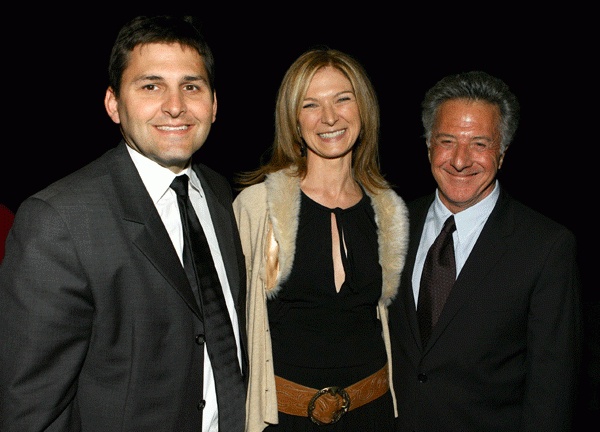
From 2000 to 2008, he directed the Los Angeles Film Festival. Running a festival placed him between filmmakers and the people they wanted to reach. It was also a job inside an institution with an identity of its own, a distinction that would become painfully consequential at the end of his tenure.
The unfinished business of 2008
His departure from the festival was a public controversy. Raddon had donated $1,500 to the campaign supporting Proposition 8, the California measure banning same-sex marriage. The contribution drew criticism within and beyond Film Independent, the festival’s producer. In November 2008, he resigned.
In his statement, Raddon said he believed all people were entitled to equal rights and apologized for the hurt experienced by the gay community and the negative attention brought to Film Independent. The organization accepted his resignation reluctantly, while praising his service and commitment to its principles during his tenure.
That episode belongs in the career alongside the subsequent companies. The festival had provided a platform for diverse voices; his political contribution became a matter of institutional trust. His departure should not be tidied into a cheerful transition toward entrepreneurship. The next chapter happened afterward. It does not resolve the previous one.
Twelve thousand little beginnings
In 2009, Raddon and Zach James co-founded Movieclips. The proposition had the appealing simplicity of something people were already doing: finding a memorable piece of a film and passing it around. Their version involved licenses from studios and a searchable destination for those scenes.
By December, the service had more than 12,000 clips, generally running from thirty seconds to two minutes, and deals with six studios. Viewers could embed the videos elsewhere. They could also follow purchase options for the full film. A scene could work both as a small entertainment in its own right and an invitation to the larger work.
This required a change of perspective. A movie’s commercial life could include thousands of small encounters beyond a screening or a disc. Someone might want a particular exchange, expression or joke. Movieclips gave those moments an organized, licensed route into online circulation. The fragment was acquiring a respectable business address.
Raddon’s interest in YouTube went beyond treating it as another distribution pipe. In a 2012 open letter to creators, he wrote, “It is not simply a small television.” He argued that the platform’s social character mattered: people could respond, participate and circulate what they watched. Creators needed to work with those possibilities.
“It is not simply a small television.”
Rich Raddon, on YouTube, 2012
His examples reached back to filmmakers who had changed Hollywood’s storytelling and technology. The continuity in his thinking was visible. A new medium deserved experiments with its own possibilities. Importing the habits of an older one risked missing what people were already enjoying about the new place.
Learning to leave a successful idea
The company adopted the Zefr name in 2012. Its work widened beyond the official movie upload. Fans uploaded and discussed content too, and rights holders needed help identifying that activity, understanding it and earning revenue from it. In a 2014 interview, James described the next question the founders asked: could they provide similar understanding for brands?
That question moved the customer into focus. A studio wanted to know where its material appeared. A brand might want to understand its official channel, the videos fans made about it, and the audience it could reach through advertising. The underlying familiarity with video could support different services.
Fandango acquired Movieclips in 2014. At the announcement, the network included 25 YouTube channels and more than seven million subscribers. Zefr continued separately. The recognizable consumer business had found a new owner; Raddon and James remained at work on the technology and commercial questions around video.
Another consequential decision arrived in 2019. Vobile agreed to acquire Zefr’s RightsID and ChannelID assets for estimated consideration of $90 million. Those businesses helped content owners identify, protect and monetize video. Zefr would concentrate on contextual targeting for brands.
The price attached to particular assets, rather than a sale of the whole company. The distinction explains the direction. Raddon’s business was becoming more concerned with the relationship between an advertisement and its surroundings. Whose content is this? What is happening in it? Should this brand appear beside it? Experience with the first question had led toward the others.
The couch that stayed on the spreadsheet
Return to that outdated blocklist. Its problem was partly administrative: an old precaution could survive long after anyone remembered reviewing it. Its deeper problem concerned meaning. A keyword tells a buyer something appears in the text around a video. It says much less about what the video is doing with that subject.
In a 2020 video interview, Raddon described the limits of titles, tags and comments. The language available around a video could be sparse. A buyer looking only at those signals could struggle to establish what the content actually contained or whether it suited a brand.
Consider, as an illustration, two videos mentioning the same actor: a film review and an angry personal attack. The shared name does little to settle an advertiser’s choice. Even the same scene can be presented as celebration, criticism or a joke. The useful judgment concerns the encounter a viewer will actually have.
Context informs a brand’s placement decision.
Raddon’s work increasingly addressed that encounter inside major social platforms. Zefr combined content classification with advertiser preferences and reporting. The practical promise was more informed choices about individual pieces of content, including material an indiscriminate list might exclude. Understanding more could allow an advertiser to participate more confidently.
In 2022, Zefr acquired Adverif.ai, adding expertise in misinformation detection. Its approach drew on integrations with more than fifty fact-checking organizations. By 2024, Raddon was discussing how fabricated images and recirculated footage made assessing content more difficult. A video could be authentic footage and still tell a misleading story about when or where something happened.
A new picture, an old question
By May 2025, Zefr’s work included Instagram feed and Reels monitoring and expanded TikTok capabilities. Raddon described the YouTube advertising crisis of 2017 as a significant point in the company’s development. Platforms had invested in improvements; advertisers also wanted outside validation. Building the relevant product had taken years.
In March 2026, he discussed Zefr’s new content-level YouTube brand-safety and suitability accreditation from the Media Rating Council. His emphasis was on analyzing the actual video or post. The same insistence on looking closer had acquired a formal measurement dimension. The accreditation concerned a specified service; the work still depended on the content and placement being assessed.
September brought a Reddit partnership announcement. Conversations added another setting in which subject alone cannot settle meaning. A thread can contain advice, disagreement, irony and a useful recommendation within a few replies. Raddon’s stated aim was to help advertisers understand that context and identify opportunities within it.
Meanwhile, his public LinkedIn writing has turned toward the judgment companies accumulate as they use AI: brand preferences, difficult examples, decisions and feedback. He argues that organizations should retain control of that learning. The technology may be widely available, while experience with a particular customer’s choices remains something worth protecting.
The old film assistant is still visible in this concern for accumulated judgment. Hughes remains a mentor Raddon names when discussing his own career. There is also a family connection to another corner of the entertainment world: his brother Ryan performs as Kaskade. Rich’s route has taken him deeper into the business surrounding the screen.
Across that route, he has repeatedly changed what he sells while staying close to what interests him. A scene once needed a festival, then a searchable home, then a commercial interpretation. Now AI supplies more pictures, more ambiguity and more decisions. Raddon keeps returning to the frame. Before deciding what belongs beside it, he wants to know what is going on inside.
Keep watching
CONVERSATIONS, WRITING & PUBLIC PROFILES