An early customer gave Rehan Jalil the sort of feedback that rarely appears on a startup’s commemorative T-shirt: they would not buy the thing he was building. Elastica had already raised its first institutional funding. Money was in. Confidence, briefly, was out. Jalil paused to reconsider the product and the problem. Three years after its 2012 incubation, Blue Coat agreed to buy the cloud security company for $280 million.
It is tempting to read a founder’s career backward from the purchase price. Everything becomes inevitable, especially the decisions that were uncomfortable at the time. Jalil’s own account preserves the awkward bit. A customer’s refusal could interrupt the plan. Conviction had to survive an examination before it earned the right to become a company.
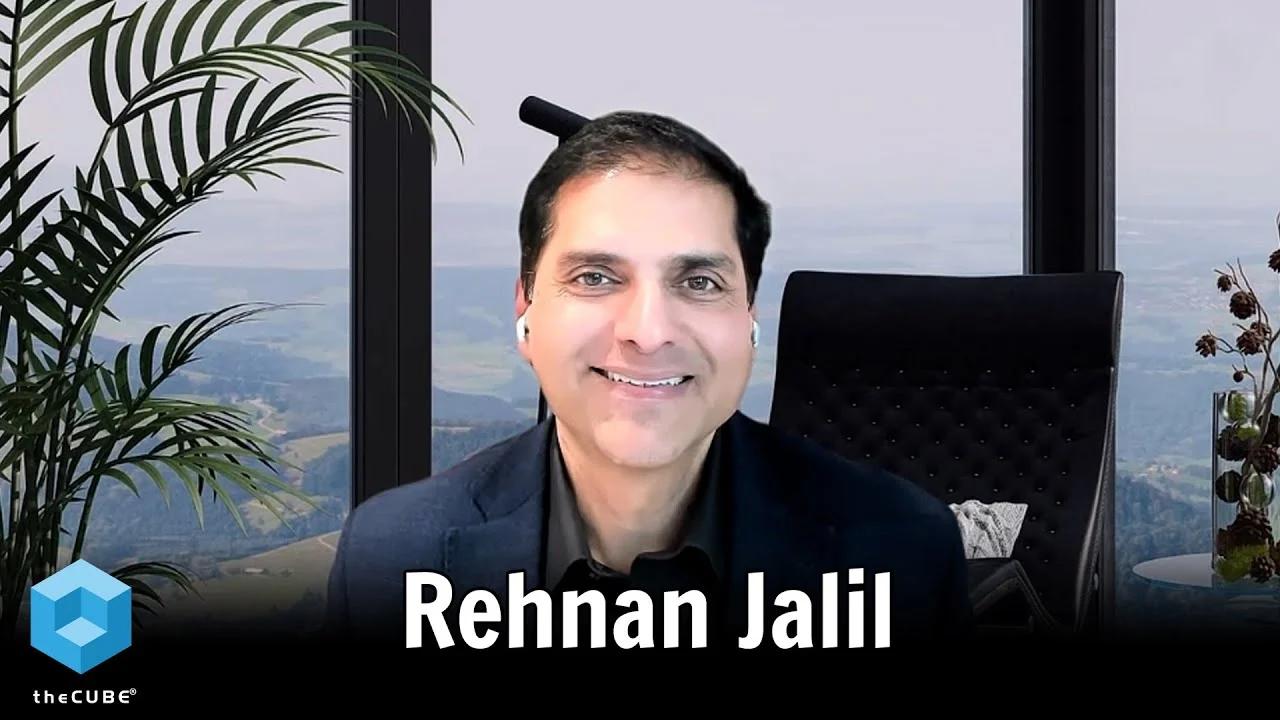
Today he is President, Products & Technology at Veeam, following its acquisition of Securiti AI. The scale has changed considerably. The recurring question has a familiar shape: when a new technology lets people do more, who builds the machinery that lets them do it safely?
A note from home, with unusual wishes
Jalil grew up in Karachi, Pakistan, and studied at NED University before pursuing graduate work at Purdue in the United States. His education eventually included Harvard Business School’s Advanced Management Program. The route joins engineering and management, two disciplines that occasionally behave as though they have never been introduced.
One childhood lesson arrived without a syllabus. His father gave him a handwritten note: “May you always struggle.” Jalil later interpreted the wish as encouragement to keep trying, to stretch beyond familiar limits. A peculiar blessing for a schoolchild; a serviceable job description for an entrepreneur.
His early work included Sun Microsystems and a role as chief architect at broadband wireless company Aperto Networks. Before he was selling the idea of controlling enterprise data, he was working on the systems underneath the network. That background gives his later career a useful continuity. The products moved up through the computing stack; the interest in how large systems behave remained.
The Karachi-to-America journey is part of the story he has told publicly, alongside the dotcom boom and the lessons of repeated company building. There is movement across countries here, but also across kinds of work: designing, founding, managing, then beginning again.
Before the cloud, there was the phone in your hand
Jalil founded WiChorus in 2005. The opportunity was mobile broadband, with 4G networks preparing to carry an expanding volume of internet traffic. Behind every pleasingly simple experience on a phone sits a remarkable amount of equipment doing unglamorous work. WiChorus built mobile packet core technology, part of the infrastructure needed to make that traffic move.
Its SmartCore platform supported functions including routing traffic, authenticating devices and tracking mobile sessions. Clearwire selected the technology in 2009. These were practical concerns at a moment when putting the internet in people’s hands was becoming a daily expectation. The customer saw a screen; the network operator had to make the experience hold together.
Tellabs completed the acquisition on December 1, 2009. Its annual report recorded $180 million in cash for WiChorus’s shares and vested options, with a lower net cash price after accounting for the company’s cash balance. The distinction matters when telling a founder’s story: acquisition prices describe transactions, rather than the contents of somebody’s personal bank account.
Jalil stayed to lead Tellabs’s mobile internet business. He had built a company, sold it and taken responsibility inside the buyer. That sequence would become familiar. An acquisition could change the employer while leaving plenty of work on the desk.
Announced or reported company purchase values in US dollars. Bars share one scale. These figures are not Jalil’s personal proceeds.
A cloud company, a red Ducati
By late 2011, he was a venture advisor at Mayfield, evaluating possible markets. Mayfield incubated Elastica in April 2012. Cloud applications were spreading through businesses, sometimes with the IT department’s blessing and sometimes with the cheerful independence of employees who had found a useful tool.
The security problem followed the work. Files could be shared, accounts accessed and information moved through services outside the old corporate perimeter. A business needed to understand what was happening inside those applications. Elastica developed its CloudSOC, bringing monitoring and controls into a cloud security operations center.
The company’s repertoire extended beyond product diagrams. At the RSA conference, Elastica gave away a red Ducati motorcycle, a marketing initiative that generated thousands of leads. Enterprise security tends to favor acronyms. On this occasion, two wheels also proved useful.
There was substance behind the spectacle: a team of more than 200 people, partnerships with Box and Dropbox, and a reseller agreement with Cisco. Blue Coat’s November 2015 acquisition announcement set the price at $280 million and paired its web gateway business with Elastica’s cloud application security broker capabilities.
Symantec subsequently acquired Blue Coat for $4.7 billion, and Jalil became senior vice president and general manager of cloud security there. That larger transaction belonged to Blue Coat as a whole. Elastica was an earlier, separate acquisition within the chain. The chronology is interesting enough without inflating the founder’s scorecard.
Privacy gave the next company its opening
Securiti was founded in 2018 and publicly debuted in 2019. Its early proposition centered on privacy operations: helping organizations understand personal data and carry out the work associated with its use. The premise was human even when the machinery was technical. People wanted meaningful control over information about themselves; businesses needed a workable way to honor it.
At its September 2019 public debut, Securiti had a team of 130 drawn from companies including Symantec, Blue Coat, Elastica and Cisco. The initial PRIVACI.ai product addressed requests and obligations that could otherwise send staff searching through many internal and third-party systems. Automation was central to the plan.
The timing placed Jalil in another changing market. Privacy requirements were becoming operating tasks for businesses, creating demand for software that could connect policies to actual information. Securiti’s opening bet was that those tasks belonged together in a coordinated system.
In February 2020, Securiti won the RSA Conference Innovation Sandbox competition. The title was Most Innovative Startup, an award with a specific year and a specific contest attached. For a young enterprise software company, recognition helps with a stubborn practical problem: persuading someone to entrust important work to a supplier they have only just met.
Over time, the product widened into a Data Command Center spanning security, privacy and governance. Its knowledge graph connected data with surrounding context, such as ownership, access permissions and location. Generative AI made those connections newly consequential. A model given access to a business’s documents needed boundaries that followed the information.
The unromantic art of doing it twice
For someone associated with repeated startup sales, Jalil spends a conspicuous amount of time talking about the work before the revenue. His advice to founders emphasizes identifying the problem, choosing the right audience and making the sales process repeatable. An enthusiastic customer is encouraging. A reliable way of finding and serving more customers is a business.
“The only metric is repeatability.”
Rehan Jalil · Fund/Build/Scale, 2024
He has also stressed the need for information to flow between teams, and for founders to prepare useful material before recruiting salespeople. These are prosaic requirements. They have the advantage of surviving contact with a purchasing department.
His 2025 conversation with Prateek Joshi adds another consideration: validation depends on whom you ask. A person outside the intended customer group can send a company in the wrong direction. Existing relationships may open the first doors, but eventually a founder must reach beyond that circle.
Among the books he names is Jim Collins’s Good to Great. The choice fits the concerns he returns to in public: product decisions, customers, teams and the discipline of building something that can keep working. The glamour of a sale occupies a day’s headlines. The organizational habits behind it occupy rather longer.
Now the product needs an undo button
Veeam completed its $1.725 billion purchase of Securiti AI on December 11, 2025, welcoming 600 Securiti employees. Jalil initially joined as President of Security and AI. By February 2026, Veeam identified him as President, Products & Technology, with responsibility for advancing the combined product family.
The combination gave his work a further dimension: recovery. Understanding who can touch data is one problem. Restoring the right information after something goes wrong is another. AI agents, able to act across systems, put pressure on both.
In February, he introduced Agent Commander around three functions: detect risk, protect AI use and undo mistakes. The proposed recovery approach aimed to reverse affected actions with precision rather than restore an entire environment indiscriminately. The announcement scheduled a private preview for the end of March.
See agents, identities and the data they can reach.
Apply controls as AI systems use that data.
Recover affected data when actions go wrong.
On October 15, 2026, Jalil announced the Intelligent ResOps family. The Microsoft 365 offering became generally available as an add-on to Veeam Data Cloud; offerings for Veeam Data Platform and Okta entered private preview. His explanation focused on context: knowing what matters and restoring the right parts first.
The public ambition is concrete: let organizations use data and AI with enough visibility, control and recovery to trust the result. From packet cores to cloud applications to autonomous agents, Jalil keeps working where greater freedom creates another engineering obligation. His father’s handwritten wish has aged rather well. There is still plenty to try.
Continue the conversation
Jalil’s writing, interviews and current work.