Christopher Ahlberg was running on a treadmill in 2007 when the obvious, oversized thought arrived: the internet was not merely a place to search. It was a dataset. News stories, forum posts, company pages and technical records contained millions of references to things that had happened and things people expected to happen. What if software could organize the dates, people, places and relationships, then let an analyst interrogate the whole unruly pile?
Ahlberg wrote the patent, put it in a drawer and returned to it two years later with longtime collaborators, including his former professor Staffan Truvé. Recorded Future began in 2009 with backing that made people pay attention: Google's venture arm and In-Q-Tel, the strategic investor connected to the American intelligence community. The name suggested prophecy. The product was really about structure.
Then came the less cinematic part. The company wandered. Its founders had technology that could organize the public internet for analysis, but a horizontal capability is not automatically a business. Quantitative investors were interested. Government users could see the intelligence value. Yet the clean, repeatable customer problem took roughly three years to reveal itself.

The first thing to fail was the width of the idea
Recorded Future did not suffer one famous product explosion. Something quieter failed first: the assumption that a powerful general tool would choose its own market. Ahlberg later described this period as “a little bit of wandering.” An intelligence contact told the team that customers needed context added to signals intelligence. The founders did not really listen for about three years.
What changed their minds was not a grand strategic retreat. It was repeated contact with people who had an urgent job. By 2012, the team was meeting security practitioners at organizations such as JPMorgan. Those buyers did not need a machine to philosophize about tomorrow. They needed to know which hostile infrastructure, malware, stolen credentials, vulnerabilities and threat actors mattered to their systems today.
That focus changed the pitch. Recorded Future would collect material from the open web, dark web and technical sources, use natural-language processing and machine learning to extract entities and relationships, then score risk and add human analysis. Its buyer could stop boiling the ocean. A bank could identify chatter about its brand. A vulnerability team could distinguish a flaw attackers were exploiting from thousands that merely existed. An incident responder could paste in an unfamiliar file hash and discover the actor, infrastructure and tactics connected to it.
How the machine earns its seat
A decision engine wearing a data-company jacket
Today the Recorded Future platform indexes and analyzes data from more than one million sources. Its Intelligence Graph links those observations across adversaries, infrastructure and targets. Insikt Group, whose name means “insight” in Swedish, supplies research from specialists in malware, geopolitics, languages and particular regions. Recorded Future AI lets users ask questions in ordinary language, but its useful trick is grounding answers in that accumulated graph and analyst work rather than an all-purpose model's memory.
The catalog is modular. Threat Intelligence covers actors and indicators. Vulnerability Intelligence helps rank patches by evidence of real-world exploitation. Brand and Identity Intelligence look for impersonation, phishing and leaked credentials. Attack Surface Intelligence maps exposed assets. Third-Party Intelligence watches suppliers. Payment Fraud Intelligence follows compromised cards, infected merchants and criminal infrastructure. Geopolitical Intelligence helps protect people, facilities and supply chains. SecOps Intelligence carries context into alert triage.
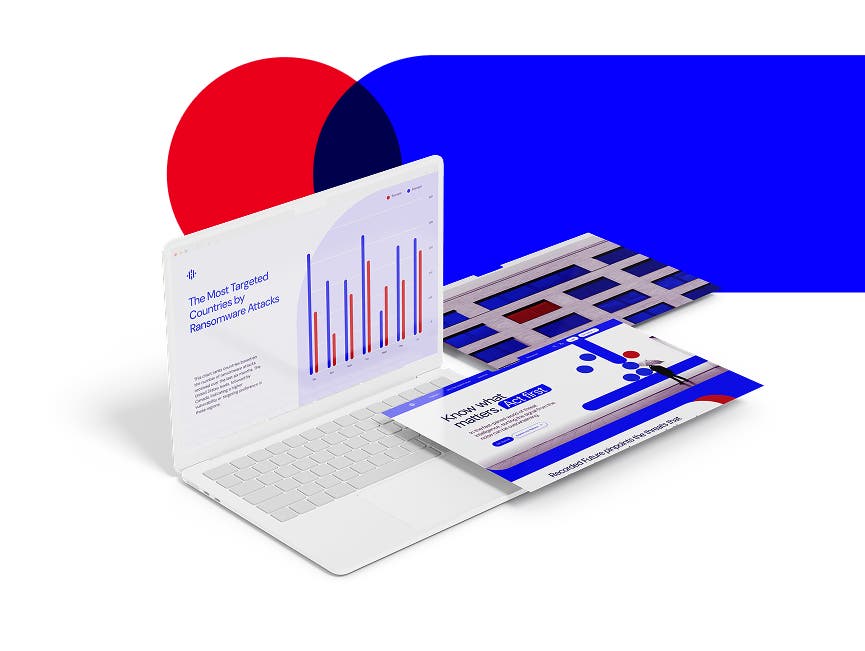
This breadth puts Recorded Future between raw threat feeds and broad security platforms. A feed supplies indicators. A security platform such as Microsoft, CrowdStrike or Palo Alto Networks may combine intelligence with its own controls. Recorded Future's argument is that an independent intelligence layer can observe widely, add context and improve tools customers already own. More than 100 integrations connect it with systems including Splunk, Microsoft Sentinel, ServiceNow, AWS and Palo Alto Networks.
That integration strategy is a practical differentiator. Intelligence left inside another dashboard becomes homework. Intelligence that enriches an alert, opens a ticket or launches a hunt becomes workflow. Recorded Future competes with Mandiant and Google Threat Intelligence, Flashpoint, Intel 471, Anomali, ThreatConnect, Microsoft, CrowdStrike, Unit 42 and internal analyst teams. Its defense is accumulated data, research memory, customer-specific context and the switching friction of becoming useful across the stack.
Who buys it, what it costs and why they renew
The users are analysts with more queues than hours: security operations centers, incident responders, threat hunters, vulnerability managers, fraud investigators, supplier-risk teams and government agencies. Public customer references include Siemens Energy, Avangrid, SITA, Allied Bank, Superhuman and NOV. Recorded Future says more than 1,900 businesses and government organizations use its intelligence across more than 75 countries.
The business is enterprise subscription software, sold in annual or multi-year arrangements through direct sales and partners. Buyers choose packages and capabilities, with licensing influenced by workforce tier, named users or monitored organizations. Services, training, APIs and managed intelligence can sit around the software. Recorded Future does not generally publish a neat price card; the process begins with a demo and a quote.
For customers, public list pricing is not available. The useful public benchmark is category spend: Recorded Future's 2025 industry survey found 76% of respondents spent at least $250,000 a year on external threat-intelligence products, excluding services. That is market context, not a Recorded Future quote.
For investors, the costs and payoffs are clearer. Public funding records put the company's venture financing at roughly $58 million through its 2017 Series E, although databases differ because of smaller early rounds and later filings. Insight Partners acquired a controlling interest in 2019 in an all-cash deal valuing Recorded Future above $780 million. Five years later, Mastercard paid $2.65 billion. Annual revenue around the acquisition was reported at roughly $350 million.
The increase was not merely a multiple slapped onto the same company. Under Insight, Recorded Future acquired Gemini Advisory, SecurityTrails and malware-analysis company Hatching. It expanded products, international reach and integrations. Insight says the customer base grew 350% during its ownership period. The company passed 1,000 employees and built a presence across Boston, Washington, Gothenburg, London, Singapore, Tokyo and Dubai.
The Mastercard logic - and the new boss
Mastercard's interest makes sense when “cybersecurity” and “payment fraud” stop living in separate slides. The same underground markets, stolen identities, compromised merchants and hostile infrastructure can produce both security incidents and financial losses. Mastercard can combine Recorded Future's external view with its own identity, fraud-scoring and network capabilities. Recorded Future gets global distribution and a wealthy parent without disappearing into a general security vendor.
There has been one material change since the acquisition. Ahlberg handed the CEO role to longtime product executive Colin Mahony effective September 1, 2025. Ahlberg moved toward products, intelligence and major relationships, including work enabled by Mastercard. It was a deliberate handoff after more than 15 years, not a founder vanishing after the wire transfer.
The product direction is also changing. Recorded Future launched Autonomous Threat Operations in October 2025. Instead of stopping at an analyst note or risk score, it continuously runs threat hunts, correlates outside feeds in the Intelligence Graph and pushes action across connected controls. In its own security operations center, the company says staff moved to 15 to 20 hunts a week, and its CISO launched a network-wide hunt related to Salt Typhoon in five minutes between meetings.
That example answers the most important buyer question: what exactly did they do? They standardized a hunt that once depended on an analyst's habits, connected it to Splunk, kept the threat definitions current and made the action repeatable. The product did not replace judgment. It removed the copy-paste choreography around judgment.
What to copy - and when not to copy it
The stealable lesson is not “collect the whole internet,” unless you possess unusual capital and tolerance for infrastructure bills. Copy the sequence. Start with one group that shares an expensive problem. Build a proprietary memory from every job. Add humans where ambiguity is costly. Deliver the answer inside tools the customer already uses. Finally, measure the outcome in time saved, incidents scoped, vulnerabilities avoided and decisions accelerated.
Conditions that help
- A dedicated security or risk owner
- Known assets and priority suppliers
- Integrations with SIEM, EDR or ticketing tools
- Authority to block, patch, investigate or notify
Conditions that break it
- No team responsible for the signal
- Poor asset inventory and messy telemetry
- Automation without trusted guardrails
- A small, simple environment that needs a narrow tool
Recorded Future will not work merely because its graph is large. A company that cannot name its critical assets, connect its controls or authorize a response may buy an impressive stream of context and still move slowly. Autonomous action adds another condition: guardrails must be trusted. A false positive that becomes an automated block can turn efficiency into self-inflicted downtime.
There is also a market tradeoff. Customers already committed to a single broad security vendor may prefer its bundled intelligence. Smaller teams may get enough value from a focused credential-monitoring service, a vulnerability tool or curated open-source feeds. Recorded Future fits best where external threats are varied, the cost of delay is high and enough operational machinery exists to turn information into action.
The company did not end up recording the future. It found something more billable: reducing uncertainty in the present. The playful name survived the pivot. The broad technology survived too, but underneath a narrow promise that a tired analyst can appreciate - show me what matters, explain why, and help me do something before lunch.