A text arrives about an unpaid toll. The charge is small. The deadline is rude. Nothing downloads, nothing crashes, and the computer has no particular reason to complain. The recipient supplies a card number. A perfectly healthy device has just assisted a perfectly unhealthy transaction. For an antivirus company, this is an awkward development: the machine can behave impeccably while its owner is being robbed.
- ReasonLabs builds security software for home users, from RAV antivirus to Mozo scam checks.
- Its expansion follows the threat from infected files into messages, websites and identity fraud.
- Mozo advertises $9.99 monthly scam protection; identity benefits depend on the plan and eligibility.
ReasonLabs has made that gap its business. Its older vocabulary concerns endpoints, malware and behavioral detection. Its newer product, Mozo, asks a question people actually ask: is this message a scam? The distance between those two vocabularies explains much of the company’s appeal, and much of the work it still has to do.
01 The living room needs a security team
Founded in 2016, ReasonLabs is led by co-founders Kobi Kalif, its CEO, and Andrew Newman, its CTO and a former lead security program manager at Microsoft. The original proposition was straightforward: individuals deserved the kinds of protection available to large companies. A household has valuable information, too. It usually lacks the staff paid to watch over it.
RAV Endpoint Protection addresses that mismatch with antivirus, machine learning and behavioral analysis. Instead of relying solely on recognition of an already catalogued malicious file, behavioral detection examines what software does. That distinction matters when an attacker changes the packaging. The challenge is giving consumers useful protection without making them supervise a miniature corporate security department.
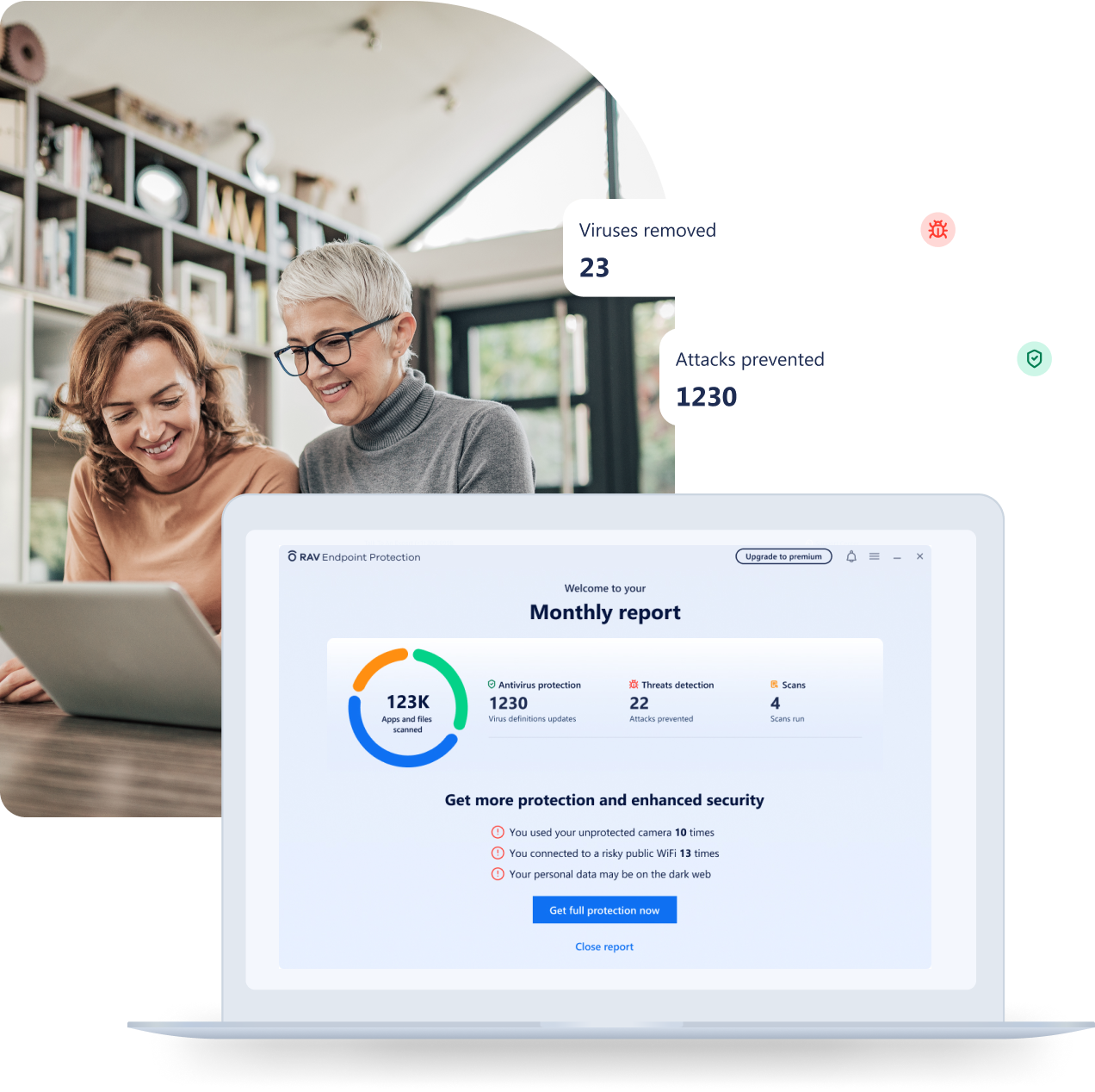
The surrounding tools cover different entrances. RAV VPN protects the connection; Safer Web filters at the DNS layer; Online Security watches browser threats. FamilyKeeper adds parental controls. These are distinct jobs, even when sold as a suite. A VPN cannot decide whether the person requesting a transfer is your bank. Filtering a dangerous address cannot retrieve information you have already handed over.
02 The threat changed its manners
In a July 2024 interview, Kalif described identity protection and online scams as growing challenges. Antivirus, he argued, would remain essential but would not solve the problems consumers faced next. It is a revealing statement from someone selling antivirus. The product could continue doing its job while the customer’s problem grew beyond it.

Mozo follows that argument into ordinary communication. Users can submit suspicious screenshots, messages and links for an AI-assisted assessment. The service advertises protection across texts, email and browsing; its Gmail integration must be enabled. The useful design idea is the second opinion, delivered before curiosity becomes a payment. It gives the family member who normally forwards everything to a technically confident relative another place to ask.
The public offer is $9.99 a month for scam protection, with a 30-day money-back guarantee. That becomes $119.88 across twelve monthly payments. Identity protection is a separate purchasing consideration: the site describes plan-dependent credit and Social Security number monitoring, recovery help and up to $1 million in identity-theft insurance for U.S. residents. Insurance comes with terms and exclusions. A coverage ceiling is not a promise that every loss will be repaid.
03 A lab that watches the costume changes
ReasonLabs says it serves 25 million users across more than 180 countries and scans over two billion files daily. Those are company-reported totals, rather than counts of paying subscribers. Their significance is the breadth of the observation network: home security can generate intelligence well beyond one household.
There is a research operation behind the reassuring interface. ReasonLabs has published investigations into malicious browser extensions and deceptive download campaigns. Its Mozo knowledge center now examines fake shops, investment lures and government impersonation. This is where the business becomes more interesting than a bundle of familiar utilities: watching many attacks can expose patterns that one frightened recipient cannot see.
A government-impersonation investigation, updated in September 2026, supplies a lovely, grubby detail. Fraud operators had left date-like batch codes in public domain-registration records. The codes helped researchers connect disposable addresses. Then the clue expired: the pattern disappeared by the fourth quarter of 2025 as registrations became blank or privacy-redacted. The lab documented both the fingerprint and its disappearance.
That is a practical lesson for anyone building detection systems. A rule can be accurate and still become useless. The work is to keep checking what the adversary does next. For ordinary users, the smaller lesson is equally portable: verify an urgent payment request through a channel you already trust, before following the message’s instructions.
04 Protection also has to explain its arrival
ReasonLabs has two routes to market: software for consumers and security SDKs supplied to partners. RAV’s terms describe a free Essential edition and a paid Premium edition. PICO Venture Partners lists ReasonLabs in its portfolio, with the investment relationship beginning in 2022. The business therefore combines consumer upgrades with technology that other software makers can integrate.
Distribution introduces a complication. Public user discussions describe finding RAV after installing other software and being surprised by its presence. These reports are individual accounts, not a controlled measurement. They nevertheless identify a real question for a security seller: did the customer understand the choice? In this category, a confusing welcome can undermine the confidence the product is supposed to provide.
The company received OPSWAT Gold Access Control Certification for RAV in 2022. That is a specific compatibility credential, not a universal verdict on buying experience or scam detection. Against alternatives such as Microsoft Defender, Norton and Bitdefender, ReasonLabs’ consumer focus and research-led pitch need to earn their value in daily use. Merely saying “AI” settles very little.
05 Before the expensive click
In March 2026, ReasonLabs announced that its threat intelligence and Mozo technology would support the Global Anti-Scam Alliance’s Scam.org platform. The contribution takes its research beyond its own subscriptions. “No single company can solve this problem alone,” Newman said. The partnership is a concrete expression of that argument, rather than a claim that one app can end fraud.
“No single company can solve this problem alone.”
Andrew Newman · CTO · March 2026
The offer works best when protection is enabled, integrations have the necessary permissions, and someone actually asks about the uncertain message. A scam checker provides evidence, not immunity. ReasonLabs’ most useful ambition is to make that pause easy enough to become ordinary. The unpaid toll will arrive at an inconvenient moment. A second opinion has to arrive before the card number.